
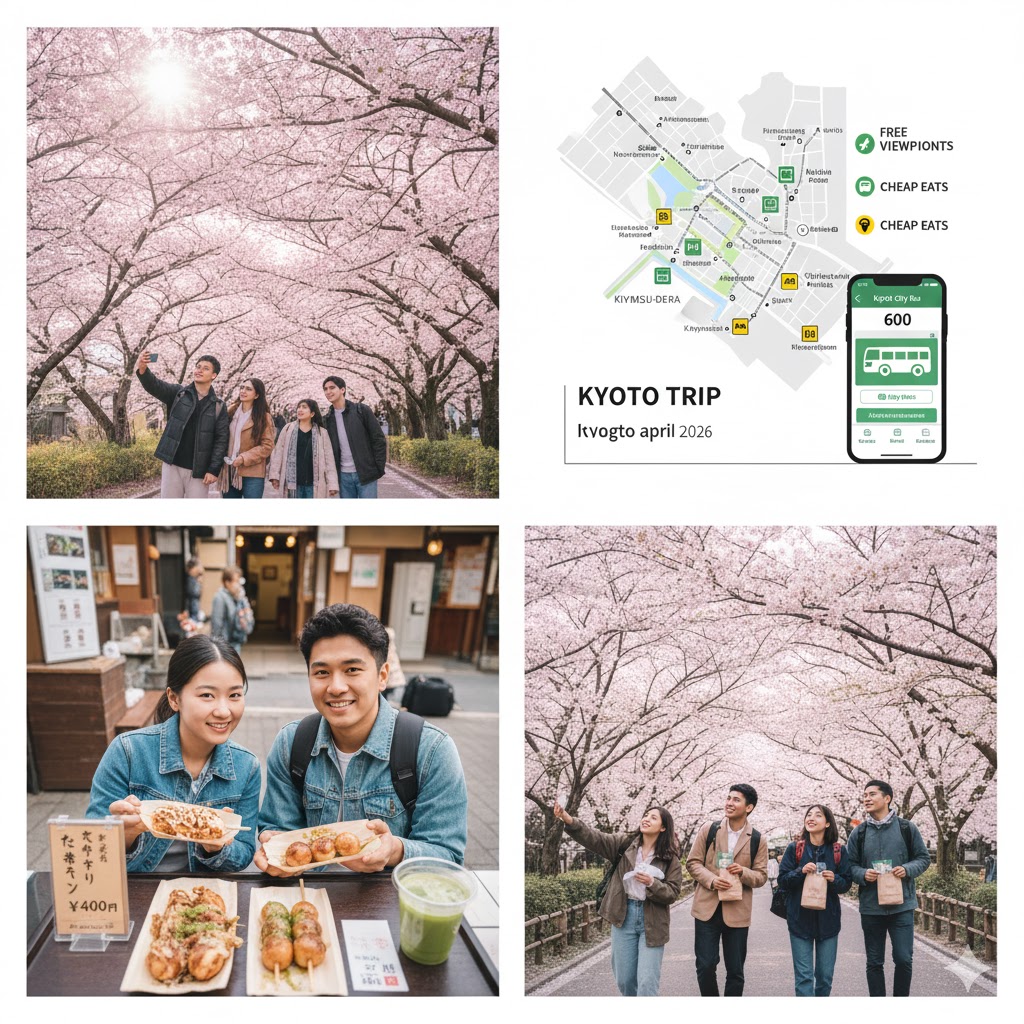
1. Introduction: Kyoto Without Breaking the Bank
Let’s be honest—Kyoto during cherry blossom season gets expensive. Everywhere you look, restaurants are charging triple their normal prices, hotel rooms are booked months in advance at premium rates, and tour operators are pushing expensive guided experiences at premium prices. It’s enough to make you think you need serious wealth to enjoy Japan’s most magical city during its most magical season.
But here’s the secret that budget travelers rarely talk about: I’ve spent cherry blossom season in Kyoto on less than $50 USD per day, and you absolutely can too. You just need to know the right moves, avoid the tourist traps, and think strategically about where you spend your money.
I’m a travel blogger who’s been exploring Kyoto for five years now, and I’ve figured out all the money-saving strategies that don’t involve sacrificing the experience or staying in terrible hostels. This guide isn’t about eating instant ramen every single meal or staying in sketchy accommodations. It’s about being smart—knowing where locals eat (versus where tourists overpay), understanding how to navigate public transportation like a pro, and discovering the hidden free views that absolutely blow the expensive paid viewpoints out of the water.
April 2026 in Kyoto is going to be spectacular. Cherry blossoms will be at their peak. Temples will be stunning. The atmosphere will be magical. And you can experience all of it without selling a kidney. Let’s dive in and make this happen.
2. How to Actually Afford Kyoto in April 2026
2-1. Understanding the Real Budget Breakdown
Before we get into the specific money-saving tips and tricks, let me give you the truth about what you can realistically expect to spend in Kyoto during cherry blossom season. Most budget travel guides tell you to expect ¥5,000-8,000 per day ($35-55), which is wildly optimistic during peak season. More realistically for April 2026, you’re looking at ¥6,000-10,000 daily ($40-65), depending on your accommodation choice and dining preferences.
Here’s exactly how I break down daily spending:
- Accommodations: ¥2,000-4,000 ($13-27) This is where you’ll make your biggest money moves. This decision determines your entire budget. Forget traditional hotels—they’re charging ¥15,000-25,000 during peak season. Instead, consider guesthouses, hostels with private rooms, or Airbnb-style apartments in outer neighborhoods. Smart accommodation choices save you ¥5,000-10,000 daily compared to tourist-area hotels.
- Food: ¥2,000-3,000 ($13-20) Yes, Kyoto has expensive restaurants, but it also has incredible cheap eats everywhere if you know where to look. Eating what locals eat versus eating where tourists eat creates massive price differences.
- Attractions: ¥1,500-2,500 ($10-17) Many famous temples charge ¥600-1,200 for admission. But here’s the thing—many of the best views are completely free. You have options.
- Transportation: ¥800-1,000 ($5-7) Buy a bus pass. Your daily transportation costs practically disappear. This single decision saves you thousands of yen.
- Miscellaneous: ¥500-1,000 ($3-7) Coffee, snacks, souvenirs—keep this flexible and manageable.
Total Daily Budget: ¥6,800-11,500 ($45-77)
The beauty of this breakdown? Everything here is negotiable. Cut accommodations in half if you’re willing to share a room or stay further out. Save money on food by eating where locals eat. Skip paid attractions entirely if you’re strategic about free options. The budget is flexible.
3. Where to Stay Without Emptying Your Wallet
3-1. Best Guesthouses for Budget Travelers
The accommodation decision determines your entire budget more than anything else. Choose poorly, and you’re stuck spending ¥15,000+ daily. Choose smart, and you pocket the savings for experiences, good food, and memories.
Shared Dorms vs. Private Rooms: Shared dorm beds run ¥2,500-3,500 per night ($17-23). Private rooms in guesthouses go ¥3,500-5,500 ($23-37). The private room option doesn’t seem much more expensive than dorms, and you get significantly more comfort and privacy. I always recommend choosing private rooms in guesthouses over dorm situations.
Location Strategy: Suburbs Save Serious Money: Staying in central Higashiyama or Gojo Districts puts you steps from major attractions but costs a fortune during peak season. Instead, stay one or two train stops away in neighborhoods like Kurama, Fushimi, Uzumasa, or Otokoyama. Yes, you’ll spend 15-20 minutes on transit to reach major central sightseeing areas, but you’ll save ¥3,000-5,000 daily ($20-33). That’s meals, experiences, and memories. The time trade-off is worth it.
Specific Budget Accommodation Options:
- Guesthouse Karala (South Kyoto): Clean private rooms, genuinely friendly staff, excellent location on the Nara Line. ¥3,500/night. Transit time is 30 minutes to central areas, but incredibly cheap for Kyoto standards. Real travelers stay here, not just tourists passing through.
- Len Kyoto Kawaramachi (Budget Chain Hotel): If you want a real bed without dorm vibes, this no-frills chain offers private rooms at ¥4,000-5,000. Location isn’t ideal for temples, but it’s affordable, clean, and you get actual privacy.
- Airbnb Apartments (Outer Neighborhoods): Share an apartment with other travelers or book a small private place in quieter neighborhoods. Search areas like south Higashiyama, Fushimi, or Uzumasa. Prices: ¥3,000-4,500/night. You get kitchen access, washing machine access, and local living experience.
- Monastery Stays: Some Buddhist temples offer surprisingly cheap accommodation (¥3,000-4,000) with meditation sessions and morning services. Sounds intimidating, but it’s a genuine cultural experience and saves real money while connecting you to Japanese spiritual traditions.
- Couchsurfing: For the absolute most budget-conscious travelers, Couchsurfing connects you with locals offering free accommodation. Stay with real Kyoto residents, experience authentic local life, and pay absolutely nothing for accommodation. It’s genuine travel.
3-2. The Booking Timeline That Actually Works
April 2026 is peak season, which means accommodation fills extremely fast. Here’s the booking timeline that actually works:
December 2025-January 2026: This is when you book if you want real options. Most decent budget places still have good availability. Book anything decent because rates increase every single day as April approaches.
February 2026: Prices have increased 20-30% from December prices. Availability is limited but definitely existent.
March 2026: You’re basically in trouble if you haven’t booked. Places that were ¥3,500 in January are now ¥5,000+. Many places are completely full. Last-minute options exist but at inflated prices.
The Real Lesson: Start booking right now if you’re reading this. Do not procrastinate. The difference between booking in January and booking in March is ¥1,500-2,000 per night ($10-13). That’s multiple meals.
4. Eating Like a Local: Kyoto Food on a Budget
4-1. Where Budget Travelers Actually Eat (And Where to Avoid)
This is where my biggest travel secret lives. Kyoto has incredible cheap food. The real secret? Eat where locals eat, not where tourists eat. This single strategy saves you more money than anything else.
The Gojo and Higashiyama shopping streets—those famous main tourist streets you see in every guidebook—charge triple prices for the exact same food available one block away. It’s like someone put a “Foreigner Tax” on every restaurant within camera range of a famous temple.
4-2. The Real Budget Eats Guide
Udon Spots: ¥700-1,200 ($5-8)
Kyoto Udon Ishin (Higashiyama District, Masuyacho): Before you think “tourist trap udon restaurant,” hear me out on this one. This place genuinely serves locals and tourists equally. The udon is exceptional—made fresh daily, with careful attention to both the noodles and the richness of the broth.
Here’s what makes it special: the water source (this actually matters for udon quality), seasonal ingredients that change monthly reflecting what’s fresh, and a philosophy that respects traditional techniques over shortcuts. The owner clearly cares about the craft, not just turning tables quickly.
A perfect bowl costs ¥900-1,200. The real magic? Go during off-peak hours (2-4 PM or after 6 PM), and you’re eating alongside neighborhood workers and locals, not tour groups. This is authentic Kyoto dining without the tourist markup.
Small Local Ramen Shops: ¥800-1,000 ($5-7)
Walk one block away from major tourist streets and look for small shops absolutely packed with office workers eating lunch. These tiny neighborhood ramen shops charge ¥800-900 for excellent quality ramen. Follow the crowds—where locals eat, quality is consistently good and prices are fair.
Gyudon (Beef Bowl) Chains: ¥500-800 ($3-5)
Yoshinoya, Sukiya, and other gyudon chains are literally everywhere in Kyoto. Quick, cheap, and satisfying. ¥500-700 gets you a rice bowl covered in beef and sauce. It’s not fancy, but it’s reliable everywhere in the city.
Convenience Store Strategy: ¥300-600 ($2-4)
7-Eleven, FamilyMart, and Lawson have genuinely good prepared food sections. Bento boxes, onigiri (rice balls), and snacks run ¥300-600. Definitely eat here for breakfast and some lunches. While eating every meal at convenience stores is sad, incorporating them strategically saves real money.
Street Food and Snacks: ¥300-500 ($2-3)
Walking through Higashiyama neighborhoods, you’ll see street vendors selling takoyaki (octopus balls), okonomiyaki (savory pancakes), and other snacks. ¥300-400 gets you a satisfying snack that feels like an experience.
Sushi for Cheap: ¥2,000-3,000 ($13-20)
Conveyor belt sushi restaurants let you eat what you want and pay by the plate. One plate costs ¥200-400. You can eat to satisfaction for ¥1,500-2,000. Not the cheapest meal option, but occasionally treating yourself is part of travel.
4-3. The Real Food Budget Strategy
Eat breakfast at convenience stores (¥400). Eat lunch at local udon shops or gyudon chains (¥800). Eat dinner at casual local restaurants or street food (¥1,200-1,500). You can eat well on ¥2,500-3,000 daily ($17-20). This isn’t suffering—it’s actually how most locals eat in Kyoto daily.
4-4. Pro Tips for Maximum Food Savings
Eat on Side Streets, Not Main Streets: The main Sannenzaka and Ninenzaka streets charge ¥2,000-3,000 for meals that cost ¥900 one block away. It’s the same food. Same quality. Massive markup just for being visible to tourists with cameras.
Follow Crowds to Lunch Spots: Where you see salarymen and local workers eating lunch? Food is good and cheap. Where you see only camera-carrying tourists? You’re about to overpay significantly.
Make Lunch Your Biggest Meal: Many restaurants offer excellent lunch sets (¥1,000-1,500) that are half the dinner price for identical food. Eat your biggest meal at lunch, lighter meals the rest of the day.
Ask About Monthly Specials: Talk to guesthouses or hotel staff about restaurant specials. During April, some places offer cherry blossom season specials or lunch discounts.
Cook When Possible: If your accommodation has kitchen access, cook some meals. Buy groceries at supermarkets (cheaper than convenience stores) and eat in. Saves ¥1,000+ daily.
5. Free and Cheap Cherry Blossom Views
5-1. The Secret Free Views Everyone Misses
Here’s the thing about Kyoto’s famous temples: you’re paying ¥600-1,200 to see famous views. But often, the best views are literally a few steps outside the paid areas, completely free. This strategy saves you thousands of yen.
5-2. Genuinely Free Cherry Blossom Spots
Kamo River Riverside (Completely Free)
Walk along the Kamo River banks during cherry blossom season, and you get stunning water reflections of blooming trees. No admission fee. No crowds like at famous temples. Just beautiful blossoms and peaceful walking.
The best stretch? Between Gojo Bridge and Demachi Masugata Shotengai. Walk here during golden hour (early morning or evening), and you’ll see photography-worthy views that rival—or exceed—paid temple viewpoints. Plus, you get to watch locals walking, jogging, and cycling beneath the blossoms. It’s real Kyoto, not tourist Kyoto.
Maruyama Park (Free Entry)
Technically, this park has free admission if you just want to see the cherry trees and walk the grounds. The park’s famous weeping cherry (over 100 years old) is visible from outside paid areas. It’s not the ultra-premium experience, but honestly, the views are spectacular and completely free.
Even better? Come at dawn (6:30-7:00 AM) or after 6 PM when almost nobody’s around. The atmosphere is peaceful and magical—way better than crowded daytime viewing.
Philosopher’s Path Extension (Free)
The extended section of Kyoto’s famous Philosopher’s Path south of Ginkakuji Temple features cherry trees lining a narrow canal. Beautiful, peaceful, and completely free to walk. Come off-peak (before 8 AM or after 5 PM), and you’ll see exactly what cherry blossoms mean to locals: a quiet moment of spring beauty while going about daily life.
Takasen Canal Path (Free)
The canal-side walk through Higashiyama features cherry trees creating natural tunnels. Free to explore. Beautiful to experience. Way less crowded than main streets.
Local Neighborhood Temples (¥400-500)
Instead of paying ¥600+ at famous temples, find small neighborhood temples with beautiful cherry trees. Small temples like Chionin charge ¥400-500 and have equally stunning blossoms with a fraction of the crowds. You’re not “saving” money so much as “avoiding tourist markup.”
5-3. Which Paid Temple Views Are Actually Worth the Money?
I’ll be honest here: some temples are worth the admission. Some absolutely aren’t.
Worth it: Kiyomizu-dera (¥400). The temple’s hillside location gives views of the city covered in blossoms. It’s genuinely spectacular.
Borderline Worth it: Arashiyama area temples (¥400-600). Beautiful, but the exteriors are partially visible for free from outside.
Not Worth it: Touristy paid attractions like Arashiyama Bamboo Grove (¥800). It’s overcrowded, overrated, and most of the view is free if you peek from outside.
Decide Based on Interest: Major temples like Fushimi Inari (¥500) or Kinkaku-ji (¥400). The interiors are beautiful, but honestly, the exteriors are visible for free from outside. Decide based on how much you care about seeing the interior versus exterior photography.
5-4. The Math on Free vs. Paid
If you’re here for 5 days and limit yourself to 2-3 paid attractions while hitting the rest free spots, you’re saving ¥2,000-3,000 ($13-20) compared to tourists paying for every temple. That’s meals saved or extra experiences. Think strategically.
6. Smart Transportation That Actually Saves Money
6-1. The Bus Pass Strategy (The Single Best Money-Saving Move)
Kyoto’s public transportation system has one magic hack: the bus pass. A one-day unlimited bus pass costs ¥700 ($5 USD). You’ll use it daily, and it pays for itself after just 2-3 rides.
How to Buy: Get it at the airport upon arrival, at convenience stores throughout the city, or from the bus terminal. It’s genuinely easy.
Where It Works: Covers most Kyoto buses except some mountain route buses. Includes the tram system as well.
Real Math: Most individual bus rides cost ¥230 each. Four rides per day (morning commute to temple area, afternoon trip elsewhere, return ride, evening trip) = ¥920. The ¥700 pass saves you ¥220 daily. That’s breakfast tomorrow paid for.
6-2. Additional Transit Hacks for Budget Travelers
Walking > Transit: Kyoto’s compact size means many attractions are within 15-30 minute walks. Walk when you can. See the neighborhood. Save transit money. Win-win situation.
Bikes Are Cheaper Than You Think: Bicycle rentals cost ¥1,000-1,500 daily ($7-10). For the cost of four bus rides, you get unlimited travel all day. Plus, cycling through Kyoto’s neighborhoods is genuinely fun and gives you a local perspective.
Night Transit: Buses run late. Evening sightseeing or bar hopping usually means expensive taxi rides home. Instead, plan activities so you can catch the last bus (usually 10-11 PM).
Walking Routes Between Attractions: Map walking routes between temples. Kyoto’s compact neighborhoods mean you often can walk to multiple temples in a day without paying transit costs.
Free Shuttle Buses: Some temples and attractions offer free shuttle buses. Research before visiting.
6-3. IC Cards and Payment Systems
Get an ICOCA or Kitaca IC card at the airport (¥2,000, including ¥1,500 usable credit). Use it for buses, trains, convenience stores, and vending machines. No per-transaction fees. Just spend the card’s balance before you leave Japan.
This isn’t technically a money-saver, but it’s a time-saver (no waiting to buy individual tickets) that makes your travel smoother.
7. Strategic Timing for Maximum Savings
7-1. When to Visit for Cheapest Rates
Peak cherry blossom season (April 6-15) charges the highest prices. Everything costs more. Everyone raises prices. It’s pure supply-and-demand economics.
April 1-5: Cherry blossoms are just starting or in early bloom. Prices haven’t reached peak insanity yet. Significantly fewer crowds. You won’t see peak bloom, but early-season blossoms are stunning too.
April 15-25: Most blossoms have fallen, but late varieties remain. Fewer tourists because the cherry blossom crowds are gone. Prices drop 30-40% from peak season. Hotels have availability. Restaurants aren’t charging triple.
The Trade-off Explained: Early April offers lower prices and fewer crowds but not-yet-peak blossoms. Late April offers lower prices and fewer crowds but mostly-fallen blossoms. Peak April (6-15) offers peak blossoms but expensive chaos.
If you’re a budget traveler, April 1-5 or April 15-25 absolutely makes sense. You still experience cherry blossoms—just not peak-perfect ones. And you save serious money.
7-2. Weekday vs. Weekend Timing
Weekdays (Tuesday-Thursday) are cheaper and less crowded than weekends. Hotels drop rates 20-30%. Restaurants have availability. Temples aren’t completely packed with tour groups.
If your travel schedule allows flexibility, hit Kyoto mid-week. Weekend tourists drive up prices and crowds.
8. Hidden Cheap Eats Near Major Attractions
8-1. The Back Streets Strategy (The Ultimate Budget Secret)
Every major tourist area in Kyoto is surrounded by back streets where locals eat. This is the ultimate budget secret nobody talks about.
Near Kiyomizu-dera: The main Ninenzaka and Sannenzaka streets are tourist restaurants charging ¥2,500-3,500 per meal. Go two blocks east or west, and you’re in residential neighborhoods with ramen shops, udon restaurants, and casual dining at ¥900-1,200. Same quality. Half the price.
Near Arashiyama: The main shopping street is expensive tourist country. The residential blocks north and south have wonderful small restaurants where locals actually eat. Same quality. Half the price.
Near Fushimi Inari: This area is surprisingly residential despite heavy tourism. Most tourists eat at theme restaurants near the temple. Walk five minutes in any direction, and you’re in neighborhood territory with cheap good food.
The Real Lesson: If a restaurant is within sight of a temple or within the main tourist streets, it costs at least 30% more than the same food two blocks away. Walk away from the obvious. Find the locals. Find the deals.
9. Strategic Sightseeing on a Budget
9-1. The Free Sightseeing Strategy
Honestly? Many of Kyoto’s best experiences don’t cost any money.
Walking Tours: Walking through neighborhoods isn’t a paid activity. But it’s arguably Kyoto’s best experience. See how locals live. Find random temples. Discover little shops and cafes. This is free and invaluable.
Shrine Hopping: Small neighborhood shrines (not the major temples) are free. They’re quieter, more spiritual, and give you authentic Kyoto that tourists miss.
Cherry Blossom Photo Walks: Photography of cherry blossoms is completely free. Grab a cheap camera or use your phone. Walk around. Take pictures. This is a full day’s entertainment at ¥0 cost.
Temple Exteriors: Yes, I’m suggesting you appreciate temples from outside. The exteriors are beautiful. The grounds are visible. You can often photograph from outside without paying. Not ideal for serious temple lovers, but budget-conscious? It’s legitimate.
Local Markets: April isn’t peak market season, but occasional local markets happen in neighborhoods. Free to browse. Great for snacks and local goods.
9-2. The Budget Attraction Schedule
Day 1: Free riverside walk, neighborhood exploration (¥0 attraction cost) Day 2: Paid temple (¥400) + free neighborhood temples (¥0) Day 3: Free park walk, riverside views (¥0) Day 4: Paid temple (¥400) + photography walk (¥0) Day 5: Free neighborhood walk, shrine hopping (¥0)
Total paid attractions: ¥800 for the entire week. You’ve seen plenty. Your wallet is incredibly happy.
10. Seasonal Money-Saving Hacks Specific to April
10-1. Cherry Blossom Season Budget Strategies
Off-Peak Accommodation: Book accommodations in outer Kyoto neighborhoods. You’ll pay ¥2,000-3,000 instead of ¥4,000-5,000 for the same room quality. Transit takes 15-20 minutes to major sites, but you save ¥30-50 daily. That’s multiple meals.
Bring Empty Water Bottles: Kyoto has excellent tap water. Bring refillable bottles. Skip convenience store water. Saves ¥300-500 daily. Multiply that across a week.
Pocket Wifi Instead of Phone Data: If traveling with others, share pocket wifi (¥1,000-1,500 daily shared). Cheaper than phone data plans and more reliable than cafe wifi.
Free Walking Maps: Convenience stores have free maps. Hotels provide free maps. Download offline maps on your phone. No need to buy printed maps.
Visit Free Museum Hours: Kyoto has several museums with free admission hours. Check before visiting—some offer free entry on certain days or times.
11. Real Budget Itinerary for April 2026
11-1. 5-Day Budget Kyoto Itinerary (¥35,000 / ~$230 USD)
Day 1: Arrival & Neighborhood Orientation
Accommodation: ¥3,500
Food (breakfast, lunch, dinner): ¥2,500
Transit: ¥700 (buy bus pass)
Attractions: ¥0 (walk neighborhoods)
Total: ¥6,700
Day 2: River Walks & Temple Hopping
Accommodation: ¥3,500
Food: ¥2,500
Transit: ¥0 (bus pass from yesterday)
Attractions: ¥400 (one paid temple)
Total: ¥6,400
Day 3: Hidden Neighborhood Temples
Accommodation: ¥3,500
Food: ¥2,500
Transit: ¥0
Attractions: ¥0 (free neighborhood temples)
Total: ¥6,000
Day 4: Riverside Walks & Evening Cherry Blossoms
Accommodation: ¥3,500
Food: ¥2,500
Transit: ¥0
Attractions: ¥0 (evening free viewing)
Total: ¥6,000
Day 5: Departure Day
Accommodation: ¥3,500
Food: ¥2,500
Transit: ¥700 (new bus pass for airport transfer)
Attractions: ¥0
Total: ¥6,700
Total 5-Day Cost: ¥34,900 (~$230 USD)
This includes accommodation, food, transit, and some attractions. It’s not luxurious, but it’s authentic Kyoto experiencing real cherry blossoms, eating real food at local prices, and having an incredible trip.
12. Money-Saving Mistakes to Avoid
12-1. What Actually Costs You Money (And How to Fix It)
Mistake: Eat every meal on main tourist streets Solution: Eat one block away and save 50%
Mistake: Stay in central Kyoto “for convenience” Solution: Stay 15 minutes away and save ¥2,000-3,000 daily
Mistake: Book every paid temple without knowing prices Solution: Research admission costs—some hidden temples are as impressive but half the price
Mistake: Skip the bus pass and buy individual tickets Solution: Get the ¥700 pass and use it 3+ times daily
Mistake: Think free sightseeing isn’t worth your time Solution: Free riverside walks often beat expensive temple visits
Mistake: Arrive in late March expecting accommodation availability Solution: Book accommodations in December or January
Mistake: Book expensive tours instead of exploring independently Solution: Use your legs and local maps for free exploration
13. Real Talk About Budget Travel in Kyoto
Here’s my honest take: budget travel in Kyoto is absolutely possible if you’re willing to be strategic. You won’t eat at fancy Michelin-star restaurants. You won’t stay at luxury hotels. You won’t do every single paid attraction.
But you’ll eat incredible food at local prices. You’ll stay in clean, comfortable accommodations. You’ll see cherry blossoms from both famous viewpoints and hidden local spots. You’ll experience Kyoto the way locals experience it daily.
And honestly? That’s the best way to travel. Tourist-focused travel is expensive and exhausting. Local-focused travel is cheap and authentic.
April 2026 in Kyoto can absolutely be yours on a real budget. You just need to be smart. Use public transit instead of taxis. Eat where locals eat instead of tourist restaurants. Find free views instead of always paying for paid attractions. Stay slightly outside central neighborhoods instead of paying premium central prices.
This isn’t deprivation. This is just knowing the system and using it strategically.
14. Final Budget Travel Tips for April 2026
14-1. Things That Actually Matter
Invest in comfortable walking shoes: You’ll walk 15,000+ steps daily. Blisters cost you experience time. This investment is worth it.
Invest in transit (the bus pass): Your time is valuable. A ¥700 pass saves money and time. Win-win.
Invest in one or two special meals: One nice dinner makes the budget meals feel like a choice, not a limitation.
Skip paying for every single attraction: You literally cannot afford that, and honestly, many free experiences are better anyway.
Book accommodations early: This single decision determines your entire budget more than anything else.
Plan strategically: The goal of budget travel isn’t to spend zero money. It’s to spend money intentionally, experiencing maximum value and authentic experiences without waste.
Kyoto in April 2026 deserves your time. You deserve to experience it. Make it happen without breaking the bank.
Ready to experience budget Kyoto? Start booking accommodations now. Research the back-street neighborhoods for cheap food. Map your free sightseeing strategy. Calculate your realistic daily budget. Your amazing, affordable Kyoto adventure is waiting.
15. Detailed Day-by-Day Budget Breakdown for April 2026
15-1. Breaking Down Your Actual Daily Spending
Understanding exactly where your money goes helps you stay on budget. Let me break down realistic daily spending across different scenarios.
Breakfast Options:
Convenience store onigiri and coffee: ¥400
Small cafe breakfast: ¥600
Skip breakfast at home: ¥0
Lunch Options:
Gyudon or udon: ¥800
Ramen from local shop: ¥900
Street food: ¥400
Convenience store bento: ¥500
Dinner Options:
Casual restaurant: ¥1,500
Street food multiple items: ¥800
Conveyor belt sushi: ¥1,800
Ramen and gyudon combo: ¥1,200
Snacks/Drinks:
Convenience store: ¥300-500
Cafe coffee: ¥400-600
The beauty? You have options every single day. Some days eat cheaper (convenience store breakfast and lunch, nice dinner). Other days eat expensive breakfast and lunch, cheap dinner. It all averages out.
16. Advanced Accommodation Hacks for Budget Travelers
16-1. Finding Hidden Budget Accommodations
Beyond the obvious options, budget travelers have more choices than they realize.
Capsule Hotels: These Japanese institutions cost ¥3,000-4,500. Private “pods” give you more privacy than shared dorms while being cheaper than private rooms. Bathrooms and lockers are shared, but many budget travelers find them uniquely Japanese and fun.
House-Sitting: Websites like Trustedhousesitters let you stay in apartments for free while watching someone’s home. Takes time to get approved and find matches, but saves accommodation cost entirely.
Work-Exchange Programs: HelpX and WWOOF connect you with hosts offering free accommodation in exchange for work (usually 15-20 hours per week). If you have time flexibility, this is incredible money-saving.
University Dorms: Some universities rent rooms to visitors during holidays for ¥3,000-4,000. Email university accommodation offices directly.
Temple Stays Beyond Meditation: Some temples rent rooms without requiring religious participation. Just rooms at cheap prices.
17. Restaurant Density Mapping: Where Cheap Food Actually Is
17-1. Neighborhood-by-Neighborhood Breakdown
Higashiyama Central (Tourist Area):
Main streets: ¥2,000-3,500 per meal
Side streets (1-2 blocks away): ¥900-1,300
Recommendation: Avoid main streets entirely
Gojo Area:
Tourist streets: ¥2,000-3,000
Back streets: ¥800-1,200
Recommendation: Walk one block away from temples
Kuramae (South Kyoto):
Mostly residential
Cheap local restaurants: ¥800-1,000
Great budget option if staying here
Fushimi (Southeast):
Mixed tourist and local
Best deals in residential blocks
Walk away from the temple
Arashiyama (West):
Extremely touristy
Overpriced everywhere near main areas
Walk north or south for local prices
18. The Psychology of Budget Travel
18-1. Understanding Your Money Decisions
Budget travel isn’t just about spending less. It’s about making intentional choices about what matters to you. Some travelers splurge on food, skip attractions. Others skip meals, spend on experiences. There’s no “right” way.
Your spending priorities:
Food lovers should spend ¥3,000+ on meals, find cheap accommodation
Experience lovers should spend on attractions, eat convenience store meals
Culture enthusiasts should spend on cultural experiences, stay outside central areas
The mental game: Budget travel requires accepting trade-offs. You can’t have everything. You’re choosing between temple visits and nice meals, accommodation quality and activity budget, central location and lower prices. Accept the trade-offs and own your choices. This mindset actually makes budget travel fun rather than depressing.
19. Transit Hacks for Getting Around Cheaply
19-1. Beyond the Bus Pass
Night Buses: Kyoto has late-night buses (after 10 PM) to airports and distant areas. Planning activities so you catch these saves taxi costs.
Train Systems: Keihan and Hankyu trains have multiple lines serving different areas. Understanding the map helps you reach distant attractions cheaply via train instead of bus.
Free Hotel Shuttles: Many hotels offer free shuttles to/from stations or other locations. Ask accommodation staff about shuttle services.
Walking Shortcuts: Kyoto’s neighborhood layout means you often can cut through residential areas to reach attractions faster. Ask locals for shortcuts.
Bicycle Combination: Bike to distant areas, then use bus pass. Sometimes cheaper and faster than multiple bus rides.
20. Attraction Pass Strategy
20-1. Is There Value in Attraction Passes?
Kyoto offers some combination passes. Should you buy them?
Kyoto Bus & Subway One-Day Pass: ¥1,100 for both bus and subway. Only worth it if you’ll take 5+ transit rides. Usually not worth it.
Temple Combination Tickets: Some temples offer combination tickets for multiple sites (¥1,200-1,500 for 3-4 temples). If you want to visit those specific temples, they’re slightly cheaper than individual admission.
Honest answer: Most passes aren’t worth it for budget travelers. Usually better to pay individually and skip temples that don’t interest you.
21. Food Diary: What Actual Budget Meals Look Like
21-1. Sample Day of Eating on Budget
Breakfast (7 AM): Convenience store onigiri (rice ball) + coffee
Cost: ¥400
Eaten at your accommodation
Late Morning Snack (11 AM): Street takoyaki
Cost: ¥350
Eaten while walking
Lunch (1 PM): Kyoto Udon Ishin (off-peak hours)
Cost: ¥1,000
Experience: Authentic local experience, great udon, minimal crowds
Afternoon Snack (4 PM): Convenience store coffee and snack
Cost: ¥300
Dinner (6:30 PM): Local ramen shop
Cost: ¥900
Experience: Surrounded by locals, authentic neighborhood dining
Evening Drink: Convenience store beer
Cost: ¥300
Total Daily Food Cost: ¥3,250
This is eating well, trying different experiences, and staying on budget. You’re not suffering. You’re eating what locals eat.
22. Free Activities Beyond Cherry Blossoms
22-1. What to Do When You’re “Templed Out”
After 3-4 days of temples, you might want different experiences. Good news: lots of free stuff.
Neighborhoods to Explore:
Arashiyama residential areas
North Kyoto residential neighborhoods
East Kyoto residential areas
South Kyoto suburbs
Free Activities:
Shrine exploring and photographing
Architecture photography
Street photography
Neighborhood coffee shop hopping
Local market exploring (if available)
Riverside walks and people watching
Photography walks during different times of day
Journaling and reflection time
Paid Activities Worth Considering:
Museum on free hour (research times)
Cultural performance (¥2,000-4,000 but unforgettable)
One nice restaurant meal (¥4,000-6,000)
Special temple stay experience
23. COVID and Other Practical Considerations
23-1. Planning for Uncertainties
While hopefully Kyoto in April 2026 will be fully open and operating normally, it’s worth planning for unexpected situations.
Backup Plans:
Research free activities in case paid attractions close
Know which neighborhoods have good covered areas (shopping arcades) in case of rain
Identify indoor budget activities (museums, arcades, shopping)
Have cash backup plan in case card systems fail
Travel Insurance: Budget travelers often skip insurance. Don’t. A ¥2,000-3,000 annual policy covers medical emergencies, trip cancellation, and unexpected costs. It’s worth it.
Contingency Fund: Budget travelers should keep ¥5,000-10,000 ($35-70) emergency fund separate from daily budget for unexpected situations.
24. The Real Secret to Budget Travel
24-1. What Separates Successful Budget Travelers from Miserable Ones
I’ve traveled with broke travelers who had amazing experiences and rich travelers who were miserable. The difference isn’t money. It’s attitude.
Successful budget travelers:
See limitations as adventures, not deprivations
Make intentional choices about spending
Engage with locals genuinely
Eat local food confidently
Walk everywhere without complaining
Find joy in small experiences
Don’t try to do everything
Miserable budget travelers:
Resent not having money
Feel deprived eating cheap meals
Skip authentic experiences for cost
Rush to “see everything”
Avoid talking to locals
Complain about accommodations constantly
See budget travel as punishment
The secret? Reframe your perspective. Budget travel isn’t about deprivation. It’s about authenticity. You’re eating what locals eat. Living where locals live. Seeing temples the way locals see them. You’re experiencing Kyoto more genuinely than rich tourists at expensive hotels.
That’s not budget travel. That’s better travel.
Ready to start your budget Kyoto adventure? Download the bus pass app. Research guesthouses in outer neighborhoods. Make a list of local ramen shops. Calculate your realistic daily budget. Accept the trade-offs. Embrace the adventure.
Your affordable, authentic, unforgettable Kyoto experience is waiting.