
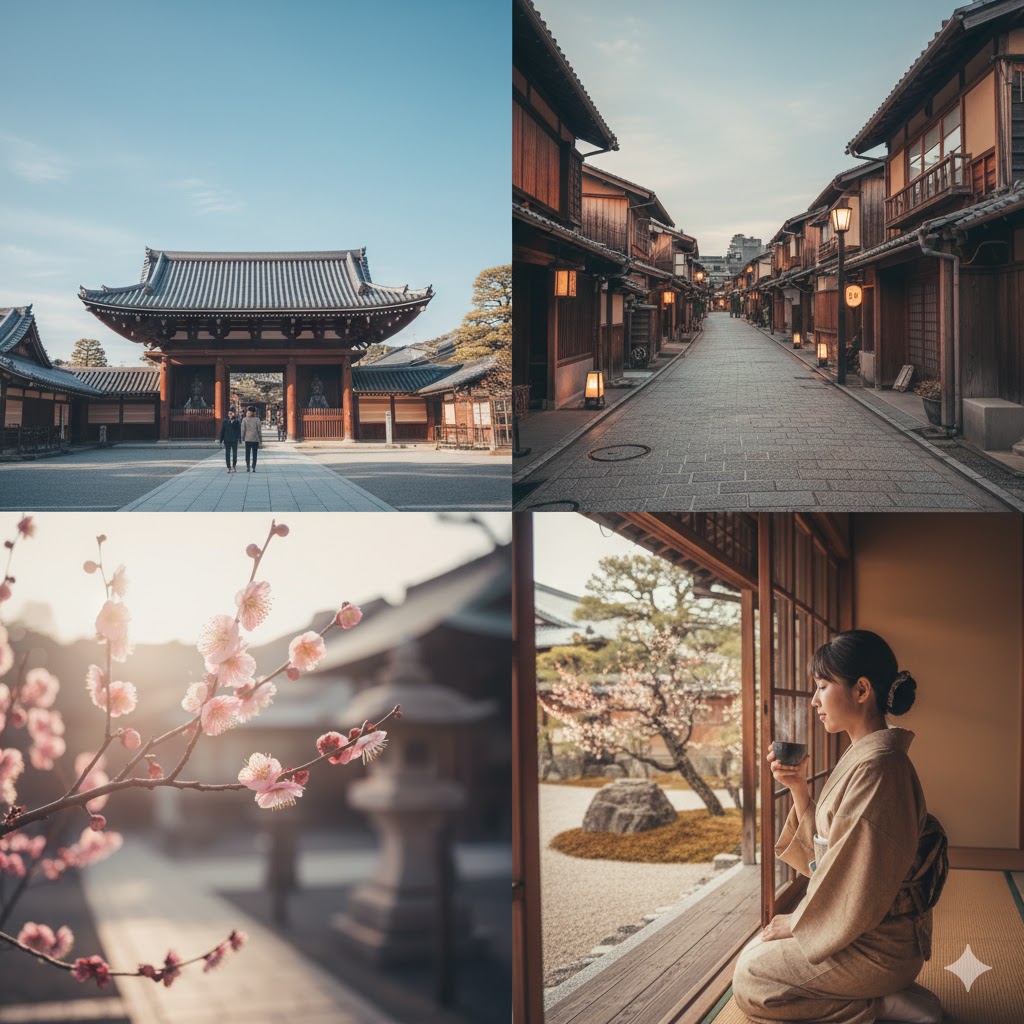
1. Introduction: Kyoto’s Hidden February Charm
When most tourists think about visiting Kyoto, they picture spring’s famous cherry blossoms or autumn’s vibrant crimson leaves. But here’s a travel secret that many visitors miss: February is actually one of the best times to explore Japan’s ancient capital. Why? The answer is simple yet powerful: fewer crowds, clearer skies, and a unique perspective on Kyoto that few tourists ever experience.
February represents a quiet moment between the busy holiday season and the spring rush. It’s when the city truly belongs to local residents and discerning travelers who understand that authentic experiences don’t always come with Instagram-perfect weather. In this comprehensive guide, we’ll explore everything you need to know about visiting Kyoto in February, including the incredible temple experiences, peaceful neighborhoods, and the perfect way to fuel your day with authentic local cuisine.
2. Why February Is the Perfect Time to Visit Kyoto
2-1. Avoiding the Crowds: Experience Authentic Kyoto
February attendance at Kyoto’s famous temples drops dramatically compared to other seasons. While millions of visitors flood Kyoto during cherry blossom season in spring and peak tourist season in summer, February sees a significant decrease in foot traffic. This means you can experience Japan’s cultural treasures in a way that more crowded seasons simply cannot provide.
When you visit temples and shrines during February, you’re not just checking off a sightseeing list. You’re actually participating in the spiritual atmosphere these sacred places were designed to create. You can spend time in quiet meditation gardens without shoulder-to-shoulder crowds. You can take photographs without strangers appearing in every shot. Most importantly, you can connect with the genuine historical and spiritual significance of these ancient structures.
The local residents appreciate February tourism for exactly this reason. You’ll notice shopkeepers more willing to chat, restaurants less hectic and more focused on quality service, and overall a sense of authentic cultural exchange rather than mass tourism transactions.
2-2. Clear Skies and Crisp Winter Air
February weather in Kyoto is characterized by clear, crisp conditions. The humidity that makes summers uncomfortable is completely absent. The rain that occasionally disrupts spring and autumn plans is relatively rare in February. This translates to beautiful natural light for photography, excellent visibility for sightseeing, and overall comfortable conditions for walking through the city.
The average temperature ranges from 34°F to 46°F (1°C to 8°C), which is cold enough to require a jacket but not so severe as to discourage outdoor exploration. The crisp air creates a certain clarity—both literally in terms of visibility and metaphorically in terms of peaceful contemplation. Kyoto’s temples seem to stand even more majestically against February’s clear blue skies.
2-3. The Beginning of Spring: Nature’s Quiet Transition
February marks the beginning of Japan’s seasonal transition toward spring. While the cherry blossoms won’t arrive for another month, early signs of the season appear throughout Kyoto. Some plum blossoms begin appearing in late February, offering beautiful photography opportunities and a different aesthetic than the famous cherry blossoms.
This transitional period provides a unique perspective on Japanese seasonal awareness. You’ll understand why Japanese culture places such profound importance on subtle seasonal changes. The Kyoto Udon Ishin, like many traditional restaurants in the area, adjusts its menu to reflect these seasonal shifts, offering diners a culinary connection to the changing seasons.
3. The Eastern Higashiyama District: Your Gateway to Temple Culture
3-1. Location and Accessibility
The Higashiyama district, where Kyoto Udon Ishin is located at 3-chome Masuyacho, Higashiyama Ward, Kyoto, represents the heart of Kyoto’s historic temple culture. This neighborhood is one of Kyoto’s most walkable and tourist-friendly areas, with excellent public transportation connections and compact distances between major attractions.
From Kyoto Station, you can reach the Higashiyama district via bus (approximately 15-20 minutes), taxi, or a scenic train ride. The district’s compact size means most major temples and attractions are within a 10-15 minute walk from each other, making it perfect for a focused day of exploration.
The Higashiyama district stretches across the eastern foothills of Kyoto, following the natural topography of the mountains. This geography creates the district’s characteristic steep streets and slopes—locals joke that Higashiyama exists on various levels, both literally and culturally. The elevation changes, while occasionally challenging for walking, create natural beauty and provide viewing points overlooking Kyoto’s extensive urban landscape.
Public transportation effectively serves the district. Bus stops provide direct access from Kyoto Station, and the area is connected to Kyoto’s subway system. However, many visitors find that walking represents the best way to experience Higashiyama. The district’s compact size combined with February’s pleasant weather creates ideal conditions for pedestrian exploration.
3-2. Kiyomizu Temple (清水寺): Kyoto’s Most Iconic Landmark
Kiyomizu Temple stands as Kyoto’s most recognizable and visited temple, earning its status as a UNESCO World Heritage site. The temple’s main hall, built in 1633, features the famous wooden stage that juts out from the mountainside, offering stunning views of Kyoto’s landscape below. This architectural achievement, constructed without a single nail, represents a masterpiece of traditional Japanese engineering and design.
The temple’s name literally translates to “pure water temple,” referring to the sacred waterfall within its grounds. Visitors traditionally drink from this waterfall, believing it offers health benefits and purification. The practice dates back centuries, with pilgrims traveling specifically for this spiritual experience. In February, you can experience this ritual with minimal crowds, truly understanding why this practice has endured for centuries and remains central to the temple’s spiritual significance.
Beyond the main stage, Kiyomizu Temple contains numerous smaller temples, gardens, and spiritual spaces. The temple grounds cover a significant area, with multiple buildings representing different historical periods. Exploring these spaces thoroughly requires 60-90 minutes, allowing time for contemplation and photography without the rushed feeling that characterizes peak-season visits.
The approach to Kiyomizu Temple takes you through charming streets lined with traditional shops and restaurants. February’s quieter conditions mean you can actually stop and admire the traditional wooden storefronts, engage with shopkeepers, and photograph the architectural details without being swept along in a rushing crowd. These approach streets themselves constitute a significant cultural experience, preserving Kyoto’s traditional commercial aesthetic.
Kiyomizu Temple’s admission fee is modest (around 400 yen), making it extremely affordable compared to attraction pricing in many other countries. The fee includes access to all temple grounds and the sacred waterfall experience. No additional fees are required for photography or extended stays.
Pro tip: Visit Kiyomizu Temple early in the morning (around 9:00 AM when it opens) to experience the temple at its most peaceful. The morning light illuminates the wooden stage beautifully, and you’ll have much of the space to yourself before mid-morning crowds arrive. Consider bringing a water bottle—the climb up to Kiyomizu is moderately strenuous, and hydration is important even in February’s cool temperatures.
3-3. The Five-Story Pagoda (五重塔): A Symbol of Japanese Heritage
Kiyomizu Temple’s five-story pagoda stands as a stunning example of Japanese architectural achievement and serves as one of Kyoto’s most photographed structures. This iconic structure has appeared in countless photographs and artworks throughout history, functioning as a visual symbol of Kyoto and Japan itself. Built in 1407, the pagoda showcases traditional Japanese architectural principles, with each level representing different Buddhist concepts and spiritual meanings.
The pagoda’s construction demonstrates remarkable engineering sophistication. The structure rises approximately 30 meters while maintaining extraordinary stability against earthquakes—a consistent challenge in Japan. The design incorporates flexible joinery and weight distribution principles that allow the pagoda to sway slightly during seismic activity without collapsing. Understanding this engineering achievement adds appreciation to the structure’s visual beauty.
Each level of the pagoda features characteristic architectural elements: overhanging eaves, decorative railings, and symbolic statuary. The proportions follow classical Japanese aesthetic principles that emphasize balance, harmony, and restrained elegance rather than ostentation or excessive decoration.
The pagoda’s slender silhouette against Kyoto’s clear February skies creates an almost ethereal quality. Photographers particularly appreciate the February conditions for capturing this structure’s essence without harsh shadows or obscured views caused by humidity or crowds. The reduced crowds mean you can spend extended time photographing from various angles, waiting for optimal light conditions, and truly absorbing the structure’s visual and spiritual significance.
The pagoda is particularly magical during dawn and dusk hours when the low sun angle creates dramatic lighting while maintaining the soft quality that February light provides. Many serious photographers plan specifically to capture the pagoda during these hours.
3-4. Higashiyama Walking Trails: Where History Meets Nature
The Higashiyama district features several interconnected walking trails that weave through temples, gardens, and residential neighborhoods. These paths represent some of Kyoto’s most picturesque routes and offer genuine cultural immersion rather than simple sightseeing. The trails follow natural topography, creating varied scenery and constantly changing perspectives as you walk.
These walking paths evolved over centuries as pilgrims traveled between temples and residents navigated the hilly terrain. The routes now constitute important cultural heritage, carefully maintained to preserve their historic character while accommodating modern visitors. Walking these paths, you’re literally following footsteps from Kyoto’s centuries of history.
3-5. Ninenzaka and Sannenzaka (二年坂・三年坂): These shopping streets preserve traditional Kyoto aesthetics while offering modern shopping experiences. The names literally mean “two-year slope” and “three-year slope,” referencing local legends about whether slipping on these slopes would result in years of misfortune. These slightly inclined streets feature traditional wooden storefronts selling everything from traditional crafts to contemporary souvenirs.
The architecture along these streets represents careful preservation efforts. Many buildings date to the Edo or Meiji periods, yet modern shops operate within these historic structures. This juxtaposition—maintaining historical appearance while adapting to contemporary use—reflects Kyoto’s ongoing balance between tradition and modernity.
February’s quieter conditions make these streets genuinely enjoyable to walk. You can window-shop, sample street food from local vendors (including traditional treats like mochi, dango, and roasted chestnuts), and photograph the traditional architecture without navigating through dense crowds. The natural light in February creates beautiful conditions for photography without the harsh shadows or humidity-induced haze that affects other seasons.
Walking these streets typically requires 20-30 minutes depending on shopping pace and photographic stops. Many restaurants and small eateries line these streets, providing perfect opportunities for refreshment breaks or additional meals beyond your main lunch at Kyoto Udon Ishin.
3-6. Isninenzaka (一年坂): Another charming slope street, this one offers perhaps even more authentic local character than its more famous neighbors. Featuring traditional restaurants, craft shops, and cozy cafes, Isninenzaka provides an authentic taste of old Kyoto with less commercial focus than Ninenzaka and Sannenzaka.
This street particularly appeals to visitors seeking genuine cultural experiences rather than tourist-oriented shopping. Small family-run shops sell local crafts, traditional foods, and antiques. The street’s quieter nature means you can genuinely interact with shop owners and understand local perspectives on preservation and cultural continuity.
Isninenzaka’s restaurants often feature local specialties and seasonal preparations. Dining at one of these establishments connects you with Kyoto’s authentic food culture in ways that chain restaurants cannot replicate. The intimate scale of these establishments means personal service and genuine hospitality rather than efficient mass-market service.
3-7. Neneo’s Path (ねねの道): Kyoto’s Most Romantic Street
Neneo’s Path connects Kiyomizu Temple to the broader Higashiyama district, representing perhaps Kyoto’s most atmospheric street. Named after the wife of famous warlord Toyotomi Hideyoshi, this path features traditional wooden buildings, charming stone lanterns, and an overall sense of stepping back in time. The path’s name honors Yodo-dono (Lady Yodo), who founded the nearby temple Kodai-ji, making the street a physical connection to Kyoto’s feudal history.
The path stretches approximately one kilometer, connecting major attractions while preserving an intimate, walkable scale. The street maintains strict architectural guidelines ensuring all buildings conform to traditional Kyoto aesthetic principles. Modern commercial signage is carefully restricted, and utilities are hidden to maintain visual coherence.
The stone lanterns lining the path create a particularly magical atmosphere in early evening when their subtle lighting emerges. In February, this lighting becomes particularly pronounced as sunset arrives earlier than in summer months. The combination of traditional architecture, careful landscaping, and subtle lighting creates one of Kyoto’s most photographable and emotionally resonant environments.
In February, the path’s quietude is particularly pronounced. You can walk slowly, stopping to admire architectural details, peek into small galleries and restaurants, or simply soak in the atmosphere without feeling rushed or crowded. The reduced foot traffic means you can actually hear the sounds of the street—birds, water features, distant temple bells—rather than human noise overwhelming the environment.
Several tea houses and small restaurants line the path, many specializing in traditional Kyoto cuisine or contemporary interpretations of classical food traditions. These establishments represent ideal stopping points for refreshment or additional meals beyond your primary lunch.
The path is approximately 10-15 minutes walking from Kiyomizu Temple, making it a logical continuation of morning temple exploration. Walking the entire path, photographing, and enjoying a rest break requires approximately 45 minutes to an hour.
3-8. Kodai-ji Temple (高台寺): Serenity Beyond the Main Crowds
While Kiyomizu Temple draws the majority of Higashiyama visitors, Kodai-ji Temple offers a more serene alternative that many experienced Kyoto visitors prefer. Founded in 1606 by Yodo-dono (Lady Yodo) in memory of her husband Toyotomi Hideyoshi, this temple features beautiful gardens, a traditional tea house, and walking paths through bamboo groves and wooded areas.
The temple’s history connects directly to Kyoto’s feudal past. While it originated as a memorial temple, Kodai-ji evolved into an active Buddhist community maintaining traditions continuously for over 400 years. This continuous spiritual practice creates a palpable sense of living spiritual culture rather than merely historical artifacts.
Kodai-ji Temple represents an ideal February experience. The temple’s gardens are designed to showcase subtle seasonal beauty rather than dramatic visual impact. In February, understanding why Japanese aesthetics value restraint and simplicity becomes almost intuitive. The sparse trees, the carefully raked gravel gardens, the gentle sound of water features, and the strategic placement of moss-covered rocks all create a peaceful atmosphere perfect for contemplation.
The garden design exemplifies karesansui principles—”dry landscape”—using carefully arranged rocks, gravel, and minimal plantings to suggest vast natural landscapes within confined spaces. Walking through these gardens, you develop deeper appreciation for the artistic principles underlying Japanese aesthetic philosophy.
Several specific features enhance the Kodai-ji experience. The Kaisando Hall houses significant cultural properties and provides excellent examples of temple architecture and decoration. The Joju-tei tea house offers traditional tea service in an intimate setting overlooking the gardens. The Niomon Gate, reconstructed in traditional style, provides a perfect photography opportunity.
The temple is just a short walk from Neneo’s Path (approximately 5-10 minutes) and requires minimal additional effort to visit, yet sees far fewer visitors than Kiyomizu Temple. This accessibility combined with the reduced crowds makes Kodai-ji an essential stop for visitors seeking authentic temple experiences.
A complete Kodai-ji visit, including garden exploration and tea house refreshment, requires approximately 60-90 minutes. The admission fee is modest (approximately 600 yen), making it extremely affordable even considering the quality of the experience provided.
3-9. Yasaka Shrine (八坂神社): Kyoto’s Sacred Heart
Yasaka Shrine stands as one of Kyoto’s most important shrines, founded in the 9th century. This massive shrine complex serves both spiritual and cultural functions in Kyoto society. The shrine is particularly famous for its Gion Matsuri festival in July—one of Japan’s most important traditional festivals—but even in February, it holds significant spiritual importance.
The main shrine building showcases beautiful architectural elements representing centuries of refinement and restoration. The surrounding grounds feature numerous smaller shrines, sacred spaces, and stunning torii gates (the iconic red entrance gates of Japanese shrines). The shrine’s architectural complexity reflects layers of history and renovation spanning more than a thousand years.
February visits allow you to explore these spaces calmly, understanding the shrine’s spiritual role in Kyoto’s community rather than simply checking off a sightseeing list. The shrine maintains active practice of traditional rituals and spiritual services, making it genuinely living sacred space rather than mere historical monument.
The shrine’s proximity to the Higashiyama district (particularly near Gion, Kyoto’s famous geisha district) makes it conveniently accessible. February provides ideal conditions for exploring the shrine’s architectural details and photographing its traditional structures against clear winter skies.
Yasaka Shrine is conveniently located near the Higashiyama district and makes an excellent addition to any February itinerary, particularly when combined with nearby attractions. Visiting the shrine requires approximately 30-45 minutes depending on the depth of exploration and photography desired.
4. Planning Your February Higashiyama Day: A Practical Itinerary
4-1. Morning (8:00 AM – 11:00 AM)
Start with an early breakfast at a local restaurant before heading to your first destination. The Higashiyama area features numerous small breakfast spots offering traditional Japanese breakfast (featuring miso soup, rice, pickled vegetables) or more casual morning options. These intimate breakfast establishments provide your first genuine interaction with local Kyoto hospitality.
Then head directly to Kiyomizu Temple as it opens at 9:00 AM. Spending 60-90 minutes exploring the main temple and its surrounding grounds allows sufficient time for meaningful temple experience. The clear February light creates excellent conditions for photography and observation, illuminating details you might miss under summer haze or autumn cloud cover.
Include time for the sacred waterfall ritual—this ancient practice remains central to the temple experience. Take time to sit in quiet areas contemplating the view from the wooden stage. Rush reduces the experience to checklist completion rather than genuine cultural engagement.
4-2. Mid-Morning (11:00 AM – 1:00 PM)
Walk down from Kiyomizu Temple through Ninenzaka and Sannenzaka shopping streets. Take your time exploring shops and sampling street food from local vendors. This section takes approximately 60-90 minutes depending on how much you stop and how thoroughly you explore.
February’s reduced crowds mean you can actually stop and chat with shopkeepers, learning about their businesses and the neighborhood. This personal interaction provides cultural insight impossible during peak seasons. Many shopkeepers appreciate tourists who genuinely engage rather than simply photographing and moving on.
By around 12:30-1:00 PM, you should be feeling hungry and ready for a proper meal. This is the perfect time to visit Kyoto Udon Ishin, located at 3-chome Masuyacho, Higashiyama Ward. The timing ensures you avoid the rush of late lunch crowds while benefiting from the restaurant’s full midday menu selection.
5. Why Kyoto Udon Ishin is Your Perfect February Lunch Destination
After hours of walking through temples and historic streets, Kyoto Udon Ishin offers exactly what you need: authentic local cuisine that energizes you for afternoon exploration while providing genuine cultural insight into Kyoto’s food culture.
5-1. Authentic Udon Craftsmanship
Udon represents one of Japan’s most beloved comfort foods, with deep historical roots in Japanese cuisine. At Kyoto Udon Ishin, every bowl is prepared with attention to traditional technique and seasonal ingredients. The restaurant’s commitment to quality means each bowl of udon noodles provides genuine nutrition and satisfaction, perfect for fueling an afternoon of sightseeing and walking.
The noodles themselves represent significant craftsmanship—the thickness, the springy texture, the subtle sweetness derived from wheat flavor. These qualities cannot be rushed or mass-produced. Experiencing authentic udon made with traditional methods provides food understanding that chain restaurant meals simply cannot offer.
5-2. Seasonal Menu Adjustments
Unlike chain restaurants offering identical menus year-round, Kyoto Udon Ishin adjusts its offerings to reflect February’s subtle seasonal changes. This connection to Japan’s seasonal consciousness (called kisetsukan) provides cultural insight beyond typical tourist experiences. February may feature winter vegetables, special broths, or temperature adjustments reflecting the season’s influence.
Understanding this seasonal approach transforms your understanding of Japanese food culture. Food isn’t simply nutrition but is consciously connected to the seasons, reflecting nature’s rhythms and the chef’s artistic intentions.
5-3. Local Atmosphere
The restaurant serves as a genuine local dining spot, not primarily designed for tourist consumption. Walking inside, you’ll notice local residents, office workers, and occasional tourists mixing naturally. This authentic mixed patronage creates genuine dining atmosphere—Kyoto Udon Ishin serves the actual community that lives and works in Higashiyama.
Dining here connects you with Kyoto’s authentic food culture rather than tourist-oriented adaptations of Japanese cuisine that sometimes prioritize presentation over genuine culinary traditions.
5-4. Strategic Location
Located in the heart of the Higashiyama district, Kyoto Udon Ishin provides convenient access to major temples and attractions. Its location makes it perfect for a lunch break during temple exploration. You’re not traveling far from your sightseeing route—actually, the restaurant sits naturally within the district you’re exploring.
5-5. Traditional Interior
The restaurant’s traditional Japanese design complements the historic atmosphere of the surrounding Higashiyama district, creating visual and cultural coherence for your day. Dining inside feels continuous with the historical buildings outside rather than representing a jarring transition to modern commercial space.
5-6. Afternoon (2:00 PM – 5:00 PM)
After lunch with renewed energy, continue exploring the Higashiyama district. Walk along Neneo’s Path toward Kodai-ji Temple. This section allows you to continue your temple exploration with less crowded conditions than morning visits, as many tourists have already left the district.
Spend 60-90 minutes at Kodai-ji Temple and its surrounding gardens. The afternoon light illuminates the gardens from different angles than morning, creating new photography opportunities and visual perspectives. If time permits, enjoy traditional tea service at the Joju-tei tea house overlooking the gardens—this provides perfect restoration after hours of walking.
Then walk toward Yasaka Shrine if time permits (approximately 20-30 minutes walking from Kodai-ji). This shrine is particularly atmospheric in late afternoon, with February’s early sunset creating beautiful lighting conditions for photography. The shrine’s architecture takes on additional character in golden late-afternoon light.
5-7. Evening (5:00 PM Onward)
As evening approaches and you’re likely tiring from hours of walking, consider a return visit to the Higashiyama shopping streets. Many restaurants and small eateries open for dinner service around 5:00-6:00 PM.
Some visitors choose to return to Kyoto Udon Ishin for a quiet dinner bowl of udon, continuing the day’s cultural immersion. Dinner at Kyoto Udon Ishin creates lovely continuity—the same dish takes on different significance in evening’s quiet atmosphere after a full day of sightseeing.
Alternatively, explore other dining options along Neneo’s Path or Isninenzaka. Many restaurants feature tempura, kaiseki, or other traditional Japanese preparations perfect for completing your cultural day.
6. Essential February Travel Tips for Kyoto
6-1. Weather Preparation and Clothing
While February is generally pleasant, proper clothing is essential for comfort and optimal experience. Pack a warm jacket or coat—temperatures ranging from 34°F to 46°F (1°C to 8°C) require substantial outerwear. Layering is crucial, as you can remove layers as activity generates heat and midday temperatures rise slightly.
Comfortable walking shoes represent perhaps the single most important preparation for a successful February Higashiyama day. You’ll likely walk 15,000-20,000 steps navigating temple grounds, shopping streets, and winding paths. Modern athletic shoes with proper arch support significantly outperform fashion-forward footwear on Higashiyama’s stone and uneven surfaces.
Worn-in hiking boots or trail shoes work particularly well for the steep elevation changes and uneven terrain. New shoes, even high-quality brands, often cause blisters and foot pain that significantly diminish the experience. Test any new footwear extensively before your trip.
Bring thermal underlayers or moisture-wicking base layers for temperature regulation. These often make the difference between comfortable exploration and diminished experience due to cold or dampness. Modern synthetic materials work better than traditional cotton for this purpose.
Bring an umbrella or rain jacket despite relatively low February precipitation. While February is drier than other seasons, weather in Kyoto can change quickly. An unexpected rain shower becomes significant when you’re hours from your accommodation. Compact umbrella design works well for sightseeing without creating encumbrance.
A wide-brimmed hat provides sun protection on clear February days and helps regulate temperature. The UV radiation reflecting off temple stone can be surprisingly intense despite cooler temperatures.
Bring a backpack or small crossbody bag for carrying photography equipment, water bottle, light snacks, and personal essentials. Backpacks interfere less with temple etiquette than shoulder bags, and crossbody designs balance comfort with accessibility.
6-2. Hydration and Nutrition
Despite February’s cool temperatures, dehydration remains a genuine concern. The crisp, dry air can cause significant water loss through respiration—you may not feel as thirsty as in summer, but your body requires equivalent hydration. Bring a 1-liter water bottle and refill it regularly at convenience stores (ubiquitous in Kyoto) or restaurant water stations.
Pack energy snacks such as nuts, energy bars, or dried fruit to maintain stamina for full days of walking and sightseeing. While numerous restaurants and vendors line the Higashiyama district, having accessible nutrition prevents energy crashes that diminish experience quality.
6-3. Cultural Considerations and Respectful Behavior
Temple visits require removing shoes in certain areas, particularly within main buildings and meditation spaces. Be prepared for this by wearing shoes that slip on and off easily—laces and complicated fasteners create awkwardness and delay. Bring clean socks or go barefoot, as both are common.
Generally, temples require quiet, respectful behavior. This isn’t merely etiquette but reflects the spiritual purposes these spaces serve. Speaking quietly, avoiding loud cameras or phones, and respecting meditation spaces represents genuine cultural respect rather than tourist conformity.
Photography is permitted in most temples, but flash photography may be restricted in certain areas, particularly within main shrine buildings or areas with important historical artifacts. Always observe posted signs—temples carefully manage photography restrictions to preserve artifacts and maintain spiritual atmosphere.
Many temples and shrines feature precious artworks, historical documents, and irreplaceable cultural properties. Treating these spaces with appropriate reverence ensures preservation for future visitors and demonstrates respect for Buddhist and Shinto spiritual traditions.
6-4. Making the Most of Dining Experiences
While Kyoto Udon Ishin typically accommodates walk-in visitors, calling ahead during February—when the restaurant is quieter than peak seasons—ensures optimal experience without potential waits. The restaurant staff appreciates advance notice, particularly when tourists are visiting. Having reservations allows restaurant staff to provide fuller attention and perhaps offer seasonal recommendations beyond standard menu offerings.
Learn basic Japanese dining phrases: “itadakimasu” (a phrase of gratitude before eating) and “gochisousama” (gratitude after eating) are appreciated even with imperfect pronunciation. These small gestures demonstrate respect for culinary tradition and hospitality.
In traditional Japanese restaurants, tipping is not customary and may cause confusion. Instead, appreciate service through verbal thanks and polite behavior. However, leaving small change for exceptional service is sometimes appreciated at less formal establishments.
6-5. Transportation Advantages and Public Transit
Purchase an IC card such as ICOCA for convenient public transportation throughout Kyoto. This card, purchased for approximately 2,000 yen (includes 1,500 yen usable value), eliminates the need to purchase individual tickets and understand complex fare systems. Simply tap the card at ticket readers when boarding buses or trains.
IC cards work at most shops and convenience stores as well, providing comprehensive utility beyond transportation. The card can be recharged at stations, convenience stores, or sometimes directly at some restaurants. Many travelers appreciate having a single payment method for transportation, food, and shopping.
Plan your transportation using navigation apps such as Google Maps, which accurately reflects Kyoto’s transportation network and provides real-time arrival information. Download offline maps before traveling in case of connectivity issues.
Buses represent the most convenient transportation for most Higashiyama attractions, though many visitors prefer walking between nearby attractions. The compact district size makes walking practical and actually preferable for experiencing the atmosphere.
6-6. Photography Equipment and Preparation
February’s clear, low-angle light creates exceptional photography conditions. Bring a camera—whether professional DSLR, mirrorless camera, or smartphone—and become familiar with its settings before traveling. Learning exposure compensation, white balance adjustment, and compositional techniques before traveling maximizes photograph quality.
A lightweight tripod, though somewhat cumbersome, enables long-exposure photography of temples and landscapes, dramatically improving photograph quality. Many successful travel photographers consider tripods essential for temple photography.
Bring extra memory cards and fully charged batteries—the combination of reduced crowds and exceptional light often encourages extensive photography that drains typical camera batteries quickly. Planning for extended photography sessions prevents missed opportunities due to equipment limitations.
6-7. Practical Logistics and Accessibility
Most Higashiyama attractions remain accessible even during February’s cooler weather. However, some temples and gardens close during extreme weather, so verify accessibility before departing your accommodation if severe weather occurs.
Obtain comprehensive travel insurance covering medical emergencies, trip cancellation, and personal liability. While February weather is generally benign, travel insurance provides peace of mind and protection against unforeseen circumstances.
Bring copies of important documents—passport, hotel reservation confirmations, travel insurance documents—separate from originals. Digital backups on your phone or cloud storage provide additional security against document loss.
Learn emergency contact information for your embassy and insurance provider. While unlikely to be necessary, preparation proves invaluable if actual emergencies occur.
7. Beyond the Main Route: Hidden February Experiences
7-1. Early Morning Temple Walks
February mornings are particularly magical. Consider visiting a temple before official opening hours if possible, experiencing the space as monks and local worshippers would encounter it. This provides cultural perspective far beyond standard tourist visits.
7-2. Local Café Culture
Small independent cafes throughout Higashiyama serve excellent coffee and tea in intimate settings. These spaces provide perfect resting points during sightseeing and often feature local artwork and crafts. Supporting these small businesses contributes directly to neighborhood preservation.
7-3. Photography Workshops
February’s clear skies and reduced crowds make it ideal for photography enthusiasts. Several local photographers offer impromptu guidance or workshops focusing on temple photography and Kyoto’s aesthetic principles.
8. Why February Visitors Become Kyoto Advocates
Travelers who visit Kyoto in February consistently report more profound travel experiences than those visiting during peak seasons. They describe genuine connections with local culture, meaningful temple experiences unmediated by crowds, and a sense of discovering something authentic rather than consuming a mass-market tourist product.
These February visitors become Kyoto advocates, encouraging others to visit during this underrated season and to seek authentic experiences like dining at local restaurants such as Kyoto Udon Ishin rather than only pursuing famous photo spots.
9. Conclusion: Your February Kyoto Adventure Awaits
February represents an unconventional but genuinely superior time to visit Kyoto. Clear skies, serene temples, quiet streets, and authentic local experiences combine to create a uniquely rewarding travel experience. The Higashiyama district—anchored by magnificent temples like Kiyomizu and enhanced by charming walking streets and the excellent local cuisine at Kyoto Udon Ishin—provides everything needed for an unforgettable day.
When you plan your February Kyoto visit, you’re not just scheduling a vacation. You’re choosing an approach to travel that values depth over surface tourism, that appreciates subtle seasonal beauty, and that seeks genuine cultural connection. You’re joining a community of discerning travelers who understand that the best travel experiences rarely come from crowds.
Kyoto Udon Ishin awaits to fuel your temple exploration with authentic udon while connecting you more deeply to local Kyoto culture. The clear February skies will illuminate your photographs. The quiet temples will touch your spirit. And the authentic experiences will create memories far more meaningful than any busy-season tourist day could provide.
Plan your February Kyoto visit today. Discover why insiders consider it the ideal season. Experience the temples, the streets, the culture—and don’t forget the nourishment of authentic local udon at Kyoto Udon Ishin.
Your authentic Kyoto adventure is waiting.
Restaurant Information: Kyoto Udon Ishin Address: 3-chome Masuyacho, Higashiyama Ward, Kyoto, Japan Perfect for lunch or dinner between temple visits in the historic Higashiyama district.