
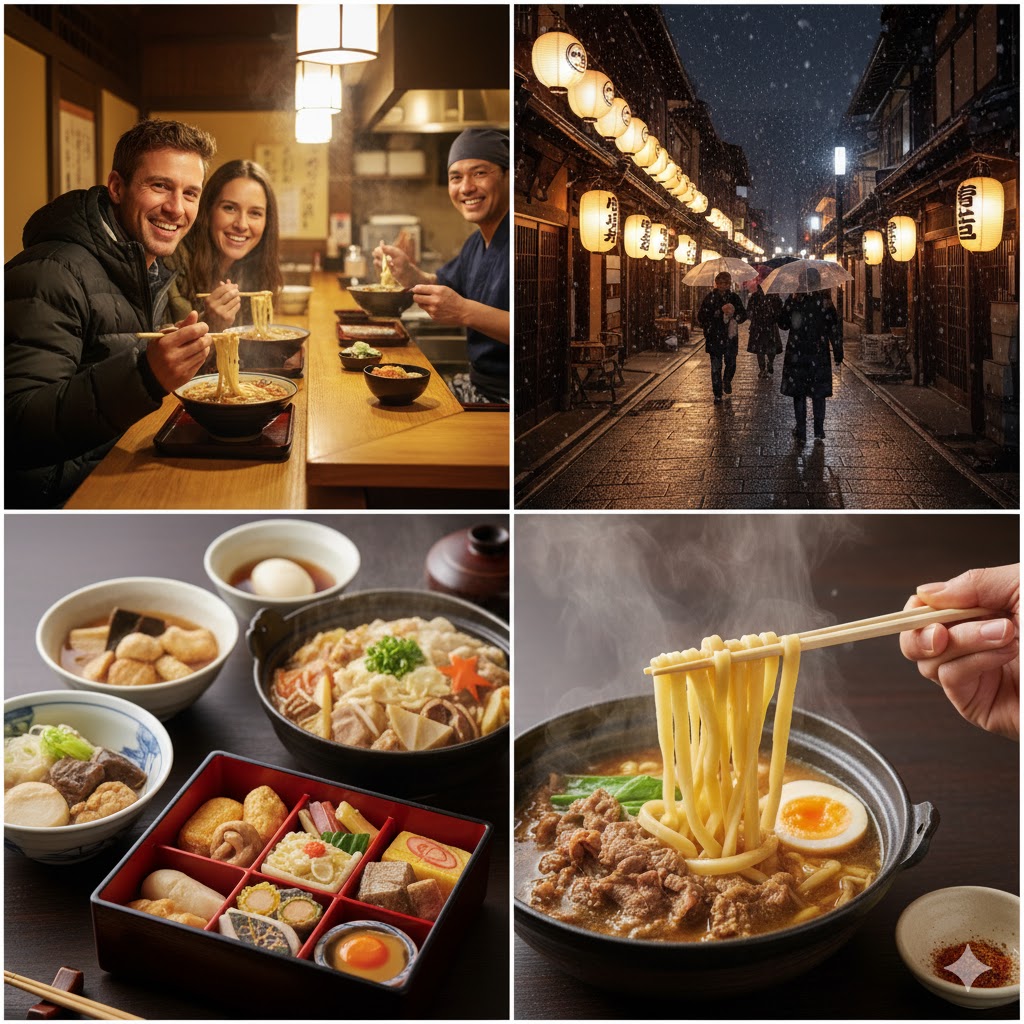
1. Introduction
Look, I’m gonna be real with you: January is probably the best-kept secret for food lovers visiting Kyoto. Seriously. While everyone else flocks here for cherry blossoms in spring and autumn colors in fall, winter? It’s when Kyoto’s food culture absolutely shines.
January means cold temperatures, yes. But it also means winter ingredients at their absolute peak—the kind of seasonal abundance that makes Japanese chefs genuinely excited. These are the dishes locals actually eat when tourists aren’t around. These are the flavors that define Kyoto’s culinary identity when you strip away the Instagram-friendly presentation.
Here’s the thing: January food in Kyoto isn’t just about warming up. It’s about experiencing cuisine so seasonal, so tied to this specific time and place, that you literally can’t get the same quality anywhere else any other time. That’s actually the whole philosophy behind traditional Kyoto cooking.
Whether you’re a hardcore food traveler who’s planned this specifically for January’s cuisine, or someone who ended up visiting during winter and wants to eat beyond generic tourist spots, this guide is for you. We’re diving deep into what actually tastes good in Kyoto right now, where to find it, and why each dish matters.
2. Why January Is Peak Eating Season in Kyoto
2-1. The Science Behind Winter Flavors
Cold weather fundamentally changes how ingredients taste and how chefs prepare food. Winter vegetables develop higher sugar content as they protect themselves from freezing—it’s actual botany, not just poetic food writing. Root vegetables get sweeter. Bitter greens become more refined. Fish develop fat layers that make them richer and more delicious.
January specifically? It’s winter at its peak. We’re talking about ingredients that have been growing in cold soil for months, developing complex flavors impossible to achieve in warmer seasons. Japanese culinary tradition recognizes this. Traditional Kyoto cuisine doesn’t treat January as “just winter”—it treats January as its own distinct season with specific ingredients and specific preparation methods.
Traditional Buddhist temple cuisine (shojin ryori) practically transforms in January. Chefs who’ve been adapting seasonal vegetables all year suddenly have access to ingredients that just make sense together. Root vegetables, preserved items, specific mushrooms, citrus fruits—January’s combination of available ingredients creates cooking possibilities that other seasons literally don’t have.
2-2. Tourist Advantages (Seriously, There Are Real Ones)
January is genuinely quieter than other seasons. This means restaurants aren’t completely packed with tourist groups. You can actually sit, linger, and experience food rather than rushing through meals. Smaller restaurants that don’t rely on constant tourist traffic actually function better in January—they’re cooking for their actual clientele, not optimizing for speed.
Prices don’t spike in January like they do during peak seasons. Restaurant pricing is more honest. Hotels are cheaper. This means your food budget actually goes further, letting you eat at better-quality establishments for less money.
Temperature-wise, it’s cold enough that warm, hearty meals are genuinely pleasurable. There’s something honestly perfect about eating hot ramen or warming soup when it’s cold outside. You’re not trying to find light meals that won’t leave you overheated. You’re eating what your body actually wants.
2-3. What Makes January’s Produce Unique
Root Vegetables at Peak: Daikon, carrots, burdock root, and potato varieties reach their sweetest point in January. These aren’t flashy vegetables. They’re humble, traditional, and absolutely delicious when properly prepared. Kyoto’s famous daikon (sakuradaikon) specifically becomes available in limited quantities during January.
Winter Citrus: Yuzu and other winter citrus varieties reach peak ripeness in January. These provide brightness and acidity to winter cooking that balances heavy preparations. Yuzu is used in everything from broths to desserts to cocktails.
Preserved and Umami Ingredients: While fresh items get attention, January is when preserved ingredients actually shine. Dried mushrooms, aged miso, fermented items—these ingredients anchor January cooking. They’re not seasonal in the traditional sense, but they’re what defines the flavor profile of winter dishes.
Mountain Vegetables: Stored fresh mountain vegetables and items that preserve well through winter create specific dishes. Some ingredients are actually stored specifically for January preparation.
3. The Essential January Dishes: What You Actually Need to Eat
3-1. Yosenabe: The Perfect Winter Gathering Dish
Yosenabe is basically a Japanese hot pot, but January’s version is specifically designed for winter. Unlike lighter summer hot pots, January yosenabe features denser broths, richer ingredients, and longer cooking times. The broth—usually built from kombu seaweed, bonito flakes, and specifically winter chicken or fish stock—is genuinely comfort food at its finest.
What makes yosenabe actually January-specific? The ingredients. You’re looking at winter vegetables, specifically chosen mushrooms that are in season (shiitake, oyster mushrooms in their winter prime), fish that’s at peak fat content, and chicken that’s more flavorful in colder seasons. Everything is working together to create something that tastes exactly right for this specific time.
Where to experience it authentically: Seek out casual yosenabe restaurants (yosenabe-ya) rather than fancy establishments. These places cook legitimately good yosenabe for locals. Prices are reasonable—typically ¥2,500-4,000 ($17-27 USD) per person.
Pro tip: Ask restaurants about their specific ingredients. Good yosenabe places are genuinely excited to explain where their produce comes from, why they’re using specific fish this month, and how their broth is prepared. This is the stuff they actually care about.
3-2. Osuimono: The Art of Clear Broth
Osuimono is literally just clear broth with seasonal ingredients, but January’s version is something special. The broth clarity matters—it’s a sign of careful preparation, precise seasoning, and respect for ingredients. January’s osuimono features beautiful vegetables, specific fish or seafood at its seasonal peak, and broths that taste like concentrated essence of winter.
This dish doesn’t sound exciting, but it’s absolutely fundamental to understanding Kyoto’s food philosophy. It represents restraint, minimalism, and using seasons properly. The clarity of the broth becomes almost beautiful. Ingredients are positioned carefully—this is art presented on a plate.
Why it matters: Osuimono teaches you how to actually taste what you’re eating. Without complicated sauces or heavy preparations, you’re tasting pure ingredient quality and technique. If a restaurant makes good osuimono, they understand food fundamentally.
Best experienced at: High-quality sushi restaurants (which often serve osuimono as courses), kaiseki restaurants, or restaurant sets featuring traditional Kyoto cuisine.
3-3. Yoton (Wild Boar): The January Protein You Didn’t Know You Needed
January is hunting season for wild game in Japan. Yoton (wild boar) is the primary game meat used in Kyoto cuisine during this season. It’s richer, more flavorful, and more interesting than pork, with a slight gaminess that actually complements winter preparations.
Traditional preparations feature yoton in hot pots (botan nabe), slow-cooked stews, and sometimes grilled preparations. The meat is lean but flavorful, and January’s cold temperatures make slow-cooked game meat genuinely appealing. The flavor is distinctive—you know immediately you’re eating something specific and seasonal.
Where to find it: Specialized game meat restaurants (gibier restaurants exist in Kyoto). Prices are higher than regular meat (typically ¥4,000-7,000 per person/$27-47 USD), but it’s worth experiencing.
Important note: Wild game carries risk of certain parasites if undercooked. Legitimate restaurants serving yoton know this and cook it properly. Don’t attempt undercooked preparations—properly cooked yoton is richer and more delicious anyway.
3-4. Karaage: The Comfort Food That’s Better Than You Think
Karaage (Japanese fried chicken) sounds casual and touristy, but January karaage is genuinely different. Winter chicken has more flavor. Cold weather makes fried food hit different—it’s warmer and more comforting than summer frying.
Good karaage comes from fresh chicken marinated in soy, ginger, garlic, and sake, then flash-fried so it’s crispy outside and juicy inside. It’s not heavy or greasy if properly executed. January’s version features chicken at its peak flavor, seasoning that’s carefully balanced, and technique that matters more than ingredients.
Where to eat it: Izakayas (casual drinking establishments) serve excellent karaage. These are places where locals actually eat—not tourist attractions. Prices are very reasonable (¥600-1,200 per order/$4-8 USD).
Pro tip: Visit during off-peak hours (3:00-5:00 PM) for the most relaxed atmosphere and potentially fresher items. Many izakayas prep karaage fresh throughout the evening, but early evening usually features the freshest batches.
4. Traditional Kyoto Cuisine Elevated: January Kaiseki and Shojin Ryori
4-1. Understanding Kaiseki Through January Eyes
Kaiseki (traditional multi-course haute cuisine) isn’t specifically a January thing, but January kaiseki is genuinely different. Every course reflects January’s specific ingredients and preparation philosophy. You’re eating through an entire season in one meal.
A traditional January kaiseki might feature: clear broth with January-specific fish, fresh daikon preparations, grilled yoton, simmered root vegetables, rice with winter vegetable accompaniments, and specific desserts featuring yuzu or other winter citrus. Each course tells a story about what’s actually available and delicious right now.
Price range: ¥8,000-15,000+ per person ($54-100+ USD) for legitimate kaiseki
Where to experience it: High-end restaurants in Higashiyama District, near major temples, or in neighborhoods known for refined cuisine (like Pontocho geisha district).
Honest assessment: Kaiseki can feel overwhelming as a foreign traveler. It’s formal, it involves multiple courses, and you might not understand every element. But January kaiseki specifically teaches you how Japanese cuisine thinks about seasons. It’s worth experiencing at least once.
4-2. Shojin Ryori: Temple Vegetarian Cuisine
Shojin ryori (Buddhist temple vegetarian cuisine) reaches its creative peak in January. Chefs work within strict vegetarian constraints, meaning they absolutely maximize what’s available seasonally. January’s abundant root vegetables, preserved items, winter mushrooms, and clever techniques create dishes that are genuinely sophisticated.
The philosophy is that restraint breeds creativity. Without meat, fish, or strong aromatics, each element matters more. Texture, temperature, flavor balance, and presentation become paramount. January’s shojin ryori demonstrates this philosophy at its highest level.
What makes January shojin ryori special? Winter vegetables that are relatively rare in other seasons take center stage. Dishes featuring slow-cooked daikon, prepared mountain vegetables, mushroom preparations that showcase umami development—these are things shojin ryori chefs actually get excited about.
Where to eat it: Temple restaurants (most major temples have associated restaurants). Prices vary—casual temple cafeterias might be ¥1,500-2,500 ($10-17 USD), while more formal temple restaurants charge ¥5,000-8,000+ ($34-54+ USD).
Best temples for shojin ryori: Nanzenji Temple, Kinkakuji Temple (though Kinkakuji’s restaurant is quite touristy), Chion-in Temple, and various smaller temples throughout the city.
Honest note: Some temple restaurants are legitimately tourist traps with mediocre food at inflated prices. Ask locals (hotel staff, tour guides) which temples actually have good restaurants. The difference is dramatic.
5. Where to Actually Eat: Breaking the Tourist Restaurant Cycle
5-1. Izakayas: Your Secret Weapon for Good Food
Izakayas are casual drinking establishments where locals actually eat. They serve alcohol, appetizers, small plates, and comfort food. They’re not fancy. They’re unpretentious. They’re where Kyoto residents actually eat on regular evenings.
Why January is perfect for izakaya eating? Cold weather means warm food is genuinely appreciated. Small plates paired with hot sake or beer create perfect January evenings. The atmosphere is warm and inclusive, whether you’re solo or in a group.
What to order:
- Karaage: Fresh fried chicken (usually excellent quality)
- Edamame: Steamed soybeans with salt (simple but good)
- Nikumushi: Meat steamed in foil with vegetables (warming and delicious)
- Gyoza: Pan-fried dumplings (universally good)
- Yakitori: Grilled chicken skewers (January versions particularly flavorful)
- Seasonal specials: Ask what’s specifically featured this month
Price: Typically ¥3,000-5,000 ($20-34 USD) per person including drinks
How to find good ones: Walk through neighborhoods (particularly around Gion, Pontocho, or university areas) and look for places filled with local-looking people. If elderly people, students, and office workers are eating there, it’s probably good. If it’s mostly tourist groups, skip it.
Pro tip: Many izakayas are small and get crowded during prime evening hours (7:00-9:00 PM). Arriving at 5:00-6:00 PM means better seating, faster service, and usually fresher food.
5-2. Ramen Restaurants: January’s Most Underrated Dining Experience
Ramen is absolutely worth taking seriously in January. Winter is literally the best season for ramen—the hot broth, warming noodles, and seasonal ingredients create something that’s both delicious and exactly right for the weather.
Kyoto ramen has specific characteristics: lighter broths than other regions (often featuring soy and chicken stock rather than pork-bone intensity), seasonal vegetables, and specific preparation methods. January ramen features winter broths that have been simmered for hours, building complex flavors.
What makes January ramen special:
- Broths that are specifically developed for winter eating (lighter, more balanced)
- Seasonal vegetables that complement winter broths
- Proteins that are at peak flavor in cold season
- Atmosphere that’s genuinely warm and welcoming to solo diners
Famous Kyoto ramen styles:
- Shoyu ramen: Soy-based broths (most common in Kyoto)
- Tonkotsu ramen: Pork-bone broths (richer, more intense)
- Shio ramen: Salt-based broths (lighter, more delicate)
Price: Typically ¥900-1,500 per bowl ($6-10 USD)
Pro tip: Eat ramen for lunch rather than dinner. Ramen restaurants are often most authentic during lunch when they’re packed with office workers. The energy is better, the food is fresher, and you get genuine local atmosphere.
5-3. Kyoto Udon Ishin: Your January Lunch Strategy
Kyoto Udon Ishin, located in Higashiyama District on Masuyacho, deserves specific mention for January visiting. Udon’s appeal in January is undeniable—hot noodles in warming broth, perfect for winter exploration.
January at Kyoto Udon Ishin means the restaurant leans into winter preparations. The broths become richer and more complex. Winter vegetables appear in creative combinations. The restaurant’s philosophy of respecting seasonal ingredients aligns perfectly with January’s culinary focus.
Why it’s perfect for January:
- Located centrally in Higashiyama (perfect for morning temple visits)
- Serves substantial, warming meals appropriate for January weather
- Seasonal menu items specifically developed for January
- Prices are reasonable (¥1,200-2,000/$8-13 USD)
- Offers genuine local experience without tourist-focused presentation
Best time to visit: Lunch hours (11:30 AM-1:30 PM). The restaurant fills with office workers and locals during lunch, creating authentic atmosphere.
6. Seasonal Ingredients: Understanding What’s Actually in Front of You
6-1. Winter Daikon and Root Vegetables
Daikon (giant Japanese radish) reaches absolute perfection in January. It’s sweeter, more tender, and more refined than any other time. Traditional preparations include simmered daikon (daikon nimono), which is simultaneously simple and sophisticated.
Daikon isn’t just a side vegetable—it’s a featured ingredient in winter preparations. It appears in clear broths, as side dishes, in hot pots, and in various other preparations. When you eat daikon in January, you’re tasting a vegetable at its actual peak.
Other root vegetables shine similarly—burdock root (gobo), carrots, and potato varieties become centerpieces rather than supporting players.
6-2. Citrus: Yuzu and Winter Citrus
Yuzu (a fragrant citrus fruit) reaches peak availability in January. Its distinctive aroma and bright acidity balance heavy winter preparations. You’ll find yuzu in broths, as finishing garnishes, in sauces, and in desserts.
The flavor is distinctive—not quite lemon, not quite grapefruit, but with its own complexity. Yuzu represents winter brightness, providing contrast to the season’s heavier ingredients.
6-3. Game and Peak-Season Fish
Wild boar (yoton), duck, and other game reach their peak in January. Fish species available in January are specifically those that are flavorful in cold water—rich, fatty fish that develop specific textures in winter.
Seasonal fish changes monthly in Japan. January’s available fish are chosen specifically for January cooking requirements.
6-4. Mushroom Varieties
While mushrooms exist year-round, winter mushroom varieties are different. Oyster mushrooms are at their best in January. Shiitake mushrooms (which can be dried or fresh) are perfect for winter broths. Specific preserved mushroom preparations become relevant in January cooking.
7. Navigating the Menu: How to Actually Order and What to Look For
7-1. Reading Japanese Menus (Or Working Around It)
Most tourist-focused restaurants have English menus. Many authentic local places don’t. Google Translate with photo mode actually works surprisingly well, though context sometimes gets lost.
Pro strategy: Point at what looks good at other tables. Locals are eating real food—if it looks delicious, ordering the same thing is basically never wrong.
Ask questions: Simple questions in English often get responses from restaurant staff. “What’s good today?” or “What’s seasonal?” actually get genuine answers. Many chefs are genuinely happy to explain what they’re cooking.
7-2. Price Navigation
Kyoto’s food costs range dramatically:
- Budget: ¥800-1,500 ($5-10 USD) at casual ramen, izakaya small plates
- Mid-range: ¥2,500-5,000 ($17-34 USD) at casual sit-down restaurants
- Upscale: ¥5,000-10,000 ($34-67 USD) at better restaurants
- Fine dining: ¥10,000+ ($67+ USD) at kaiseki or Michelin-level establishments
January being off-peak season means prices don’t spike. Mid-range restaurants offer genuinely good quality for reasonable costs.
7-3. Reading Price Signals
If a restaurant’s prices seem extremely low compared to surroundings, it’s either legitimately good value or quality is compromised. If prices are dramatically higher than surrounding establishments but the restaurant isn’t explicitly upscale, be cautious.
Legitimate January restaurants with seasonal focus typically have moderate pricing—expensive enough to source good ingredients, not so expensive that they’re targeting tourist money.
7-4. Beyond the Famous Neighborhoods: Where Actual Locals Eat
University Neighborhoods
Kyoto has major universities, and their neighborhoods offer excellent authentic food. Student areas feature cheap, authentic ramen shops, casual cafes, and real restaurants. You’ll eat alongside students for very reasonable prices.
Best university areas: Near Kyoto University (Yoshida area), Doshisha University (Imadegawa), Ritsumeikan University.
Residential Neighborhoods
Neighborhoods away from temple tourism (like Shimogyo Ward, Nakagyo Ward residential areas) have real restaurants serving actual communities. These places feature seasonal focus without tourist-specific adaptations.
Walking residential neighborhoods and finding restaurants with local crowds is how you eat genuinely well.
Market Areas
Nishiki Market (tourist-focused but still has some good spots) and local neighborhood markets often have food stalls, vendors, and casual restaurants. Market eating is genuinely good—fresh ingredients, seasonal focus, casual prices.
8. What NOT to Order (Or Be Careful About)
8-1. Tourist Trap Indicators
Red flags:
- Menu with excessive English/pictures/unnecessary cuteness
- Located directly on famous tourist paths
- Staff aggressively recruiting people from the street
- Prices significantly higher than surrounding restaurants
These places aren’t necessarily bad, but they’re typically adapted for tourist expectations rather than serving actual good food.
8-2. Seasonal Caution
Some items are best avoided in January even though available:
- Fresh sashimi in extremely cheap places: Cold-water fish is wonderful, but sourcing matters. Cheap places might be using substandard product.
- Light summery cuisine at winter restaurants: If a restaurant is specifically designed for summer eating (like light cold dishes), winter versions are often less impressive.
8-3. Food Safety Notes
Kyoto’s food safety standards are generally excellent. Legitimate concerns:
- Wild game undercooked: This is real. Yoton and other game should be properly cooked. Legitimate restaurants know this.
- Sushi at casual places: January cold means sushi is fine, but casual places might not have the fish sourcing that higher-end sushi restaurants do.
9. Drinks Pairing: What to Actually Drink with January Food
9-1. Sake Winter Considerations
January is excellent sake season—cold sake is actually less common than warm sake in winter. Most January restaurants serve sake warm (atsukan), which pairs beautifully with heavy winter dishes.
Quality sake varies dramatically by price. Reasonable sake (¥500-1,000 per serving/$3-7 USD) from good restaurants is genuinely nice. Extremely cheap sake can taste harsh.
9-2. Plum Wine and Other Winter Drinks
Umeshu (plum wine) is traditional in winter and pairs specifically with warming meals. It’s sweet but sophisticated, and genuinely appropriate for winter.
9-3. Non-Alcoholic Options
Yuzu tea (yuzu hot tea with honey) is perfect January drink. Warm sake alternatives include specific teas and occasionally hot water for specific broths.
Ginger drinks are common in winter—ginger’s warming properties make sense with January cuisine.
10. January Food Experiences Beyond Individual Meals
10-1. Cooking Classes Featuring January Ingredients
Several organizations offer cooking classes specifically featuring January ingredients. These range from casual (learning to make specific dishes) to involved (full-day cooking experiences). January is actually a good time because cooler temperatures make cooking less uncomfortable.
Typical cost: ¥5,000-10,000 ($34-67 USD)
10-2. Market Visits and Ingredient Exploration
Morning market visits (particularly smaller local markets rather than Nishiki) let you see what’s actually in season. Talking to vendors about ingredients, asking what’s specifically good in January, creates food understanding that restaurant eating alone doesn’t provide.
10-3. Temple Food Experiences
Beyond eating at temple restaurants, some temples offer meal preparation workshops or specific culinary experiences. These connect you to the philosophy behind temple cuisine in January specifically.
11. Final Thoughts: January Kyoto Food Philosophy
January food in Kyoto represents something specific: restraint, respect for seasons, and understanding that when you cook with what’s actually available rather than what you want available, something genuinely special happens.
You’re not coming to Kyoto in January for the Instagram-friendly food photos. You’re coming for depth, seasonality, and actual flavor. That’s the entire point. The restaurants that serve January food are cooking with respect for ingredients, seasons, and tradition.
Approach January food in Kyoto not as consuming experiences, but as learning opportunities. Every dish teaches you something about how Kyoto thinks about cooking. Every season-specific ingredient explains why Kyoto’s culinary tradition developed the way it did.
That’s genuinely what makes January food in Kyoto worth eating.
12. Quick Reference: January Kyoto Food Essentials
- Must-Eat Dishes: Yosenabe, osuimono, yoton, shojin ryori, seasonal ramen
- Best Eating Spots: Local izakayas, university neighborhood restaurants, specialized restaurants (yosenabe-ya, game meat specialists), temple restaurants
- Key Ingredient to Understand: Daikon and winter root vegetables
- Best Times to Eat: Lunch for ramen and casual spots, early evening for izakayas (5:00-6:00 PM)
- Budget: ¥2,500-5,000 daily ($17-34 USD) for good eating at authentic places
- Pro Tips: Visit off-peak hours, eat where locals eat, ask questions about seasonal specials, embrace warm comfort food
- Signature Experience: Yosenabe at a local restaurant with warm sake on a cold January evening
Your January Kyoto food adventure is waiting. Eat well.
13. Deep Dive: Understanding Kyoto’s Seasonal Food Philosophy
13-1. The Concept of “Shun” (旬): Eating at Peak Season
The Japanese concept of “shun” (seasonal peak) is fundamental to understanding why January food in Kyoto is so special. Shun doesn’t just mean “available”—it means at absolute peak flavor, texture, and nutritional value. Every ingredient has a shun period when it’s genuinely optimal.
Kyoto’s traditional cuisine is built entirely around shun. Chefs don’t force ingredients out of season. They wait for ingredients to reach shun, then celebrate them. This means January ingredients available right now are specifically ones at their absolute best.
Understanding shun changes how you approach eating in Kyoto. You’re not trying ingredients from a universal menu that doesn’t change seasonally. You’re eating specifically what’s at its peak this exact month.
Root vegetables in January have been developing flavor in cold soil for months. Their sugar content is higher than any other season. Their texture is simultaneously tender and structured. This is their shun. This is when they’re genuinely optimal.
Winter fish that have been swimming in cold water have developed fat layers and complex proteins. January is specifically when certain fish reach shun. The flavor difference between January fish and summer fish is genuinely dramatic.
13-2. The Buddhist Influence on January Cooking
Buddhist temple cuisine (shojin ryori) profoundly influences how Kyoto approaches all seasonal cooking. The philosophy of working with what’s available rather than forcing specific ingredients creates cuisine that celebrates seasons inherently.
January’s shojin ryori specifically demonstrates this philosophy. Vegetarian limitations combined with January’s specific ingredients create dishes that couldn’t exist in other seasons. These are dishes that literally emerge from understanding what’s available and building brilliant cuisine around constraints.
This philosophy extends beyond purely vegetarian cuisine. Even non-temple restaurants approach cooking with similar thinking—respecting ingredients, respecting seasons, creating food based on what’s optimal rather than what’s trendy.
When you eat January food in Kyoto, you’re eating within this thousands-of-years-old philosophy. Whether you realize it or not, you’re connecting to culinary traditions that have shaped how chefs think about food.
14. Specific January Dishes Deep Dive: The Details That Matter
14-1. Yosenabe: More Than Just Hot Pot
Yosenabe is technically just “ingredients cooked together in broth,” but January’s version carries specific significance. The gathering nature (yose means “gather”) connects to how communities actually eat during winter—gathering warmth, sharing food, creating connection.
January’s yosenabe specifically features broths that have been prepared to warm the body and soul. The broth-to-ingredient ratio matters. The temperature matters. The sequence of adding ingredients matters.
Quality yosenabe restaurants maintain broths that are updated but never completely changed. These are legacy broths—continuously refined and improved over years or decades. Eating yosenabe at such a restaurant means you’re literally tasting accumulation of cooking knowledge.
The vegetables in January yosenabe are specifically chosen for texture, flavor contribution, and how they interact with the broth. Daikon provides subtle sweetness and texture. Mushrooms add umami depth. Leafy greens provide textural contrast. Everything is considered.
Pro tip: In legitimate yosenabe restaurants, ask about the broth. Questions like “How long is your broth prepared?” or “What ingredients anchor your broth?” get genuine responses. Chefs are proud of their broths.
14-2. Osuimono: Clear Broth as Art Form
Osuimono looks deceptively simple, but clarity of the broth is actually incredibly difficult to achieve. Creating broth that’s genuinely clear while still having developed flavor requires specific technique and genuine skill.
January’s osuimono is particularly refined because winter ingredients are suited to lighter broths. The clarity of winter osuimono showcases the broth itself—nothing else to hide behind. If the broth isn’t genuinely good, osuimono reveals it immediately.
The positioning of ingredients in osuimono matters more than preparation complexity. Three ingredients might be arranged to show technique, aesthetic sense, and understanding of flavors. This is minimalist art applied to food.
Eating osuimono teaches you how Kyoto thinks about food. You learn restraint. You learn that less can genuinely be more. You understand why preserving ingredient purity matters.
When served: Osuimono typically appears as a course in multi-course meals (kaiseki or set menus) or at quality sushi/Japanese restaurants. It’s usually not a standalone menu item but appears in seasonal sets.
14-3. Preparation Methods: Why Technique Actually Matters
Nimono (simmered): January vegetables are simmered in specific broths for specific times. This isn’t random cooking—it’s precise technique. Daikon nimono requires exact timing to achieve perfect texture where it’s simultaneously tender and structured.
Nikumi/Steaming: Ingredients steamed in foil (nikumi) is specifically January technique. The steaming method concentrates flavors while maintaining ingredient integrity. Meat steamed with winter vegetables creates flavor interactions impossible through other preparation methods.
Yakimono/Grilling: Even in winter, grilling is used for specific ingredients. Game meats specifically benefit from grilling—the char adds flavor layers that other preparations don’t develop.
Agemono/Frying: Karaage in winter is excellent precisely because cold weather makes fried food feel nourishing rather than heavy. The technique remains simple—marinate, dredge, fry—but context changes how it’s perceived and how it tastes.
15. Navigating Restaurants: Specific Strategies for January Eating
15-1. How to Actually Find Good Places
Strategy 1: Ask locals: Hotel staff, neighborhood shopkeepers, other travelers—ask what they actually eat locally. People generally give genuine recommendations when asked directly.
Strategy 2: Walk neighborhoods: Residential neighborhoods away from tourist paths have real restaurants. Look for signs with Japanese characters (not English), places with local customers, establishments that look lived-in rather than polished for tourists.
Strategy 3: Lunch rush observation: Peak lunch hours (12:00-1:00 PM) show authentic restaurant quality. If it’s packed with office workers, students, and locals, it’s probably genuinely good.
Strategy 4: Market exploration: Market areas have food stalls and vendor recommendations. Asking vendors where they eat reveals local knowledge.
Strategy 5: Use technology carefully: Google Maps reviews filtered for Japanese reviewers reveal local perspective. Asking locals in discussion forums (like Reddit’s r/Kyoto) gets genuine community knowledge.
15-2. Restaurant Timing Strategies
Breakfast (7:00-9:00 AM): Ramen and udon shops open early. Morning eating means different clientele—regular customers, construction workers, locals starting their day. Food is fresher; atmosphere is authentic.
Mid-morning (9:30-11:00 AM): Tourist restaurants start getting busy. Local restaurants might be quieter. This is ideal timing for casual sit-down places.
Lunch (11:30 AM-1:30 PM): Peak hours. Everything is busy, but this is when quality restaurants are operating at their best. Food is fresh; energy is high.
Afternoon (2:00-4:00 PM): Most restaurants close between lunch and dinner (2:00-5:00 PM). Good for exploring neighborhoods or resting before dinner.
Early evening (5:00-6:00 PM): Izakayas open, tourist restaurants still filling. Arriving early means better seating and fresher food.
Late dinner (8:00-9:00 PM): Some restaurants shift to later clientele. Good for less crowded experiences, though food might be less fresh.
16. Seasonal Food Cost Navigation: Budgeting Realistically
16-1. January Pricing Reality
January isn’t peak season pricing like spring and autumn. This means better value genuinely exists. You can eat well without spending excessively.
Budget breakdown for different eating approaches:
- Ultra-budget (¥1,500-2,500/$10-17 daily):
Breakfast: Ramen or udon (¥900)
Lunch: Casual restaurant or market food (¥800-1,200)
Dinner: Convenience store or casual izakaya small plates
This is genuinely doable but limits variety - Normal budget (¥3,000-5,000/$20-34 daily):
Breakfast: Ramen or casual spot (¥900-1,500)
Lunch: Mid-range restaurant or Kyoto Udon Ishin (¥1,500-2,500)
Dinner: Izakaya or casual restaurant (¥2,000-4,000)
This allows good eating at authentic places - Generous budget (¥6,000-10,000/$40-67 daily):
Breakfast: Casual spot (¥1,000-1,500)
Lunch: Mid-range or specialized restaurant (¥2,500-4,000)
Dinner: Better restaurant or kaiseiki experience (¥3,000-6,000)
This enables trying premium experiences - Luxury budget (¥10,000+/$67+ daily):
Any restaurant, multiple courses, premium experiences
Can experience genuinely high-end cuisine
16-2. Where to Save Without Losing Quality
Market vs. restaurant: Market food often equals restaurant quality at half price. Nishiki Market, local markets, and food stalls serve genuinely good food for less money than sit-down restaurants.
Lunch vs. dinner: Many restaurants offer lunch sets (teishoku) that feature similar quality to dinner menus at significantly lower cost. If a dinner set costs ¥4,000, lunch might cost ¥1,500.
Group vs. solo: Certain dishes (particularly hot pots and shared-style meals) become cheaper per person when shared with others.
Timing: Early dinner specials (5:00-6:00 PM) before prime evening hours sometimes offer better pricing than peak dinner.
17. What January Kyoto Food Actually Teaches You
17-1. Food as Reflection of Place and Season
Eating in Kyoto during January teaches you that food isn’t independent from place. January in Kyoto creates specific foods that literally emerge from this exact combination of season, place, available ingredients, and culinary tradition.
You can’t eat authentic January Kyoto food anywhere else because the ingredients don’t exist elsewhere at the same peak season. You can’t eat it in any other month because the seasonal ingredients are different.
This teaches you profoundly that food is contextual. Understanding this changes how you think about cuisine generally. Food isn’t universal—it’s deeply specific to when and where it exists.
17-2. Understanding Tradition Through Food
Kyoto’s food traditions aren’t historical artifacts—they’re living practices actively used because they work. Understanding why certain dishes exist in January, how they’re prepared, what ingredients matter—this teaches you actual history through current practice.
Traditional techniques persist in Kyoto not because they’re quaint. They persist because they produce genuinely better results than modern shortcuts. Understanding this teaches you respect for accumulated knowledge.
17-3. Connection to Seasons and Cycles
Modern life lets us ignore seasons. We eat strawberries in December, enjoy ice cream in January, pretend seasons don’t exist. Eating January food in Kyoto reintroduces you to seasons as actual meaningful cycles.
Your body responds differently to warm yosenabe in January than it would to cold ramen in July. Understanding this reestablishes connection to natural cycles.
This isn’t romantic nostalgia—this is practical understanding that we’re part of seasonal systems, not separate from them.
18. Final Encouragement: Approaching January Kyoto Eating
January food in Kyoto isn’t about consuming experiences. It’s about genuine engagement with food, place, and time. It’s about understanding that what’s available now, prepared well by people who understand it, creates something genuinely worthwhile.
Come to January Kyoto without expectations about what food “should” be. Come open to experiencing what’s actually here, what’s genuinely seasonal, what represents how this place eats when nobody’s watching.
The food will teach you things about cooking, about seasons, about place, about respecting tradition. That’s worth showing up for.
Eat well in January Kyoto.
19. Complete January Kyoto Food Checklist
- Must-Experience Dishes: Yosenabe, osuimono, yoton, shojin ryori, ramen, karaage
- Restaurant Types to Visit: Local izakaya, ramen shop, family restaurant, temple restaurant, market stall, yosenabe specialist
- Key Ingredient to Understand: Daikon in all its forms
- Best Times: Lunch for authenticity, early evening for value
- Budget Strategy: ¥2,500-5,000 daily for good eating
- Pro Moves: Ask about seasonal specials, eat where locals eat, try off-peak hours, visit markets
- Kyoto Udon Ishin Strategy: Lunch visit during mid-morning hours, order seasonal January specials
- January Eating Success Formula: Respect seasons + embrace warmth + eat locally + ask questions = genuine food experience
Your January Kyoto food experience awaits. Make it count.