
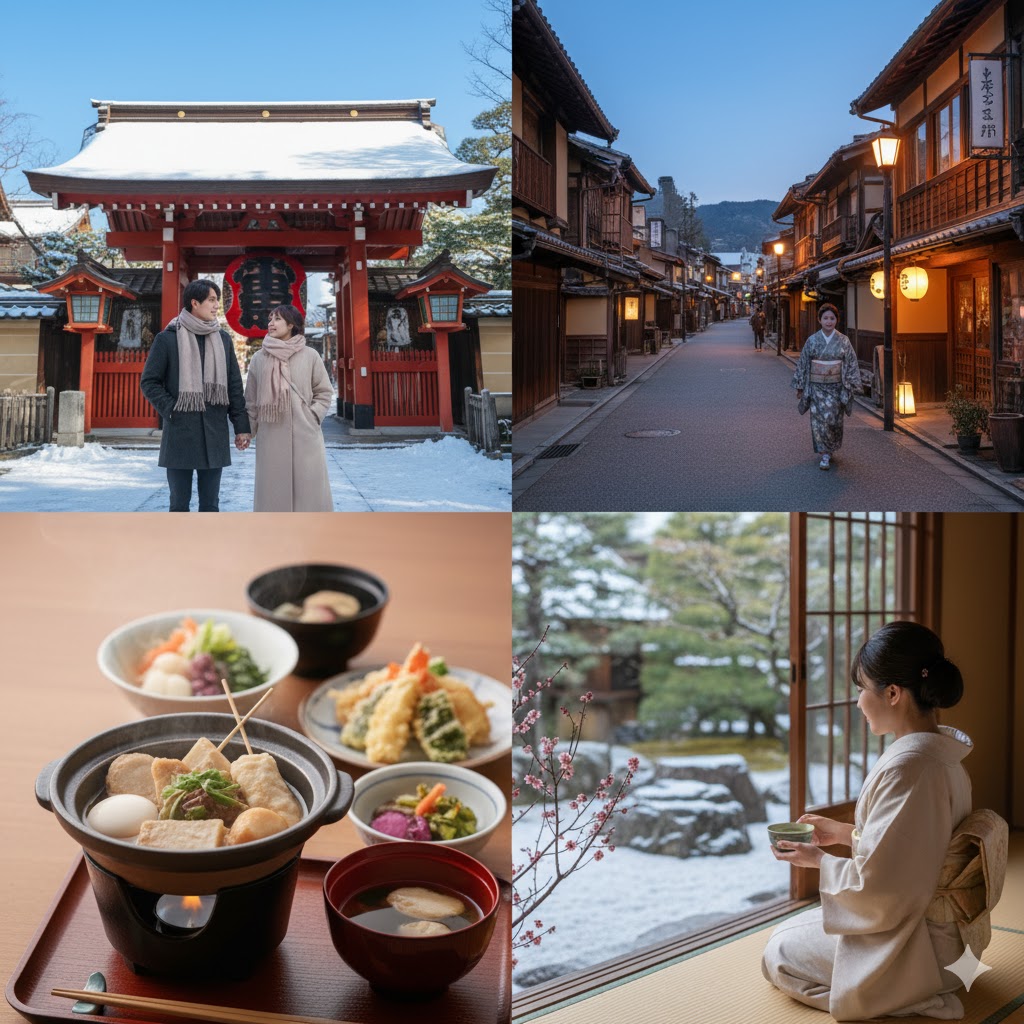
1. Introduction: Why February is the Perfect Time to Visit Kyoto
February in Kyoto is a hidden gem that many travelers overlook. While spring attracts massive crowds and summer brings sweltering heat, February offers something truly special—a crisp, clear air that makes exploring the city’s ancient temples and heritage streets an absolute pleasure. The winter months have thinned the tourist crowds, allowing you to experience Kyoto’s authentic charm without the chaos of peak season.
During February, Kyoto’s temperatures typically hover between 2°C and 10°C (35°F to 50°F), making it perfect for walking around outdoor attractions for hours without overheating. The bare branches of the city’s countless trees create stunning silhouettes against clear skies, and when you finally need a break from sightseeing, there’s no better way to warm up than with a steaming bowl of authentic udon noodles.
If you’re planning a February trip to Kyoto, you’re in for a treat. This guide will help you navigate the best attractions in the Higashiyama district, one of Kyoto’s most historically significant areas, and show you exactly where to refuel with some of the best seasonal udon the city has to offer.
2. The Higashiyama District: Your February Gateway to Traditional Kyoto
The Higashiyama district (东山区) is where old-world Kyoto truly comes alive. Located in the eastern part of the city, this neighborhood is home to some of Japan’s most iconic landmarks and is perhaps the best starting point for any February visit to Kyoto. The entire area feels like stepping back in time—narrow wooden machiya houses line the streets, traditional craft shops display their wares, and the air itself seems to carry centuries of history.
2-1. What Makes Higashiyama Special in February
In February, the Higashiyama district takes on a particularly magical quality. The usual summer humidity is completely absent, and the crisp mountain air flowing down from the Eastern Mountains creates ideal conditions for sightseeing. Locals often say that February is when Kyoto “shows its true face”—without the summer haze or spring pollen, the visibility is exceptional, and distant views of surrounding mountains are crystal clear.
The fewer tourists also mean that you can actually experience the district as it was meant to be experienced. You can linger in small shops, chat with shopkeepers about their crafts, and move through historic streets at your own pace without being swept along by massive tour groups.
3. Must-Visit Attractions Near Kyo-Udon Ishin
Located at Masuyacho, Higashiyama Ward, Kyoto City, Kyo-Udon Ishin sits in the heart of the district’s most historic area. Your visit to this neighborhood will be enriched by exploring the remarkable landmarks within walking distance of our restaurant. Here are the attractions you absolutely shouldn’t miss:
3-1. Kiyomizu-dera Temple: Kyoto’s Most Iconic Landmark
Distance from Kyo-Udon Ishin: Approximately 10-15 minute walk
Kiyomizu-dera, officially known as Otowasan Kiyomizu-dera, is one of Kyoto’s most recognizable landmarks and has been designated a UNESCO World Heritage Site. Founded in 778 AD, this temple is famous for its main hall, which stands dramatically on a hillside overlooking Kyoto, seemingly suspended over the valley below with no visible means of support.
The name “Kiyomizu” literally means “pure water,” and the temple’s sacred waterfall is believed to have healing properties. Visitors traditionally drink from one of three streams—each believed to provide different blessings: longevity, success in studies, and good relationships.
In February, visiting Kiyomizu-dera offers a completely different experience than in busier seasons. You can actually walk the wooden platform without being jostled by crowds, and the view of Kyoto spread out below is stunning under clear winter skies. The temple’s pagoda is also beautifully visible from many vantage points, and the winter light creates particularly photogenic shadows and contrasts.
Pro tip: Arrive early in the morning, around 8:30 AM, to see Kiyomizu-dera at its quietest and catch beautiful morning light on the main hall.
3-2. The Goju-no-To Pagoda: A Symbol of Kyoto’s Beauty
Distance from Kyo-Udon Ishin: Approximately 5-8 minute walk
The five-tiered pagoda of Hokanji Temple, commonly known as the Goju-no-To (Five-Story Pagoda), is perhaps Kyoto’s most recognizable structure. Standing 46 meters tall with its distinctive red coloring and traditional architectural style, this pagoda appears in countless photographs and postcards of Kyoto.
What many visitors don’t realize is that the pagoda is best photographed from specific angles, and February’s clear winter air makes these photographs absolutely stunning. The pagoda is particularly magical during the twilight hours when it’s subtly illuminated against the darkening sky.
While the pagoda itself is part of Hokanji Temple, you can view it from various public vantage points around the neighborhood. The best photo opportunity is from the street directly across from it, where you can capture the full height and architectural details with the temple grounds in the background.
3-3. Ninen-zaka and Sannenzaka Streets: Shopping, Crafts, and Local Culture
Distance from Kyo-Udon Ishin: Directly adjacent
If Higashiyama were a heart, Ninen-zaka and Sannenzaka would be its main arteries. These two charming pedestrian streets branch off from Kiyomizu-dera and are lined with traditional shops, restaurants, and cafes. The streets themselves are lined with Japanese lattice-work buildings that house everything from souvenir shops to high-end craft galleries.
February is an ideal time to explore these streets at a leisurely pace. You can browse local crafts including pottery, textiles, sweets, and traditional souvenirs without feeling rushed. Many shops offer items specific to the season, including February’s Plum Festival-themed goods.
What many travelers don’t realize is that these streets connect directly to other important areas—if you continue down Ninen-zaka and Sannenzaka, you’ll discover even more historic sites, quieter temples, and local favorite restaurants.
What to look for: Local sake breweries, traditional sweet shops (wagashi), handmade pottery, and vintage kimono boutiques.
3-4. Ichinen-zaka: The Heritage Street Less Traveled
Distance from Kyo-Udon Ishin: Approximately 2-3 minute walk
Running parallel to but separate from the main tourist routes, Ichinen-zaka (一念坂) is one of Kyoto’s most atmospheric streets. The name, which means “slope of one-sided devotion,” refers to a local legend about maintaining focused intention while climbing the slope.
This narrow street is lined with traditional wooden machiya houses and is considerably less crowded than Ninen-zaka and Sannenzaka, making it perfect for February exploration. The slope itself is steep but manageable, and the views from the top are spectacular.
What makes Ichinen-zaka special is its authenticity. Rather than packed with tourist shops, it features a mix of genuine local businesses—traditional restaurants, a few select craft shops, and the homes and studios of artisans. In February, with snow occasionally dusting the roofs of the wooden buildings, this street transforms into something resembling a scene from a historical drama.
3-5. Nen-nen-zaka (Nene-no-Michi): The Most Romantic Street in Kyoto
Distance from Kyo-Udon Ishin: Approximately 5-10 minute walk
Nen-nen-zaka, more commonly romanized as Nene-no-Michi (path of Nene), is a peaceful stone-paved walkway that runs alongside the Shirakawa Canal. The street is named after Nene, the wife of warlord Toyotomi Hideyoshi, and stretches through one of Kyoto’s most beautiful and well-preserved historic districts.
This path is absolutely stunning in February. The bare trees reflected in the still canal water create an almost contemplative atmosphere, and the cool, clear air makes for wonderful photography. Unlike the busy shopping streets, Nene-no-Michi feels like a genuine neighborhood where you can encounter locals going about their daily lives.
The path is relatively flat and easy to walk, making it ideal for a leisurely stroll after visiting the busier attractions. Along the way, you’ll pass small cafes, restaurants featuring traditional cuisine, and several important historic temples including the magnificent Higashihonganji branch temple.
February magic: The bare branches of the ancient cherry trees along the canal create delicate patterns, and on clear days, the light creates shadows that are perfect for photography enthusiasts.
3-6. Kōdai-ji Temple: Serenity in the Mountains
Distance from Kyo-Udon Ishin: Approximately 8-12 minute walk
Founded in 1606 by Nene (the wife of warlord Toyotomi Hideyoshi), Kodai-ji Temple is less visited than Kiyomizu-dera but equally deserving of your attention. The temple features stunning architecture, beautiful gardens, and several important cultural properties designated as National Treasures.
What makes Kodai-ji special in February is the atmosphere of quiet contemplation. With fewer visitors, you can actually meditate in the temple halls, explore the gardens at your own pace, and appreciate the architectural details without distraction. The temple’s landscape gardens, particularly the Karesansui (dry rock garden), take on a minimalist beauty in winter that’s quite different from other seasons.
3-7. Yasaka Shrine: Where Spirituality Meets Tradition
Distance from Kyo-Udon Ishin: Approximately 7-10 minute walk
Also known as Gion Shrine, Yasaka is one of Kyoto’s oldest and most important shrines, with a history stretching back to before 656 AD. The current main structure was rebuilt in the Edo period and remains an important spiritual center for Kyoto residents.
In February, visiting Yasaka Shrine provides a genuine spiritual experience rather than a mere tourist photo opportunity. You’ll encounter local families making prayers and offerings, priests performing morning rituals, and the peaceful atmosphere of one of Japan’s most respected spiritual sites.
The shrine features beautiful traditional architecture, serene gardens, and numerous smaller subsidiary shrines dedicated to specific aspects of daily life—health, prosperity, protection, and romance. The main prayer area is both impressive and intimate, and the winter light filtering through the tree canopy creates a particularly reverent atmosphere.
4. Higashiyama District Essentials: Navigation and Practical Information
4-1. Getting to the Higashiyama District
The easiest way to reach Higashiyama from central Kyoto is to take the Keihan Main Line to Gojo Station or Kiyomizu-Gojo Station. From there, it’s a 5-10 minute walk to Kiyomizu-dera and the main attractions. Alternatively, buses 100 and 101 run directly to Gojo-zaka, which puts you at the base of the climb up to Kiyomizu-dera.
If you’re staying in central Kyoto, the district is about a 20-30 minute walk away, making it very accessible for a full day of sightseeing.
From Kyoto Station: The journey to Higashiyama takes approximately 25-35 minutes. Take the JR Nara Line toward Nara and exit at Kiyomizu-Gojo Station (2 stops from Kyoto Station). Walk uphill for about 10-15 minutes following signs toward Kiyomizu-dera. This route is popular with international visitors because the train lines are well-marked with English signage.
From Downtown Kyoto (Kawaramachi area): This is the most convenient approach. Simply board Bus 100 or 101 heading toward Higashiyama and get off at Gojo-zaka or Kiyomizu Michi-no-Eki bus stop. The bus ride takes approximately 15-20 minutes, and you’ll have a comfortable seat to rest and observe the city. Bus stops have English signage, and bus drivers are accustomed to foreign visitors.
Parking if you’re renting a car: The Higashiyama district has limited parking, and most lots near major temples charge 500-1000 yen per hour. However, public transportation is genuinely more convenient, economical, and allows you to fully focus on sightseeing rather than worrying about your vehicle.
4-2. How to Navigate the Streets
The Higashiyama district’s streets were originally laid out in the Edo period (1603-1867) and maintain their original network. While this creates a historically authentic experience, it can be confusing for first-time visitors. Here’s the general layout:
Main attractions cluster around Kiyomizu-dera at the top of the hill
Ninen-zaka and Sannenzaka branch downward from the temple in a roughly parallel fashion
Nene-no-Michi runs east-west along the canal
Ichinen-zaka connects the main temple area to the lower streets
Rather than treating this like a strict itinerary, most visitors find it most enjoyable to take a map, pick a general direction, and allow themselves to wander. Getting slightly lost in this district is actually one of its charms—you’ll discover small temples, local restaurants, and craft shops that don’t appear in guidebooks.
4-3. February Weather Considerations
While February weather is generally pleasant for sightseeing, come prepared:
Layers are essential. February in Kyoto ranges from near freezing in the morning to around 8-10°C (45-50°F) by afternoon
Comfortable walking shoes are a must. The district involves significant uphill walking on stone and brick streets
A light rain jacket or umbrella is recommended, as February occasionally brings rain or light snow
Avoid visiting right after rain, as the historic stone streets can be slippery
5. Where to Eat: Fueling Your Higashiyama Adventure
After several hours of exploring temples, shrines, and historic streets, your body will definitely be requesting refueling. The Higashiyama district has excellent restaurants at all price points, but nothing quite matches the experience of enjoying a warm, authentic bowl of udon noodles after spending hours in the crisp winter air.
5-1. Why Udon is Perfect for February Sightseeing
Udon noodles are one of Japan’s most popular comfort foods, and there’s a reason for this. A bowl of traditional udon provides warming, satisfying nourishment that revitalizes you for afternoon exploration. The noodles are relatively light compared to heavier dishes, so they won’t leave you feeling sluggish during afternoon sightseeing. February’s cool temperatures make a steaming bowl of udon feel like an absolute luxury after walking through cold streets.
5-2. Kyo-Udon Ishin: Your Perfect Lunch or Dinner Stop
Address: Masuyacho, Higashiyama Ward, Kyoto City Perfect timing: Lunch between 11:30 AM and 2:00 PM, or dinner starting at 5:30 PM
Located directly in the heart of the Higashiyama district, Kyo-Udon Ishin represents a fresh approach to Kyoto’s culinary traditions. The name “Ishin” means “restoration” or “renovation,” reflecting the restaurant’s philosophy of blending Kyoto’s rich culinary heritage with contemporary sensibilities.
5-3. What Makes Kyo-Udon Ishin Special
Seasonal ingredients and philosophy: Rather than following a static menu, Kyo-Udon Ishin changes its offerings throughout the year to reflect what’s in season. In February, you’ll find udon preparations that incorporate winter vegetables, seasonal broths, and ingredients that celebrate the subtle flavors of early spring vegetables beginning to appear at Kyoto’s markets.
Water quality as foundation: Kyoto is blessed with exceptional water from the Eastern Mountains, and Kyo-Udon Ishin uses carefully selected spring water that brings out the best flavor in both noodles and broths. This attention to water quality might seem like a small detail, but it’s actually one of the most important factors determining udon quality.
Traditional noodle-making: The udon noodles at Kyo-Udon Ishin are made fresh daily using traditional techniques. The texture—neither too soft nor too chewy—represents the ideal balance that comes from years of experience and mastery.
Carefully crafted broths: The restaurant’s broths are made from carefully selected kombu seaweed, bonito flakes, and shiitake mushrooms, simmered for hours to develop deep umami flavors. In February, special winter broths feature additions like yuzu (Japanese citrus) or other seasonal elements that provide subtle aromatic interest.
5-4. Suggested Menu Items for February
Kake Udon (かけうどん): The simplest and perhaps most perfect representation of udon craftsmanship. Served as fresh noodles in a steaming broth with minimal toppings. This is where you taste exactly how skilled the chef is, and at Kyo-Udon Ishin, the result is exceptional.
Tsukimi Udon (月見うどん): Features a raw egg dropped into hot broth—the name means “moon viewing,” referring to the appearance of the egg yolk. When eaten with the noodles, the partially cooked egg creates a rich, creamy sauce that complements the udon perfectly.
Seasonal vegetable udon: In February, expect vegetables like daikon radish, burdock root, or early spring vegetables that reflect what’s currently at their peak. These provide textural contrast and nutritional value.
Karaage-don udon set: If you’re particularly hungry after extensive sightseeing, this set features fresh udon alongside crispy Japanese-fried chicken, providing multiple flavor and texture experiences in one meal.
6. The Kyo-Udon Ishin Experience: Beyond Just Noodles
What makes dining at Kyo-Udon Ishin special isn’t just the food—it’s the philosophy behind it. The restaurant occupies a traditional Kyoto merchant house (machiya), allowing you to dine in the same architectural style that defines the Higashiyama district. The dining room maintains traditional elements while providing modern comfort—a perfect reflection of the restaurant’s philosophy about respecting tradition while embracing contemporary values.
6-1. The machiya experience
Walking through the narrow wooden doors and stepping into the restaurant transports you backwards several centuries. The wooden lattice windows (shoji), the natural wood pillars, the tatami mat areas, and the overall spatial arrangement reflect centuries-old Japanese architectural traditions. Many visitors comment that simply entering the restaurant is worth the visit, regardless of the food.
6-2. Service style and hospitality
The service at Kyo-Udon Ishin exemplifies Japanese hospitality (omotenashi), but in an understated, authentic way. Rather than fawning attention, staff members are present when needed and respectfully unobtrusive otherwise. They’re warm and welcoming to international visitors. While the staff speaks limited English, the visual presentations of each dish make ordering straightforward, and they’re patient in explaining menu options to those unfamiliar with Japanese cuisine.
Staff members often remember regular customers’ preferences, and even first-time visitors are treated as valued guests. There’s a genuine warmth to the service that reflects the restaurant’s philosophy of honoring guests and creating meaningful culinary experiences.
6-3. The meal pace
The meal pace is leisurely—this isn’t fast food or convenient dining. Taking 45 minutes to an hour for a meal is completely normal and expected. In fact, rushing through a meal would be counter to the restaurant’s entire philosophy. Many Japanese diners view meals as social occasions and opportunities for reflection, and Kyo-Udon Ishin’s atmosphere encourages this approach.
This leisurely pace allows you to truly savor the experience rather than rushing through it. You’ll have time to appreciate the taste of each component, feel the warmth of the noodle broth, and contemplate your day before continuing your sightseeing.
6-4. Seasonal menu changes
What makes Kyo-Udon Ishin different from chain udon restaurants is the commitment to seasonality. Rather than serving the same menu year-round, the restaurant changes its offerings quarterly to reflect seasonal ingredients. This means that a February visit will feature completely different udon preparations than an August visit.
In February, for example, you might encounter limited-edition preparations featuring winter vegetables that won’t be available in summer. This approach encourages repeat visits and demonstrates respect for Japanese culinary traditions that celebrate seasonal changes. For visitors traveling to Kyoto multiple times, this seasonal rotation gives a reason to revisit and discover new aspects of the restaurant’s culinary philosophy.
7. Timing Your Visit Perfectly
Best time for lunch: Arrive between 11:30 AM and 12:15 PM to avoid the lunch rush. This gives you time to enjoy your meal without feeling hurried, and you’ll be finished by early afternoon for continued sightseeing.
Best time for dinner: Arrive between 5:30 PM and 6:30 PM. By this time, most day-trippers have left Higashiyama, and the district takes on a different character—quieter, more contemplative. Dining here in the evening allows you to experience this transformation.
Avoid these times: Between 12:30 PM and 1:30 PM during weekdays or 12:15 PM and 2:00 PM on weekends, the restaurant can fill with tour groups. If you do find a wait, it’s usually 20-30 minutes.
8. The Complete February Higashiyama Itinerary
Here’s how a perfect February day in the Higashiyama district might look:
8-1. Morning (8:30 AM – 11:00 AM)
Arrive early at Kiyomizu-dera before crowds
Enjoy the temple’s calm morning atmosphere and clear views
Walk slowly through the main hall, taking time to appreciate architectural details
Visit the shrine areas and participate in the water ritual if desired
Estimated time: 1.5 hours
8-2. Late Morning (11:00 AM – 12:00 PM)
Walk down through Ninen-zaka and Sannenzaka
Browse shops and crafts at a leisurely pace
Pick up any souvenirs or gifts you want
Estimated time: 1 hour
8-3. Lunch (12:00 PM – 1:00 PM)
Head to Kyo-Udon Ishin for a warm, satisfying meal
Take your time and enjoy the traditional atmosphere
Refuel for afternoon exploration
8-4. Afternoon Part 1 (1:00 PM – 2:30 PM)
Explore Ichinen-zaka and Nene-no-Michi
Visit Kodai-ji Temple
Take photographs in the afternoon light
Estimated time: 1.5 hours
8-5. Afternoon Part 2 (2:30 PM – 4:00 PM)
Wander the quieter residential streets
Visit Yasaka Shrine
Explore side streets and smaller temples
Stop at local cafes for tea or coffee
Estimated time: 1.5 hours
8-6. Evening (5:00 PM onwards)
Return to Kyo-Udon Ishin for dinner, or
Explore other dining options in the district
Watch sunset from elevated areas with views of Kyoto
Return to your accommodation as evening approaches
This itinerary is flexible—adjust timing based on how long you spend at particular locations.
9. February Events and Seasonal Celebrations
9-1. Setsubun (Bean-Throwing Festival) – Early February
Occurring around February 3rd or 4th, Setsubun marks the changing of seasons in the traditional Japanese calendar and the beginning of spring. The festival involves expelling evil and inviting good fortune for the coming year. Several temples and shrines near the Higashiyama district observe this tradition, including Yasaka Shrine.
During Setsubun ceremonies, priests and participants throw roasted soybeans (fukumame) while chanting “Oni wa soto, fuku wa uchi!” (Out with demons, in with luck!). The beans are then collected by participants who believe eating them brings health and good fortune. If you happen to be in Kyoto during this period, attending a Setsubun ceremony is genuinely one of the most culturally authentic experiences available.
Many family-run restaurants, including traditional establishments, offer special Setsubun meals featuring grilled sardine heads and other ceremonial foods. Even if you don’t attend a formal ceremony, the festive atmosphere in early February is palpable throughout Kyoto.
9-2. Plum Festival (Ume Matsuri) – Late February
While plum blossoms typically peak in early March, February is when delicate pink and white flowers begin to appear on plum trees throughout Kyoto. Unlike cherry blossoms, which arrive later and are celebrated with massive public gatherings, plum blossoms are more subtle and allow for more intimate appreciation.
Several temples near Higashiyama, including Kodai-ji and other sites within walking distance, celebrate plum blossoms with special exhibitions and festivals. The flowers emit a subtle, beautiful fragrance that marks the transition from winter to spring. Photographing plum blossoms against snow-laden roofs creates stunning, ethereal images unique to February in Kyoto.
Plum flowers hold significant cultural meaning in Japan. They have been celebrated in poetry and art for centuries, and the early arrival of plum blossoms is viewed as a symbol of hope and renewal during winter’s final weeks.
9-3. Prayer and Renewal Ceremonies
February is considered an auspicious month for making new resolutions and prayers in Japanese tradition. Many locals visit temples and shrines to offer prayers for health, prosperity, and family well-being during the new year. Visiting during this period allows you to witness genuine spiritual practice rather than merely observing tourist attractions.
Many temples offer “ema” (wooden prayer tablets) where you can write personal wishes or prayers. Purchasing one of these (typically 500-1000 yen) and hanging it in the designated area at a temple is a meaningful way to participate in this tradition.
9-4. Night Temple Illuminations
Several temples near Higashiyama offer special evening illuminations during February. While less extensive than spring or fall illumination events, winter illuminations create a magical atmosphere and reveal architectural details invisible during daylight. The combination of traditional architecture, carefully placed lighting, and the clear night air creates photographs of extraordinary beauty.
Pro tip: If you’re interested in temple illuminations, inquire at your accommodation or the Kyoto Tourism Information Center about what’s available during your specific travel dates.
10. Practical Travel Tips for February in Higashiyama
10-1. What to Bring
Comfortable walking shoes: The terrain is hilly with stone streets. Invest in quality footwear—you’ll be walking 10-15 kilometers during a full day of exploration. Waterproof hiking-style shoes are ideal, particularly if rain is predicted.
Light layers: Can be removed as you warm up from walking. Consider bringing a thermal base layer, a mid-weight fleece or sweater, and a lightweight waterproof outer shell. This “layering system” lets you adjust to changing temperatures throughout the day.
Small backpack: For carrying purchases and items during the day. A 20-30 liter daypack is ideal—large enough for purchases but not so big that it becomes uncomfortable during several hours of walking.
Camera or smartphone: For capturing February’s beautiful light. The clear winter air and low-angle sun create particularly photogenic conditions. Bring extra batteries or a portable charger.
Water bottle: Stay hydrated despite cool temperatures. Dehydration is easy to overlook in winter, but the dry air and physical activity make it important.
Coins: Many small shops don’t accept cards; having coins for vending machines and small purchases is helpful. Also, Japanese temples sometimes request small donations (100-500 yen).
Personal medications: Pharmacies are available but may not carry foreign brand names. Bring your own pain relievers, allergy medication, or other essentials.
Hand warmers (kairo): Available everywhere in Japan during winter, these disposable heat packs provide comfort during cold periods.
10-2. Money Matters
Higashiyama is a mix of modern commerce and traditional establishments. Most major restaurants and shops accept credit cards, but some small craft shops may be cash-only. Japanese currency (Yen) is essential. ATMs are available at convenience stores throughout the district.
Budget planning: Budget approximately 3,000-5,000 yen (about $20-35 USD) for temple admission fees, 1,500-2,500 yen for a meal at Kyo-Udon Ishin, and 3,000-8,000 yen for souvenirs and snacks. Total daily spending typically ranges from 10,000-15,000 yen for a full day.
Money-saving tips: Purchase a Kyoto one-day bus pass (900 yen) if you plan multiple bus rides. Many temples offer combined admission tickets that save money compared to individual purchases. Convenience stores offer excellent value for drinks and snacks.
10-3. Language Considerations
English signage is available for major temples and attractions, though it’s often minimal. A translation app on your smartphone is invaluable for navigating menus, understanding signs, and communicating with shopkeepers.
Useful phrases in Japanese:
“Sumimasen” (Excuse me/pardon me)
“Arigatou gozaimasu” (Thank you very much)
“Eigo ga dekimasu ka?” (Do you speak English?)
“Kurejitto kādo wa tsukaemasu ka?” (Do you accept credit cards?)
“Oishii desu” (This is delicious!)
Even attempting a few Japanese phrases, however imperfectly, invariably results in warm smiles and increased helpfulness from locals.
10-4. Respecting Local Culture
Remove shoes when entering temples and some traditional restaurants. Designated areas clearly indicate where to remove footwear. Many temples provide slippers or allow you to walk in socks on designated paths.
Don’t eat while walking on the streets—it’s considered impolite in Japanese culture. Sit down to eat or find a bench. Eating ice cream or food while strolling is viewed as disrespectful by many locals.
Be quiet in temple areas and during spiritual practices. Temple spaces are places of contemplation and worship. Speaking softly, avoiding loud laughter, and turning off phone ringers shows respect for others’ experiences.
Don’t photograph if signs indicate it’s prohibited. Some temple interiors and certain spiritual ceremonies prohibit photography. Always look for signs or ask before photographing people.
Support local businesses by purchasing from independent shops rather than chain stores. Family-run craft shops depend on tourism income and often provide more authentic cultural experiences than commercial chains.
Bow when greeting or thanking. A slight bow (about 15 degrees) when saying thank you or greeting someone is warmly received and shows respect for Japanese customs.
11. Why Return to Kyo-Udon Ishin Before You Leave
One of the joys of February sightseeing is that you have time to revisit favorite locations. Many visitors find themselves returning to Kyo-Udon Ishin once during their trip simply wasn’t enough. The menu changes seasonally, the atmosphere shifts between lunch and dinner, and the experience of dining in this traditional setting never gets old.
Whether you’re exploring for the first time or returning to revisit favorite locations, Kyo-Udon Ishin represents exactly what makes Kyoto’s culinary scene special—respect for tradition combined with contemporary sensibility, local ingredients prepared with masterful skill, and hospitality that makes you feel genuinely welcomed.
12. Conclusion: February, Higashiyama, and Unforgettable Memories
February in Kyoto’s Higashiyama district offers something increasingly rare in modern travel—the opportunity to experience an ancient city at a more natural pace. The crisp winter air, reduced crowds, clear visibility, and the region’s remarkable concentration of temples, shrines, and historic architecture create an environment where you can deeply engage with Kyoto’s cultural legacy rather than rushing through tourist attractions.
Your journey through this district will inevitably lead you to Kyo-Udon Ishin, where you can refuel and experience how Kyoto honors its culinary traditions while embracing contemporary values. The bowl of udon you enjoy here won’t just satisfy your hunger—it will represent the culmination of generations of Japanese culinary wisdom and the careful stewardship of local ingredients and techniques.
Plan your February trip to Kyoto’s Higashiyama district with confidence, knowing that you’re visiting during one of the best seasons, exploring one of Japan’s most historically significant neighborhoods, and experiencing world-class hospitality and cuisine at every turn. Kyoto in February isn’t just a destination—it’s an education in Japanese culture, an opportunity for personal reflection, and a culinary journey that will stay with you long after you return home.
The ancient temples, stone-paved streets, and mountain vistas are waiting. The question is no longer whether to visit, but when to book your ticket.
13. About Kyo-Udon Ishin
Kyo-Udon Ishin is located in the heart of Kyoto’s historic Higashiyama district at Masuyacho, Higashiyama Ward. We blend Kyoto’s rich culinary traditions with contemporary sensibilities, using locally-sourced seasonal ingredients and traditional udon-making techniques. Visit us between your exploration of nearby temples and heritage streets to experience authentic Kyoto cuisine prepared with masterful skill and served in a traditional machiya setting.
Hours typically include: Lunch service and dinner service (specific hours may vary seasonally) Cuisine: Traditional Kyoto-style udon Atmosphere: Traditional machiya restaurant with modern comfort Specialties: Seasonal udon preparations, traditional broths, fresh daily-made noodles
For the most current information about hours, reservations, and seasonal specials, inquire when you arrive in Kyoto.