
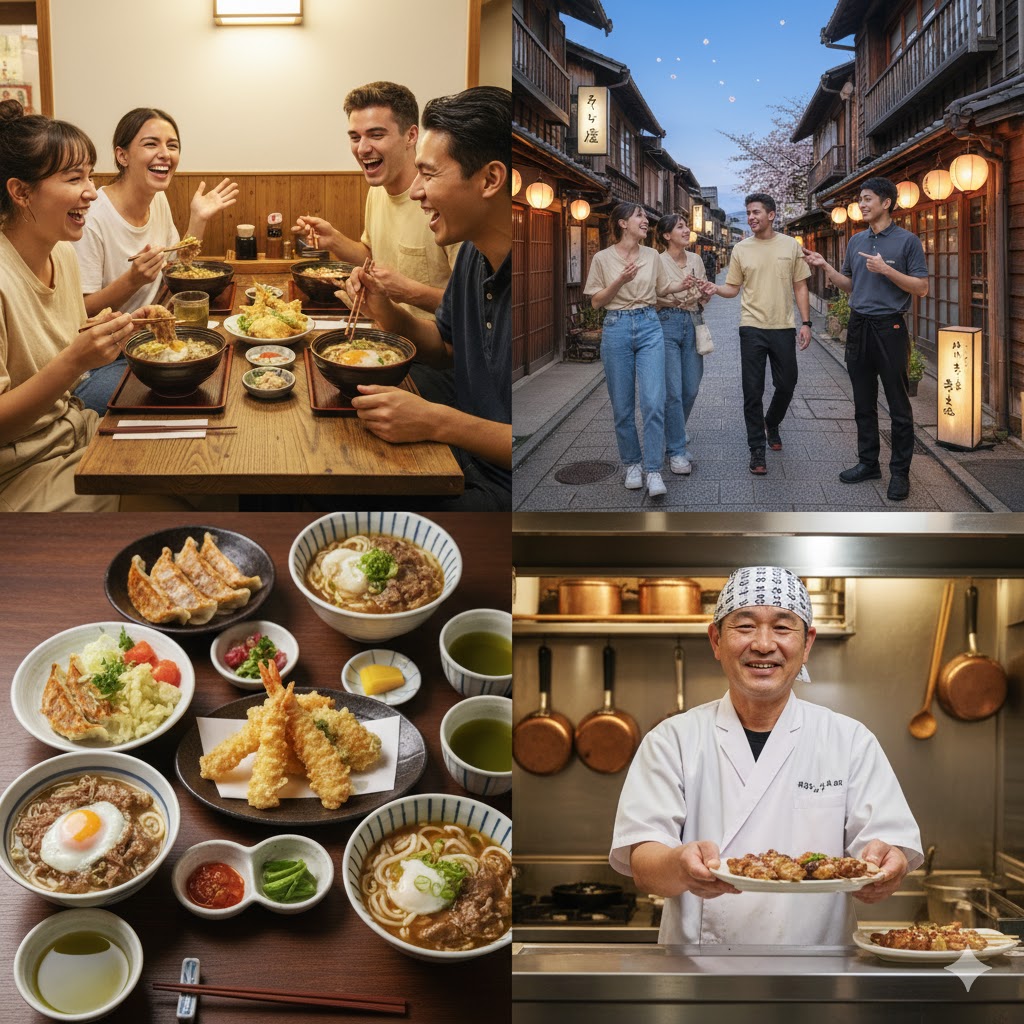
1. Your Ultimate Gion-Higashiyama Food Discovery
Planning your first trip to Kyoto? You’ve probably already got the classic Kyoto checklist running through your head: visit the iconic Kiyomizu-dera Temple, stroll through the charming wooden machiya shops along Sannenzaka Street, catch a glimpse of geishas in the famous Gion district, and maybe snap a few Instagram photos of the gorgeous Five-Story Pagoda. These are all incredible experiences that genuinely deserve to be on your itinerary.
But here’s what many first-time international visitors don’t realize: finding an authentic, affordable, and genuinely delicious meal between temple visits—something that doesn’t require fluent Japanese and won’t completely destroy your travel budget—is actually one of the hardest parts of visiting Kyoto.
That’s where Kyoto Udon Ishin comes in, and trust me, this discovery will genuinely enhance your entire Kyoto experience.
Tucked into the heart of the Higashiyama Ward at Masuyacho, Higashiyama-ku, Kyoto City, this neighborhood udon restaurant has become an absolute favorite among international travelers, digital nomads, and savvy Kyoto visitors. Whether you’re looking for a hearty lunch to refuel after exploring temples all morning, or a light dinner between shopping on Ninenzaka Street and an evening stroll through atmospheric Gion, this place deserves a prominent spot on your Kyoto itinerary.
In this comprehensive guide, I’ll walk you through everything you need to know about visiting Kyoto Udon Ishin, the incredible sights nearby, practical tips for navigating the area, and exactly why this humble udon spot is such a game-changer for your Kyoto experience.
2. What is Kyoto Udon Ishin? Understanding This Modern Udon Revolution
Before diving into the specifics and making this restaurant sound overly mysterious, let me answer the straightforward question: what exactly is Kyoto Udon Ishin, and why is it generating such enthusiasm among travelers?
Kyoto Udon Ishin is a modern, thoughtfully-crafted interpretation of traditional Japanese udon culture. The restaurant’s name is actually quite meaningful: “ishin” literally translates to “restoration” or “revolution,” and that’s precisely what this establishment brings to the contemporary udon scene.
Rather than being another forgettable chain establishment or a place that cuts corners for profit, Kyoto Udon Ishin is a neighborhood restaurant where the owners have genuinely reimagined what contemporary udon can and should be. They combine Kyoto’s richly layered culinary heritage with modern sensibilities, quality ingredients, and genuine care for their customers’ experience.
Here’s the practical breakdown: they use carefully filtered water from Kyoto’s pristine natural springs, select premium wheat flour from local Kyoto farms, and prepare hand-crafted broths that simmer for extended hours—sometimes a full day or more. You can genuinely taste the difference between a quickly prepared bowl and one made with this level of thoughtfulness and care.
And here’s the best part for international visitors: you absolutely don’t need to be a seasoned Japan veteran to enjoy it. The staff speaks English, the menu includes both Japanese and English descriptions with helpful photographs, and the pricing is incredibly reasonable for this quality level. Most complete meals, including a generous bowl of udon and toppings, typically cost between ¥900-¥1,500 (approximately $6-$10 USD).
3. Exploring the Neighborhood: Your Complete Higashiyama Walking Guide
Now that you understand what Kyoto Udon Ishin offers, let’s talk about why the location is so absolutely perfect. The restaurant sits in the heart of one of Kyoto’s most vibrant, photogenic, and visitor-friendly neighborhoods: Higashiyama. This entire district functions essentially as an open-air museum of traditional Kyoto, and spending a full day (or even multiple days) exploring here should definitely be on your must-do list.
3-1. Kiyomizu-dera Temple: The Iconic Starting Point
Just a short five-minute walk from Kyoto Udon Ishin, you’ll discover Kiyomizu-dera Temple, one of Kyoto’s most recognizable and photographed landmarks. This UNESCO World Heritage Site dates back over 1,200 years and attracts millions of international visitors annually—and for genuinely good reasons.
The temple’s most famous feature is its expansive main hall, which includes an impressive wooden stage that juts dramatically out over a forested hillside. From this platform, you get panoramic views across the entire Kyoto City, and on clear days, you can see all the way to the distant mountains on the horizon. It’s the kind of view that takes your breath away.
The descent from the main temple grounds down the hillside is particularly special—the pathway is lined with small shops selling everything from matcha sweets to traditional crafts, charming teahouses where you can rest your feet, and endless photo opportunities. Most visitors spend between 1-2 hours fully exploring the temple grounds and adjacent areas before heading back down the hillside.
Pro tip for maximizing your experience: Arrive early in the morning, ideally before 9:00 AM, to genuinely beat the tour bus crowds and enjoy a more peaceful temple experience. Then, as you work your way back down the hillside and through the shopping streets, head to Kyoto Udon Ishin around 11:30 AM for a well-deserved lunch when you’re starting to feel hungry.
3-2. The Five-Story Pagoda: That Iconic Kyoto Photo
Adjacent to and near Kiyomizu-dera, you’ll encounter the instantly recognizable Five-Story Pagoda (Gojunoto), standing majestically above the surrounding treetops. This is literally THE iconic Kyoto image you see on countless postcards, travel guides, and Instagram feeds. The pagoda belongs to Hokanji Temple and was originally constructed way back in 1440, making it a genuinely historic structure.
Here’s the convenience factor: you don’t actually need to pay entrance fees or enter the temple to photograph the pagoda. Many international visitors simply take their photos from nearby streets and public squares, capturing that quintessential Kyoto image. It’s genuinely the kind of photo that instantly communicates “I was in Kyoto” when you share it with friends and family back home.
3-3. Ninenzaka and Sannenzaka Streets: The Heart of Historic Kyoto Shopping
If there’s one specific place that truly captures the everyday charm and energy of old Kyoto, it’s the atmospheric pedestrian shopping streets known as Ninenzaka and Sannenzaka. These two parallel streets are lined with beautiful traditional wooden storefronts selling everything from authentic kimono accessories and handmade pottery to matcha-flavored ice cream and carefully crafted traditional sweets.
While Kiyomizu-dera is definitely a major tourist attraction, these shopping streets somehow genuinely manage to retain an authentic neighborhood vibe despite the crowds. You’ll see local residents shopping for daily necessities alongside international tourists, and the merchandise ranges from obvious souvenir items to genuine artisan goods created by skilled craftspeople. The narrow lanes, uneven stone paths, and hanging paper lanterns create an absolutely immersive “old Kyoto” atmosphere that feels authentic.
Recommendations for your visit: Stop at one of the specialty matcha dessert shops for a quick snack or light treat. Try fresh homemade tofu from a local vendor. Pick up handmade ceramics at one of the pottery studios run by artisans. Browse through the kimono accessory shops. These streets are genuinely perfect for wandering, exploring, and discovering hidden gems that most tourists completely miss.
3-4. Nenno-michi and Evening Gion Walks: Magic After Sunset
After you’ve finished your main daytime sightseeing, take an evening walk through the atmospheric lanes of Nenno-michi and the Sannenzaka area. As the sun sets below the horizon and the traditional lanterns gradually light up the narrow streets, the entire neighborhood transforms into something genuinely magical and dreamlike.
The steep stone paths, centuries-old wooden buildings, weathered stone walls, and warm golden lighting create an almost otherworldly atmosphere that’s hard to describe adequately. This is genuinely one of the most photogenic and atmospheric parts of all of Kyoto, and many experienced visitors actually say it’s even more beautiful and memorable in the evening than during the daytime hours.
This evening stroll is the perfect place to do a second visit after having dinner at Kyoto Udon Ishin. The combination of a satisfying meal and an atmospheric evening walk through historic streets makes for an unforgettable Kyoto experience.
3-5. Hokanji Temple and the Wider Higashiyama District
Beyond the famous primary tourist attractions, the entire Higashiyama district is absolutely packed with smaller temples, hidden shrines, and quieter spiritual spaces that receive significantly fewer visitors than Kiyomizu-dera. Exploring these less-crowded temples gives you genuine insight into what Kyoto’s spiritual and cultural life actually feels like, rather than just seeing the major tourist checkboxes.
One particularly worthwhile temple is Hokanji Temple, home to that iconic five-story pagoda we mentioned earlier. While many visitors only photograph the pagoda from outside, actually entering the temple grounds allows you to experience the peaceful atmosphere and appreciate the architectural details up close. The temple dates back centuries and has been carefully preserved, offering an authentic glimpse into traditional Buddhist temple architecture and landscaping.
3-6. Yasaka Shrine (Gion Shrine): Where Gion Meets Tradition
At the base of the Higashiyama district, you’ll find Yasaka Shrine, also affectionately known as Gion Shrine by locals. This shrine holds special significance as the spiritual center of the famous Gion geisha district. The shrine is particularly beautiful during evening hours when lanterns illuminate the grounds and the atmosphere becomes especially magical.
The shrine’s origins trace back over 1,300 years, making it one of Kyoto’s most historically significant sacred spaces. Even during daytime, the grounds offer a peaceful respite from the busy shopping streets. During festival season (particularly around July for the Gion Matsuri festival), this shrine becomes the focal point of one of Japan’s most famous summer celebrations, attracting crowds from across the country.
3-7. Hidden Temples and Quiet Reflection Spaces
Beyond the major tourist destinations, the Higashiyama district contains numerous smaller temples and shrines that most tourists never discover. These quieter spaces offer genuine opportunities for reflection and spiritual contemplation. Exploring several of these lesser-known spots gives you a more comprehensive and authentic picture of Kyoto’s deep religious and cultural heritage.
Walking through quiet temple grounds where you might encounter only a handful of other visitors, hearing the sound of a distant bell, or discovering a small garden shrine tucked behind residential buildings—these moments often become travelers’ most cherished Kyoto memories.
3-8. Maruyama Park: Natural Beauty and Evening Ambiance
Adjacent to Yasaka Shrine, you’ll find Maruyama Park, a beautiful natural oasis in the heart of the urban district. The park features ancient cherry trees (particularly stunning during spring blossom season), winding paths through forest areas, and plenty of benches for resting. Many international visitors are surprised to discover how peaceful and green this area remains despite its central location.
The park is especially atmospheric in the early evening when golden sunlight filters through the trees and the crowds thin out. It’s an ideal place to rest between sightseeing activities or to sit quietly with a takeout meal and watch the day transition into evening.
4. Why Kyoto Udon Ishin is Your Perfect Higashiyama Meal Stop
You might logically be thinking: “This all sounds genuinely great, but why specifically recommend Kyoto Udon Ishin? Aren’t there literally dozens of restaurants throughout this area?”
Yes, there absolutely are. But here’s exactly why this specific restaurant stands out for international visitors:
4-1. Genuinely International-Friendly Atmosphere and Staff
The staff at Kyoto Udon Ishin actively welcomes international visitors rather than treating them as inconveniences. They speak English—or at least understand and can communicate basic English—the menu includes both Japanese and English descriptions with helpful photographs, and they’re genuinely patient and helpful when foreign visitors are ordering. You won’t feel rushed, confused, or uncomfortable.
4-2. Authentic Kyoto Ingredients and Traditional Methods
Unlike many restaurants catering primarily to tourist crowds that cut corners to maximize profit, Kyoto Udon Ishin actually sources local ingredients directly from Kyoto farmers whenever possible and uses water from Kyoto’s pristine natural springs. You can genuinely taste the quality difference. The broth is freshly made daily, starting with premium kombu seaweed and bonito flakes, then carefully simmered for many hours to develop deep, complex flavors.
4-3. Budget-Friendly Pricing That Won’t Drain Your Travel Fund
A typical complete meal costs between ¥900-¥1,500. For real context, that’s actually cheaper than most restaurant meals you’d find in major Western cities, and the quality far exceeds what you’d normally expect at this price point. You get generous portions, genuinely quality ingredients, skilled preparation, and a satisfying experience for prices that won’t wreck your carefully planned travel budget.
4-4. Perfect Timing and Location for Any Higashiyama Itinerary
Whether you arrive genuinely exhausted after an intense morning exploring Kiyomizu-dera Temple and navigating crowds, or want a lighter dinner between shopping on Ninenzaka and Sannenzaka Streets and an evening walk through atmospheric Gion, Kyoto Udon Ishin fits perfectly into virtually any Higashiyama sightseeing itinerary. It’s centrally located, easy to find, and reasonably accessible.
4-5. A Genuine Neighborhood Experience, Not a Tourist Trap
This isn’t a massive, impersonal tourist trap or yet another forgettable chain restaurant. It’s a thoughtfully-run neighborhood establishment with genuine personality and character. You’ll likely encounter a good mix of both international tourists and local residents. The owners genuinely care about the quality of what they’re serving. That authenticity is increasingly difficult to find in popular, well-publicized tourist areas.
5. The Menu: What to Order and How to Choose
First-time visitors to Japanese restaurants sometimes feel somewhat intimidated by unfamiliar menus and options. Don’t worry—Kyoto Udon Ishin deliberately keeps things straightforward and approachable.
5-1. Essential Classic Udon Dishes
Kake Udon represents the simplest, most elegant option: perfectly cooked thick noodles served in savory, aromatic broth and topped with sliced green onions. It’s genuine comfort food at its finest and an absolutely great starting point if you’re feeling uncertain about what to order.
Zaru Udon is the chilled version, which is genuinely perfect for warm weather days. Thick, chewy noodles are served on a traditional bamboo rack with a separate dipping sauce. It’s refreshing, light, and less heavy than hot udon.
Tempura Udon comes topped with light, crispy battered vegetables and shrimp. If you want something more substantial and filling, this is your ideal choice. The crispy tempura adds wonderful textural contrast to the soft, chewy noodles.
5-2. Seasonal Menu Specials
Kyoto Udon Ishin deliberately rotates its seasonal menus to take genuine advantage of whatever local ingredients are currently in season. Spring might feature young bamboo shoots and fresh spring herbs, while autumn brings wild mushrooms and seasonal mountain vegetables. Definitely ask your server about the current seasonal special—it’s usually worth trying and showcases the restaurant’s commitment to seasonal eating.
5-3. Customizable Toppings and Additions
You can personalize your bowl with various additional toppings: soft-boiled eggs, fresh seasonal vegetables, silken tofu, and other options. The upcharge for these additions is minimal—usually just ¥100-300—and it’s a genuinely fun way to create your perfect custom bowl.
5-4. Pro Tip Regarding Portion Sizes
Come to this restaurant genuinely hungry. The portion sizes are quite generous and satisfying, and you’ll leave completely full and satisfied. Many first-time international visitors actually underestimate exactly how filling and substantial a proper bowl of udon can actually be.
6. Practical Visitor Information: How to Plan Your Visit
6-1. Exact Location and Easy Access
Kyoto Udon Ishin Address: Masuyacho, Higashiyama-ku, Kyoto City, Japan
The restaurant is approximately a 5-minute walk from Kiyomizu-dera Temple’s main entrance gate. If you’re coming from the famous Gion geisha district, it’s roughly a 10-15 minute walk through the charming neighborhood streets and can actually be a pleasant journey.
6-2. Getting There: Public Transportation Options
From Kiyomizu-Gojo Station on the Tozai Subway Line: It’s approximately a 10-minute walk uphill from the station. Simply follow the signs directing you toward Kiyomizu-dera Temple, and you’ll naturally pass by or very near the restaurant area.
From Higashiyama Station: It’s approximately a 15-minute walk through the charming shopping streets of Ninenzaka and Sannenzaka.
Helpful tip: If you’re already exploring the pedestrian shopping streets of Ninenzaka and Sannenzaka, simply ask a local resident or shop owner for directions—locals are generally very helpful with tourists, and the staff can easily point you in the right direction if you happen to look a bit lost or uncertain.
6-3. Operating Hours and Reservation Considerations
Most traditional udon restaurants in Kyoto operate on a casual first-come, first-served basis without requiring advance reservations. Kyoto Udon Ishin typically opens around 10:30 AM and closes around 6:00 PM, though these hours can vary depending on the season and demand.
Peak traffic times to know about: 11:30 AM – 1:00 PM (lunch rush) and 5:00 PM – 6:00 PM (dinner rush). If you genuinely want to avoid waiting in line, aim for slightly off-peak times like 2:00 PM, 3:30 PM, or 4:15 PM.
During peak tourist seasons like cherry blossom season (late March-early April) and fall foliage season (late October-November), expect significant crowds. Wait times can easily exceed 20-30 minutes during these peak periods, so plan accordingly.
6-4. What to Bring and Prepare
Cash is essential: While some modern Japanese restaurants now accept credit cards, it’s genuinely always safest to bring cash for small establishments. You’ll find several ATMs near major temple areas and shopping streets.
Comfortable walking shoes: You’ll be walking extensively on uneven stone paths and steep hills. Comfortable, supportive shoes with good grip are genuinely essential for navigating the neighborhood safely and comfortably.
Translation app: Google Translate works reasonably well for Japanese translation, though the English-speaking staff at Kyoto Udon Ishin means you should manage fine with basic communication.
Camera or smartphone: This neighborhood is absolutely gorgeous, and you’ll want to capture plenty of photos for memories.
7. Creating Your Perfect Higashiyama Day Itinerary
Here’s a realistic, well-tested suggested itinerary that makes excellent use of the neighborhood while including a memorable meal at Kyoto Udon Ishin:
7-1. Early Morning: Beat the Crowds (8:00 AM – 11:30 AM)
Start genuinely early and head straight to Kiyomizu-dera Temple, aiming to arrive before 9:00 AM. You’ll beat the massive tour bus crowds and enjoy a more peaceful, spiritual temple experience. Take your time exploring the main hall, the waterfall area, and the beautiful surrounding temple grounds. Photograph the Five-Story Pagoda from several different angles for the best shots.
7-2. Late Morning to Early Afternoon: Refuel and Rest (11:30 AM – 2:00 PM)
Head to Kyoto Udon Ishin for a satisfying lunch. Take your genuine time enjoying the meal without rushing. Chat with the friendly staff about other nearby sights worth seeing, and ask about current seasonal specials. This is also a good time to rest your feet and recharge before afternoon exploration.
7-3. Afternoon: Shopping and Exploration (2:00 PM – 5:00 PM)
Explore the charming shopping streets of Ninenzaka and Sannenzaka. Pop into interesting small shops that catch your eye. Try local snacks from vendors. Pick up authentic souvenirs and handmade crafts. Visit Hokanji Temple or other smaller, quieter temples in the area. Take photos of the atmospheric streets and architectural details.
7-4. Early Evening: Magical Atmospheric Walks (5:00 PM – 8:00 PM)
Take an evening stroll through Gion and the narrow atmospheric lanes of the historic district. As dusk gradually approaches, the traditional lanterns light up and the entire atmosphere becomes genuinely magical and romantic. The lighting and ambiance at this hour are particularly beautiful for photography.
7-5. Night: Dinner and Relaxation (8:00 PM+)
Grab an early dinner at a restaurant near Gion, or return to Kyoto Udon Ishin for a light, satisfying udon dinner before heading back. Explore more of Kyoto’s vibrant nightlife scene, or simply return to your accommodation feeling genuinely satisfied with your day.
8. Understanding Kyoto’s Food Culture: Why Udon Matters
To truly appreciate your meal at Kyoto Udon Ishin, it’s helpful to understand where udon fits into Japan’s broader food culture. Udon is far more than just noodles in soup—it’s a beloved comfort food with regional variations throughout Japan, and Kyoto’s version carries particular significance.
8-1. The Regional Udon Story
Different regions of Japan have developed their own distinctive udon styles. Osaka’s udon tends to feature thick, soft noodles in a relatively light broth. Fukuoka’s udon is often served with rich pork-based broths. Kyoto’s udon, reflecting the city’s overall culinary sophistication, emphasizes elegant simplicity and premium ingredients. You’ll notice Kyoto’s udon often features delicate broths that let the quality of individual ingredients shine through, rather than trying to overpower the palate with heavy flavors.
8-2. Why the Water Quality Matters So Much
One reason Kyoto has such a strong reputation for culinary excellence involves its water. Kyoto sits near several natural springs and has access to pristine groundwater filtered through the region’s geological layers. This clean water is essential not just for udon preparation but for tofu, tea, sake, and virtually every other Kyoto specialty. At Kyoto Udon Ishin, using quality water isn’t just a nice feature—it’s fundamental to why the udon tastes genuinely better than many other options.
8-3. The Philosophy of Japanese Seasonality
You’ll notice throughout your Kyoto visit that restaurants emphasize seasonal ingredients. This isn’t just marketing—it reflects a deep cultural value called “kisetsukan” (seasonal sensibility) that’s fundamental to Japanese aesthetic and culinary philosophy. Eating ingredients when they’re naturally in season means peak flavor, supports local agriculture, and creates a connection between your meal and the natural world. At Kyoto Udon Ishin, this philosophy means your meal will literally taste different depending on what season you visit.
9. Frequently Asked Questions About Visiting Kyoto Udon Ishin
9-1. Do I Need to Make a Reservation?
No, Kyoto Udon Ishin operates on a first-come, first-served basis. Walk-ins are absolutely welcome and expected. However, during peak tourist seasons and times, you might experience a short wait (typically 15-30 minutes). If you want to avoid waiting entirely, visit during off-peak hours like 2:30 PM or 4:00 PM.
9-2. What if I’m Vegetarian or Have Dietary Restrictions?
Communicate clearly with the staff about your dietary requirements. The vegetarian udon options (vegetable-based broth without fish-based dashi) can definitely be accommodated, though they’re not the restaurant’s primary specialty. Ask your server about which broths are vegetarian and which toppings are available. Japanese restaurants are generally very accommodating once they understand your needs.
9-3. Is It Expensive?
No, it’s remarkably affordable. Most meals cost between ¥900-¥1,500, which is comparable to fast food in Western countries but with significantly higher quality. Even if you order additional toppings and sides, you’ll rarely exceed ¥2,000 per person.
9-4. Can I Eat Quickly if I’m in a Hurry?
Yes, absolutely. Udon is designed as a quick meal. If you’re pressed for time, you can finish a basic bowl in 10-15 minutes. However, I’d recommend taking your time and actually enjoying the experience rather than rushing through it.
9-5. What About Allergy Information?
This is important: clearly communicate any allergies to the staff. They’ll help you understand which dishes are safe. Common allergens in Japanese food include sesame, shellfish (in dashi broths), and soy. The staff can generally accommodate reasonable requests, but it’s your responsibility to clearly communicate your needs.
9-6. Is the Restaurant Accessible for People with Mobility Issues?
The restaurant sits on sloped streets, and you might need to navigate some stairs. Call ahead or check their current accessibility situation before visiting if this is a concern for you.
10. Cultural Tips and Restaurant Etiquette for First-Time Visitors
10-1. Slurping Noodles is Actually Polite and Encouraged
In Japan, slurping noodles while eating is actually considered polite and appropriate. It shows you’re genuinely enjoying the meal and helps cool the hot noodles by aerating them. Don’t be shy or self-conscious—let yourself slurp freely and enthusiastically!
10-2. Understanding Sauce and Toppings
Unlike some other Japanese dishes, udon isn’t typically served with rice included in the same bowl. If you order both separately, the sauce (tsuyu) is specifically designed for dipping your noodles into, not for pouring over rice. However, at some restaurants, you do receive a small rice bowl with leftover broth at the end—ask your server if you’re uncertain about specific details.
10-3. Chopsticks Etiquette and Alternatives
If you’re not completely comfortable using chopsticks, don’t worry or feel self-conscious. Most udon restaurants keep forks readily available, and staff will happily bring them if you ask politely. However, if you want to practice your skills, udon is actually an ideal beginner noodle dish since the noodles are thicker and easier to manage than ramen or other thinner noodles.
10-4. Temple Visiting Etiquette and Respect
When visiting temples, remember to bow respectfully when passing through gates, remove your shoes if explicitly required, and be respectful of active worship areas and prayer spaces. Photography is generally allowed throughout most temple areas, but some inner sanctums specifically prohibit photography—look for signs or ask staff members when uncertain.
11. Why This Recommendation Actually Matters
You might reasonably wonder why I’m recommending this specific udon restaurant with such genuine enthusiasm. Here’s the honest answer: travel is fundamentally about moments and experiences, not merely checking boxes off a predetermined “things to do” list.
Yes, Kiyomizu-dera Temple is genuinely beautiful and absolutely deserves to be on your itinerary. Yes, the illuminated shopping streets and lantern-lit pathways of Higashiyama are Instagram-worthy and memorable. But here’s what many travel guides miss: the most genuinely memorable travel experiences often come from the quiet moments in between the major attractions—a delicious unexpected meal, a friendly conversation with a local shopkeeper or restaurant owner, or simply sitting down with a warm, comforting bowl of noodles and taking time to reflect on and savor everything you’ve experienced.
Kyoto Udon Ishin represents exactly this type of authentic, meaningful experience. It’s not the fanciest or most expensive restaurant, but it’s genuinely authentic, it’s sincerely welcoming to international visitors, and it represents the kind of daily life that makes Kyoto actually special and worth visiting.
12. Final Thoughts: Your Kyoto Food Discovery Awaits
If you’re seriously planning your first trip to Kyoto and genuinely wondering what to eat while exploring the incredible sights, definitely add Kyoto Udon Ishin to your carefully planned itinerary. It’s genuinely affordable, easily accessible, delicious, and perfectly positioned for exploring one of Kyoto’s most beautiful and photogenic neighborhoods.
Whether you’re taking a lunch break after experiencing Kiyomizu-dera Temple, refueling between shopping expeditions on Ninenzaka and Sannenzaka Streets, or grabbing a satisfying dinner before an evening stroll through atmospheric Gion, this humble udon spot delivers an authentic experience that will genuinely make your Kyoto trip more memorable and meaningful.
The restaurant’s genuine commitment to quality local ingredients, traditional preparation methods, and sincere hospitality sets it apart from the typical tourist-oriented chain restaurants and forgettable establishments that line these same streets. You’ll leave satisfied not just with a genuinely full stomach, but with the genuine knowledge that you’ve experienced something authentically special and worthwhile.
So go ahead, follow the crowds to Kiyomizu-dera Temple, explore the charming historic streets of Higashiyama, browse the wonderful shops on Ninenzaka and Sannenzaka, experience the magic of evening Gion, and don’t forget to stop by Kyoto Udon Ishin for your meal. Your taste buds, your wallet, and your travel memories will definitely thank you.
13. Best Times to Visit: Seasonal Considerations for Your Kyoto Trip
13-1. Spring (March-May): Cherry Blossoms and New Life
Spring in Kyoto is absolutely magical but also incredibly busy. Late March through early April brings the famous cherry blossoms (sakura), transforming the entire city into a pink-and-white wonderland. The Higashiyama district becomes especially crowded during this period, with some spots nearly impossible to navigate comfortably.
If you visit during spring, arrive at Kiyomizu-dera extremely early (before 7:00 AM if possible) to see the blossoms with smaller crowds. Visit Kyoto Udon Ishin during off-peak afternoon hours rather than lunch rush time. The reward is genuinely worth the extra effort—seeing cherry blossoms reflected in the stone paths of Sannenzaka is an unforgettable experience.
13-2. Summer (June-August): Heat, Humidity, and Fewer Crowds
Summer brings heat and humidity, which sounds unpleasant but actually has advantages. Many international tourists avoid Kyoto in summer, meaning significantly smaller crowds at major attractions. This is an excellent time to comfortably explore temples and streets without battling massive tour groups.
Opt for chilled Zaru Udon at Kyoto Udon Ishin during summer—it’s refreshing and perfect for cooling off after walking in the heat. Take advantage of the quieter tourist season to explore smaller temples and hidden areas that become impossibly crowded during peak season.
13-3. Autumn (September-November): Perfect Weather and Fall Colors
Many travel experts consider autumn the absolute best season to visit Kyoto. The weather is comfortable, the humidity is gone, and the fall foliage (koyo) creates stunning colors throughout the city. The Higashiyama district becomes particularly beautiful as maple trees turn brilliant shades of red and gold.
During this season, temples and gardens are at their aesthetic peak. The evening atmosphere becomes especially magical as golden sunset light filters through the colored leaves. However, autumn’s popularity means crowds rival spring levels, so again, timing your visits for early morning or late afternoon improves the experience significantly.
13-4. Winter (December-February): Peaceful and Atmospheric
Winter is least crowded and often overlooked by international tourists, but it offers genuine advantages. The reduced crowds mean you can actually spend time appreciating sights without being pushed along by masses. The bare trees and clear winter light create a different but equally beautiful atmosphere.
A warm bowl of Kake Udon becomes especially comforting during winter months. Evening walks through Gion with lanterns glowing against bare branches and perhaps even snow creates an almost mystical atmosphere. If you can handle cooler weather and don’t mind fewer amenities due to reduced tourist infrastructure, winter offers one of the most authentic Kyoto experiences.
14. Quick Reference: Key Information at a Glance
Planning your visit? Here’s everything you need to know condensed into one easy reference:
- Restaurant Name: Kyoto Udon Ishin
- Address: Masuyacho, Higashiyama-ku, Kyoto City, Japan
- Nearest Station: Kiyomizu-Gojo Station (Tozai Subway Line, approximately 10-minute walk)
- Operating Hours: Approximately 10:30 AM – 6:00 PM (seasonal variations possible)
- Average Meal Cost: ¥900-¥1,500 per person ($6-$10 USD)
- Payment: Cash preferred (ATMs available nearby)
- Language: Staff speaks basic English
- Specialties: Traditional Kyoto udon with seasonal ingredients
- Distance from Kiyomizu-dera Temple: Approximately 5-minute walk
- Best Times to Visit: Early lunch (11:30-noon) or mid-afternoon (2:30-4:00 PM)
- Peak Tourist Seasons: Late March-early April (cherry blossoms) and late October-November (fall foliage)
- Quietest Seasons: June-August (summer) and December-February (winter)
- Menu Options: Kake Udon, Zaru Udon, Tempura Udon, plus seasonal specials
- Dietary Accommodations: Vegetarian options available upon request
- Reservation: Walk-ins welcome, no advance reservation required
- Accessible Attractions Nearby: Kiyomizu-dera Temple, Hokanji Temple, Ninenzaka/Sannenzaka shopping streets, Yasaka Shrine, Maruyama Park, Gion district
15. Conclusion: Your Authentic Kyoto Experience Awaits
Visiting Kyoto for the first time is genuinely transformative. The temples are stunning, the shopping streets are charming, and the cultural atmosphere is unlike anywhere else in the world. But what often makes travel most meaningful are the small, authentic moments you experience between the major attractions.
Kyoto Udon Ishin represents exactly this kind of meaningful travel experience. It’s not about checking boxes or collecting Instagram photos—it’s about sitting down with a warm, carefully prepared bowl of noodles, taking time to appreciate quality ingredients and skilled preparation, and connecting with local culture through something as fundamental as food.
The neighborhood surrounding Kyoto Udon Ishin offers everything international visitors want from Kyoto: iconic temples, atmospheric shopping streets, beautiful natural scenery, and genuine cultural experiences. Adding this restaurant to your itinerary creates a perfect balance between sightseeing and real human connection.
So plan your trip, book your flights, and prepare for an unforgettable Kyoto adventure. Visit Kiyomizu-dera Temple early, explore the charming Higashiyama neighborhood, wander through the magical streets of Gion, and don’t forget to stop by Kyoto Udon Ishin for a genuinely memorable meal. Your first trip to Kyoto will be even better than you imagine—we promise.
Ready to experience authentic Kyoto? Start planning your Higashiyama adventure with Kyoto Udon Ishin as your perfect meal stop. Itadakimasu!