
1. Introduction
When you think of Kyoto, images of ancient temples, vermillion torii gates, and geisha in traditional kimono probably come to mind. But there’s one aspect of Kyoto that many first-time visitors overlook—the incredible local food scene. Sure, you might grab a quick bite of street food while sightseeing, but what you really need is a proper, satisfying meal that captures the essence of Kyoto’s culinary tradition.
That’s where Kyoto Udon Ishin comes in.
Located in the heart of Higashiyama, one of Kyoto’s most vibrant tourist districts, this hidden gem serves up some of the best oden you’ll find anywhere in the city. Whether you’re exploring the sacred temples of Kiyomizu-dera or getting lost in the charming alleyways of Ninenzaka, Kyoto Udon Ishin is the perfect spot to refuel and experience authentic Kyoto flavors.
In this guide, we’ll walk you through the best way to spend a day exploring Higashiyama’s iconic attractions and show you exactly why Kyoto Udon Ishin deserves a spot on your Kyoto itinerary.
2. Why Higashiyama is Kyoto’s Must-Visit District
Before we dive into the culinary experience, let’s talk about why Higashiyama (literally “East Mountain”) is such a special place. This historic district, located on the eastern side of Kyoto, is home to some of the city’s most iconic landmarks and atmospheric streets.
Higashiyama has been a cultural hub for centuries. During the Edo period, it was known as a bustling merchant district. Today, it perfectly balances preservation of its historical character with modern tourism infrastructure, making it accessible and enjoyable for visitors of all kinds.
The district sits at the base of the Higashiyama Mountains, which give it a beautiful natural backdrop. Whether you’re visiting during cherry blossom season or the stunning autumn foliage months, Higashiyama offers something special year-round. And when winter arrives and temperatures drop, that’s when Kyoto Udon Ishin truly shines.
3. Planning Your Higashiyama Adventure
3-1. Getting to Higashiyama
From Kyoto Station, you can reach Higashiyama in about 20-30 minutes. The most convenient options are:
By Bus: Take the No. 100 or 206 bus directly to the Kiyomizu-michi bus stop
By Train: Take the Keihan Main Line to Kiyomizu-Gojo Station, then walk about 10 minutes uphill
By Taxi: A direct taxi ride from the station costs roughly ¥1,500-2,000
Once you arrive, you’ll find yourself in a pedestrian-friendly area with narrow, winding streets perfect for exploration.
3-2. Best Time to Visit
While Higashiyama is beautiful year-round, winter nights hold a special magic. The cooler temperatures make walking through the district more comfortable, and the crowds are smaller compared to peak cherry blossom or autumn foliage seasons. Plus, there’s nothing quite like warming up with a steaming bowl of oden after exploring chilly temples.
4. Must-See Attractions Near Kyoto Udon Ishin
4-1. Kiyomizu-dera (Kiyomizu Temple)
Start your Higashiyama adventure at Kiyomizu-dera, one of Kyoto’s most recognizable landmarks. This UNESCO World Heritage site sits about a 10-minute walk from Kyoto Udon Ishin and is instantly recognizable by its iconic wooden stage that juts out from the main building.
Built in 1633, Kiyomizu-dera sits on a hillside overlooking Kyoto’s sprawling cityscape. The name “Kiyomizu” translates to “pure water,” referring to the sacred waterfall inside the temple grounds. According to tradition, drinking from this waterfall grants wishes—though you might want to save room for oden later!
The temple is dedicated to Kannon, the Goddess of Mercy, and attracts thousands of visitors daily. But don’t let that discourage you. Early morning visits (before 8 AM) offer a more peaceful experience, and you’ll have a much better chance of getting those perfect Instagram shots without crowds photobombing your pictures.
Pro Tip: The walk up to Kiyomizu-dera is steep and involves climbing stairs. Wear comfortable shoes, and plan on spending about 1.5-2 hours exploring the temple and its surrounding areas.
4-2. The Five-Story Pagoda (Gojo-no-To)
While you’re at Kiyomizu-dera, don’t miss the stunning five-story pagoda that rises dramatically from the temple complex. This is one of Kyoto’s most photographed spots, and for good reason. The pagoda’s red lacquered structure against Kyoto’s skyline is absolutely breathtaking, especially during sunset.
The pagoda is primarily a viewing structure and is not open to the public for climbing, but the exterior views are more than enough to appreciate its architectural beauty.
4-3. Ninenzaka and Sannenzaka (Historic Shopping Streets)
After leaving Kiyomizu-dera, wind your way down through Ninenzaka and Sannenzaka—two charming shopping streets that perfectly encapsulate old-town Kyoto. These narrow alleyways are lined with traditional wooden machiya buildings that now house souvenir shops, cafes, restaurants, and galleries.
Ninenzaka, the lower street, is more touristy and busier, featuring shops selling Kyoto souvenirs, sweets, and traditional crafts. Sannenzaka, slightly uphill and more exclusive, offers a slightly higher-end shopping experience with boutique shops and art galleries.
Both streets are atmospheric and fun to explore, but if you’re looking for a more authentic experience, venture off the main streets into the tiny side alleys. You’ll often find independent shops and quieter spots where you can absorb the real character of historic Kyoto.
Insider Secret: These streets can get incredibly crowded during the day. If you visit in the early morning or late evening, you’ll have a much more pleasant experience. Evening is particularly special—the streets are beautifully lit with traditional lanterns, creating an almost romantic atmosphere.
4-4. Ishinenzaka (Stone Paving Lane)
Just beyond Sannenzaka, you’ll find Ishinenzaka, a quieter lane famous for its distinctive stone paving. This street has even fewer crowds than its neighbors and offers a more intimate glimpse into historic Kyoto life.
Ishinenzaka is home to traditional tea houses, small restaurants, and artisan shops. It’s the perfect place to take a break from the busier tourist areas and enjoy a more authentic Kyoto experience. The street’s charming aesthetic and reduced tourist traffic make it a favorite among local photographers and travelers seeking the “real” Kyoto.
4-5. Nene-no-Michi (Philosopher’s Walk Connection)
From Ishinenzaka, you can easily access Nene-no-Michi, a scenic pathway that connects to the famous Philosopher’s Walk. This stone-paved path runs along the canal and offers beautiful views, especially during cherry blossom season and autumn.
Nene-no-Michi is named after Nene, the wife of Toyotomi Hideyoshi, one of Japan’s most important historical figures. Walking this path feels like stepping back in time, and it’s one of Kyoto’s most photographed locations.
4-6. Kodai-ji Temple
While exploring Nene-no-Michi, you’ll pass near Kodai-ji Temple, another significant Buddhist temple founded by Nene herself. This temple features beautiful gardens, a two-story pagoda, and peaceful walking grounds. The temple is less crowded than Kiyomizu-dera, making it a refreshing alternative for those seeking a more contemplative experience.
4-7. Yasaka Shrine (Gion’s Guardian)
Just beyond the Higashiyama district proper, you’ll find Yasaka Shrine, one of Kyoto’s most important Shinto shrines. Known as the guardian shrine of the Gion district, Yasaka Shrine features a distinctive red torii gate at its entrance that’s instantly recognizable.
The shrine is home to numerous festivals throughout the year, including the famous Gion Matsuri in July, one of Japan’s most celebrated festivals. Even outside festival season, the shrine’s spacious grounds and beautiful architecture make it worth a visit.
5. What is Oden? A Winter Comfort Food Guide
Before we dive into why Kyoto Udon Ishin is special, let’s talk about oden itself. Many international visitors are unfamiliar with this Japanese comfort food, and it’s absolutely worth understanding. Oden represents one of Japan’s most treasured culinary traditions, particularly cherished during the cold winter months when comfort food becomes not just a meal, but a necessary source of warmth and sustenance.
5-1. The Basics of Oden
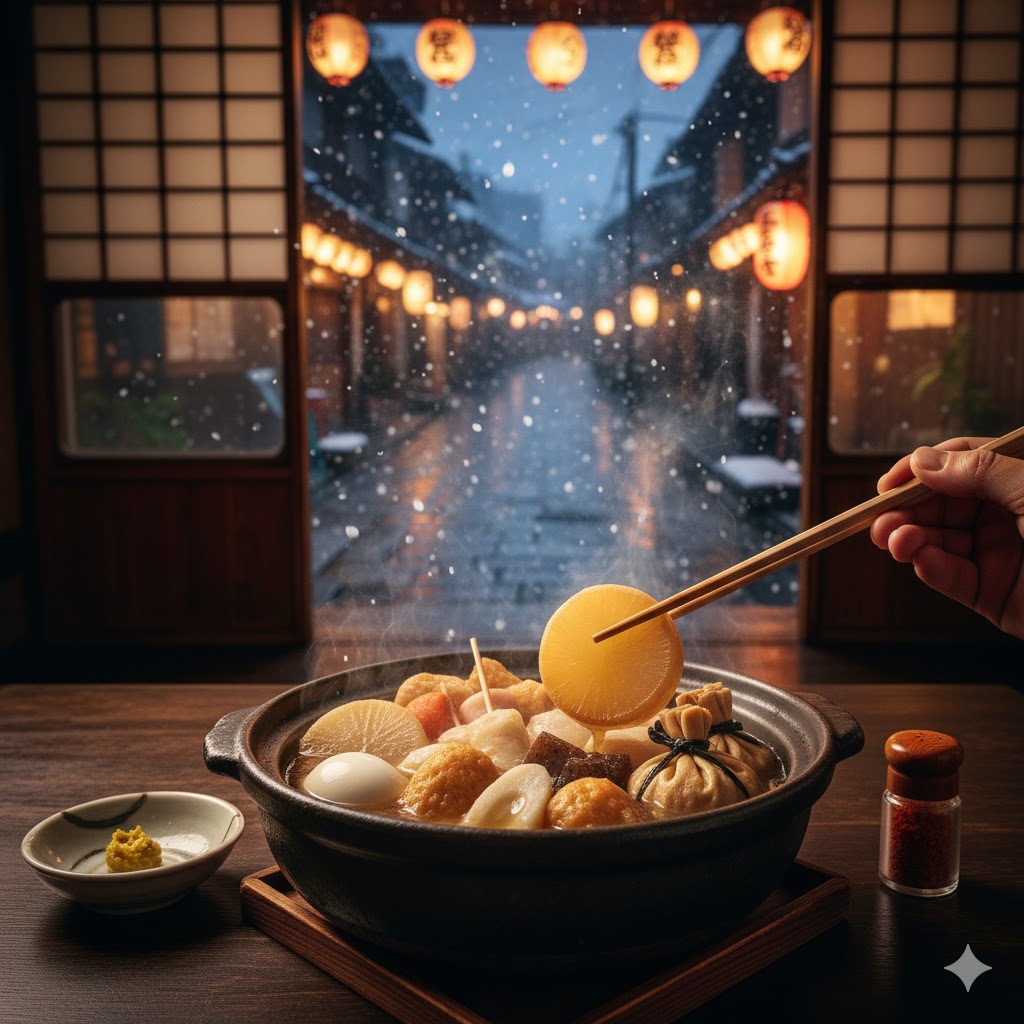
Oden is a Japanese hot pot dish consisting of various ingredients slowly simmered in a flavorful broth. Unlike sukiyaki or shabu-shabu, which are interactive dining experiences where you cook your own food at the table, oden is pre-prepared by skilled chefs and served hot in its savory broth. The beauty of oden lies in its simplicity and the way each ingredient absorbs the umami-rich flavors of the broth.
The dish has been enjoyed in Japan for centuries, with records of oden consumption dating back to the Edo period. Different regions of Japan have developed their own unique oden styles, with Kyoto’s version being particularly refined and distinctive.
Common oden ingredients include:
・Daikon radish – soft and tender, absorbing the broth’s flavors beautifully and becoming almost translucent when cooked
・Boiled eggs – usually with a marinated yolk that adds richness and depth to each bite
・Fish cakes (kamaboko) – various types with different textures and flavors, each bringing its own character to the dish
・Konnyaku – a gelatinous cake made from devil’s tongue yam, known for its unique, slightly chewy texture
・Octopus balls (takoyaki-style in oden form) – tender pieces of octopus that remain delicate even after extended simmering
・Tofu – silky smooth and delicate, absorbing broth flavors while maintaining its gentle texture
・Mushrooms – earthy and satisfying, adding natural umami to the overall dish
・Chicken or beef balls – protein-rich additions that make oden a complete meal
5-2. The Art and History of Oden Making
Creating authentic oden is as much an art form as it is a cooking technique. The broth—the foundation of any great oden—requires hours of preparation. Traditional Kyoto oden broths are made by slowly simmering kombu seaweed, bonito flakes, and other premium ingredients for extended periods. The result is a deeply flavorful, complex broth that’s nothing like instant soup stocks.
Each ingredient must be prepared individually, cooked to the exact right consistency, and then added to the broth at precisely the right moment. This isn’t fast food; it’s a slow, meditative process that reflects the Japanese principle of patience and craftsmanship in cooking.
5-3. Why Oden is Perfect for Winter
When winter temperatures drop and Kyoto’s streets get chilly, there’s nothing quite like warming up with oden. The hot broth penetrates right through you, warming you from the inside out. It’s comfort food at its finest—nourishing, satisfying, and deeply connected to Japanese seasonal eating traditions.
In Japanese culture, eating seasonally isn’t just about what’s fresh; it’s about eating what your body and environment need at that particular time of year. Winter demands warmth. Your body craves energy, comfort, and heat. Oden delivers all of this perfectly.
Oden embodies the Japanese principle of eating seasonally and according to the weather. Winter calls for warm, nourishing foods, and oden checks all the boxes. The combination of protein, vegetables, and warming broth makes it an ideal winter meal. After spending hours walking through Kyoto’s temples and historic streets in cold weather, stepping into a warm restaurant and enjoying steaming oden becomes not just a meal, but a restorative experience for body and soul.
Moreover, oden carries cultural significance in Japan. During the winter months, it’s a dish you’ll find at festival stalls, family dinners, and beloved neighborhood restaurants. Eating oden in Kyoto during winter isn’t just about nutrition; it’s about participating in a centuries-old Japanese cultural tradition.
6. Why Kyoto Udon Ishin Stands Out
Now that you understand what oden is, let’s talk about why Kyoto Udon Ishin deserves your attention. Among the many restaurants in Kyoto’s Higashiyama district, Kyoto Udon Ishin has earned its reputation as a special place where tradition meets genuine hospitality—a place where travelers from around the world come to experience authentic Kyoto cuisine in an inviting environment.
6-1. Location, Location, Location
Kyoto Udon Ishin is located at Masuyacho, Higashiyama Ward, Kyoto—literally in the heart of the Higashiyama tourist district. After spending a few hours exploring Kiyomizu-dera, wandering through Ninenzaka, and strolling along Nene-no-Michi, you’ll find yourself just minutes away from this gem. The strategic placement of the restaurant means it’s never an afterthought or an inconvenient detour.
The location isn’t just convenient; it’s perfectly situated for building a comprehensive Higashiyama experience. You can easily incorporate Kyoto Udon Ishin into a full day of sightseeing without any backtracking or complicated transportation logistics. Whether you decide to visit for lunch after morning temple exploration or return for dinner as the sun sets, the restaurant’s location makes it seamlessly part of your Higashiyama adventure.
6-2. Authentic Kyoto Flavors
What sets Kyoto Udon Ishin apart from other oden restaurants is its unwavering commitment to Kyoto’s culinary traditions and heritage. The broth is made using time-tested recipes that have been perfected over generations of careful refinement. Every ingredient is meticulously selected to ensure the highest quality and most authentic taste possible.
The restaurant sources local ingredients whenever possible, supporting Kyoto’s farmers and food producers while maintaining the integrity of traditional Kyoto cuisine. This dedication to local sourcing means the menu evolves thoughtfully with the seasons, ensuring you’re always eating food at peak freshness and flavor. In winter, ingredients reflect what’s best during cold months; in spring, the menu shifts to celebrate the season’s new offerings.
The chefs at Kyoto Udon Ishin understand that oden isn’t just about combining ingredients—it’s about creating harmony and balance on a plate. Each component plays a role in the overall experience, and nothing is included without purpose or care.
6-3. The Atmosphere and Ambiance
When you step into Kyoto Udon Ishin, you’re stepping into a place where tradition is alive and well. The restaurant maintains the aesthetic and warmth of a traditional Kyoto establishment while remaining genuinely welcoming to international visitors. The wooden interior, soft lantern lighting, and genuinely friendly staff create an atmosphere that’s simultaneously authentic and accessible.
This balance is crucial for travelers: sometimes authentic local restaurants can feel intimidating or exclusionary to foreigners. Kyoto Udon Ishin strikes a perfect balance—it’s genuinely local and beloved by Kyoto residents, yet completely welcoming to international guests. There’s no sense of being an outsider here. Staff members often speak some English and are genuinely happy to explain menu items, provide recommendations, and help you navigate the oden selection with patience and warmth.
The restaurant captures the essence of what makes Kyoto special: a place where old traditions are preserved and celebrated, not hidden away or commercialized beyond recognition. You’re not eating in a theme park version of Kyoto; you’re eating in the real thing.
6-4. Perfect for Solo Travelers and Small Groups
The beauty of oden dining is that it’s ideal for any group size, and Kyoto Udon Ishin caters beautifully to all types of travelers. Solo travelers can sit at the counter and enjoy the camaraderie of watching skilled chefs work while perhaps chatting with other diners or simply reflecting on the day’s adventures. The counter seating offers a sense of inclusion without pressure.
Small groups can gather around tables and share the experience, passing bowls back and forth, discussing flavors, and enjoying the communal aspect of the meal. This shared dining format naturally encourages conversation and connection. Families appreciate the variety of oden ingredients to choose from, allowing each person to customize their meal. The casual, communal nature of oden dining makes Kyoto Udon Ishin perfect for meeting other travelers from around the world or simply enjoying meaningful time with your travel companions.
6-5. Reasonable Prices and Exceptional Value
Compared to many other Kyoto restaurants targeting tourists, Kyoto Udon Ishin offers exceptional value that doesn’t compromise on quality or authenticity. A satisfying bowl of oden typically costs between ¥800-1,500 (approximately $5-10 USD), making it one of the most affordable ways to eat well in Kyoto while experiencing genuine local cuisine.
This reasonable pricing is particularly important for travelers on a budget. Kyoto can be expensive, but Kyoto Udon Ishin proves that you don’t need to spend a fortune to eat excellent food in an authentic setting. This means you can stretch your food budget further and experience more of Kyoto’s culinary scene. You might find yourself returning multiple times during your stay, which is exactly what locals do.
7. Your Perfect Higashiyama Day Itinerary
Let’s put it all together. Here’s how to spend an ideal day exploring Higashiyama and dining at Kyoto Udon Ishin. This itinerary is designed for winter months when oden season is at its peak, but can be adapted for other seasons.
7-1. Morning (7:00 AM – 10:00 AM)
Start your Higashiyama adventure early to beat the crowds and experience the temples at their most peaceful and contemplative. Arrive at Kiyomizu-dera by 8 AM, when the temple is just opening and still relatively quiet. This early timing gives you a significant advantage—you’ll have time to explore without being jostled by crowds, and photography enthusiasts will find the morning light absolutely stunning for capturing the temple’s beauty.
Spend about 1.5-2 hours exploring the main temple building, the iconic wooden stage that seems to float above the hillside, and the five-story pagoda that rises dramatically from the temple grounds. Don’t miss the sacred waterfall inside the temple grounds—tradition says drinking from this waterfall grants wishes. After traversing steep temple grounds and climbing various staircases, you’ll have worked up an appetite.
7-2. Late Morning (10:00 AM – 12:30 PM)
Make your way down from Kiyomizu-dera and explore Ninenzaka and Sannenzaka at a leisurely pace. These charming shopping streets are best enjoyed slowly and thoughtfully rather than rushed. Browse the shops at your own pace, grab a snack or coffee if you’re peckish, and take plenty of photographs. These streets are best enjoyed slowly, so don’t rush.
Use this time to observe local life. Watch how residents navigate these streets differently than tourists. Notice the architectural details of the traditional wooden machiya buildings. If you’re interested in local crafts, take time to examine the artisan work. This is where you truly experience Kyoto’s character.
7-3. Early Afternoon (12:30 PM – 2:00 PM)
Time for the highlight of your day: heading to Kyoto Udon Ishin for lunch before the midday crowds arrive. Enjoy a warm bowl of oden, rest your feet after hours of walking, and recharge your batteries. The quieter lunch hour means shorter wait times and a more relaxed dining experience. This is the perfect moment to sit down, slow down, and appreciate what you’ve already experienced this morning.
Take your time with this meal. Savor each component. Ask the staff about the ingredients. This isn’t fast food to be rushed through. This is an opportunity to connect with Kyoto’s culinary heritage and traditions.
7-4. Afternoon (2:00 PM – 5:00 PM)
After lunch, continue exploring Higashiyama at a more leisurely pace. Head to Ishinenzaka with its distinctive stone paving and quieter atmosphere. Visit Kodai-ji Temple if you’re interested in additional temple exploration. The afternoon light at this time is beautiful for photography, and you’ll still avoid the worst of the crowds.
Explore Nene-no-Michi with its serene canal-side pathway. If you have time and energy, venture into Gion district and observe the traditional wooden machiya buildings. This afternoon period is perfect for taking a more contemplative approach to sightseeing—fewer rushed tourist hordes, more time to appreciate details, more opportunity for spontaneous discoveries.
7-5. Late Afternoon (5:00 PM – 7:00 PM)
Consider visiting Yasaka Shrine as evening approaches, or simply wandering further into the atmospheric streets of Gion. The evening light is magical in this area, casting long shadows and creating beautiful photographic opportunities. You’ll encounter more locals and fewer tourists at this hour. The energy of the district begins to shift from daytime tourism to evening leisure.
This is a good time for a break—perhaps tea at a traditional tea house, or simply sitting and observing the transition from day to evening. Kyoto in the hours just before sunset has a particular magic that shouldn’t be missed.
7-6. Evening (7:00 PM onwards)
As evening settles in and temperatures drop, return to Kyoto Udon Ishin for dinner. There’s something particularly special about warming up with oden as the sun sets and the district’s evening lanterns flicker to life. The restaurant takes on a different character in the evening—more intimate, more atmospheric, deeply restorative after a full day of exploration.
This dinner at Kyoto Udon Ishin becomes the perfect bookend to your day. You began at a temple contemplating wishes and tradition; you end at a humble restaurant honoring culinary tradition. You’ve moved from solemn sacred space to welcoming communal space. Both are essential to understanding and experiencing Kyoto authentically.
End your day on a high note with a satisfying, warm meal before heading back to your accommodation, your body warm, your spirit nourished, your mind full of the day’s experiences.
8. Seasonal Considerations
8-1. Winter (December – February)
Winter is prime oden season. Cold nights make hot oden especially appealing, and tourist crowds are at their lowest of the year. Winter is arguably the best time to visit Kyoto Udon Ishin, though the weather can be chilly, so dress warmly.
8-2. Spring (March – May)
Spring brings cherry blossoms and mild temperatures. While beautiful, spring is peak tourist season, and Higashiyama becomes extremely crowded. If you visit during this time, arrive very early or visit late evening to avoid masses of tourists.
8-3. Summer (June – August)
Summer is hot and humid in Kyoto, and crowds remain heavy. While oden is traditionally a winter dish, Kyoto Udon Ishin likely serves cold oden variations during summer months—a refreshing alternative to warm oden.
8-4. Autumn (September – November)
Autumn foliage brings spectacular scenery and large tourist crowds. Like spring, autumn is extremely busy. However, the pleasant temperatures and beautiful colors make it a wonderful time to visit if you can handle the crowds.
9. Understanding Japanese Restaurant Etiquette and the Oden Dining Experience
9-1. The Oden Counter Experience
One of the unique aspects of dining at Kyoto Udon Ishin is understanding how oden restaurants typically operate. Most traditional oden establishments, including Kyoto Udon Ishin, serve their dishes from a central counter display where all ingredients are arranged in large pots of simmering broth. This setup has both practical and cultural significance.
The central counter is where you’ll place your order. You can point to the ingredients you’d like, or you can ask the staff to prepare a chef’s selection if you’re unsure. This interactive ordering process is part of the charm of oden dining. There’s no pretension here—just direct, honest food service that respects your preferences and budget.
The visual presentation of all available ingredients means you’re never confused about what you’re ordering. You can see the exact condition and appearance of each component before it’s served to you. This transparency is one of the things that makes oden restaurants so appealing to international visitors who might be hesitant about ordering unfamiliar foods.
9-2. The Importance of Broth in Japanese Dining
In Japanese culinary culture, broth (dashi) is considered one of the most important elements. It’s not an afterthought or a mere vehicle for other ingredients; it’s the heart of the dish. The broth in authentic Kyoto oden carries centuries of culinary tradition. Each spoonful should be savored and appreciated.
This is different from many Western soups where you might focus primarily on the solid ingredients. In oden, the broth is equally important, if not more so. As you eat your way through the solid ingredients, don’t forget to enjoy the broth. Many Japanese diners will drink the remaining broth directly from their bowl as a final appreciation for the meal. This isn’t considered rude; it’s a compliment to the chef.
9-3. Ordering and Customization
At Kyoto Udon Ishin, you have flexibility in creating your perfect meal. You can order individual items or select a set that includes a curated selection of ingredients. The staff can also provide guidance based on what’s particularly good that day or what might appeal to your tastes.
Don’t hesitate to ask questions. The staff understands that many international visitors are experiencing oden for the first time. They’re accustomed to explaining ingredients and offering recommendations. There’s no judgment here—only genuine hospitality and a desire to help you have a wonderful meal.
9-4. Timing Your Visit
The timing of your visit can significantly impact your experience. Lunch hours (typically 11:30 AM-1:30 PM) are moderately busy but not overwhelming. This is an excellent time to visit if you prefer a balance between authentic local atmosphere and not being squeezed into a packed restaurant.
Dinner service (typically 5:00 PM onwards) brings a different energy. Early evening (5:00-6:30 PM) tends to be quieter than later evening (7:00 PM onwards). Late evening can get quite busy as locals stop by after work or evening activities. Early morning or very late evening visits offer the quietest experience if you prefer a more peaceful dining atmosphere.
10. Tips for Making the Most of Your Visit
10-1. Language and Communication
While English proficiency in Kyoto has improved significantly in recent years, traditional restaurants can sometimes present language challenges. Here’s what we recommend:
・・Download Google Translate’s offline mode before your trip
・Use your phone’s camera translation feature to read menus
・Learn a few basic Japanese phrases like “arigatou gozaimasu” (thank you) and “oishii” (delicious)
・Don’t hesitate to point at pictures on the menu or ask staff for recommendations
Kyoto Udon Ishin’s staff are accustomed to international visitors and will do their best to help, even if language barriers exist.
10-2. Etiquette and Customs
・Japanese dining has certain customs and etiquette:
・Say “itadakimasu” before eating (a phrase expressing gratitude for the meal)
・Slurp your noodles—it’s expected and shows appreciation
・It’s okay to pick up your bowl and bring it closer while eating
・Chopsticks are provided; ask for a fork if needed
・Say “gochisousama” after finishing (a phrase expressing gratitude for the meal)
・Leave a small amount of cash on the table if paying in cash (though tipping is not required in Japan)
10-3. Payment Methods
・Most traditional restaurants in Kyoto still operate primarily on a cash basis. Before visiting:
・Check if Kyoto Udon Ishin accepts credit cards (call ahead if possible)
・Withdraw Japanese yen from an ATM at a convenience store (7-Eleven, Family Mart, etc.)
・Don’t assume credit cards will be accepted, even at established restaurants
10-4. Accessibility
Higashiyama’s charming narrow streets and steep hills can be challenging for travelers with mobility issues. If accessibility is a concern, plan your route accordingly and don’t hesitate to ask locals for assistance.
11. Beyond Kyoto Udon Ishin: More Higashiyama Dining
While Kyoto Udon Ishin is absolutely worth visiting, Higashiyama offers numerous other dining options if you want to explore further:
・Gion District Restaurants: Just beyond Higashiyama, Gion offers everything from casual ramen shops to high-end kaiseki establishments
・Traditional Tea Houses: Ninenzaka and Sannenzaka feature traditional tea houses serving matcha and traditional sweets
・Street Food: Various vendors throughout the district sell takoyaki (octopus balls), dango (sweet dumplings), and other local specialties
The beauty of Higashiyama is that you have options. Whether you want to return to Kyoto Udon Ishin multiple times or branch out and explore other restaurants, you’ll find excellent food throughout the district.
12. Planning Your Kyoto Trip: Final Thoughts
Kyoto is one of Japan’s most iconic destinations, and for good reason. The temples are magnificent, the history is profound, and the atmosphere is truly special. But what often gets overlooked—especially by first-time visitors—is how food, particularly authentic local dishes like oden, completes and enriches the Kyoto experience in ways that cannot be replicated by visiting temples alone.
12-1. The Deeper Kyoto Experience
Many travelers approach Kyoto with a checklist mentality: visit these temples, walk these streets, take these photos, then move on to the next destination. But the most meaningful travel experiences come from slowing down and engaging with local culture at a deeper level. This is where Kyoto Udon Ishin and restaurants like it become invaluable.
Eating where locals eat, warming up in a cozy restaurant after hours of exploration, and tasting the flavors that represent generations of Kyoto culinary tradition—these experiences are just as important as visiting the famous temples and shrines, if not more so. They create memories that last a lifetime and give you stories to tell that go beyond “I visited this famous temple.”
When you eat oden at Kyoto Udon Ishin, you’re not just consuming food. You’re participating in a ritual that’s been part of Kyoto life for centuries. You’re supporting local businesses and artisans who have dedicated their lives to preserving traditional cooking methods and flavors. You’re connecting with something real and authentic.
12-2. Kyoto as a Living City
It’s easy to think of Kyoto as a museum—a place preserved in amber for tourists to admire. But Kyoto is a living, breathing city where real people work, live, and eat. The best way to experience Kyoto authentically is to do what residents do: visit temples and shrines, yes, but also eat well, support local businesses, and take time to simply be present in the moment.
Kyoto Udon Ishin represents this authentic Kyoto experience perfectly. It’s a restaurant that serves residents during lunch and dinner rushes, yet welcomes travelers with genuine warmth. It maintains tradition without becoming a tourist attraction. It’s exactly the kind of place that makes Kyoto special—and exactly the kind of place you’ll wish you could return to again and again.
12-3. Winter in Kyoto: A Special Time
If you have the opportunity to visit Kyoto during winter months, don’t miss it. Winter gets fewer tourists than spring (cherry blossoms) or fall (autumn foliage), meaning you can experience Kyoto with more space to breathe. The temples are peaceful, the streets are quieter, and the experience feels more authentic.
And during winter, visiting Kyoto Udon Ishin isn’t just a nice meal—it’s a quintessential Kyoto experience. As snow falls or temperatures drop, as the city takes on a more contemplative mood, warming up with oden becomes the perfect punctuation mark for a day of exploration. This is Kyoto at its most authentic and atmospheric.
12-4. Creating Lasting Memories
Travel is ultimately about creating lasting memories and expanding your understanding of the world. These memories don’t all come from famous landmarks. Many of your most cherished travel memories come from unexpected moments—a quiet meal in a small restaurant, a conversation with a local, the simple pleasure of warming soup on a cold evening in a historic city.
When you plan your Kyoto itinerary, make sure to include Higashiyama’s attractions—the temples, the streets, the atmosphere. The temples like Kiyomizu-dera and Kodai-ji offer spiritual and aesthetic richness. But equally important is making time for culinary experiences. Make absolutely certain to carve out time for Kyoto Udon Ishin.
Sit down, relax, and enjoy a warm bowl of oden while reflecting on the magic of Kyoto. Feel the warmth of the broth penetrate through you as you consider the generations of chefs who have perfected this dish. Watch the steam rise from your bowl and think about how you’re eating something that was likely eaten by travelers in Kyoto centuries ago.
Your stomach will thank you, and your memories of Kyoto will be all the richer for it. This is what authentic travel looks like.
13. Quick Reference: Kyoto Udon Ishin Information
Address: Masuyacho, Higashiyama Ward, Kyoto, Japan
Best For: Solo travelers, small groups, winter visitors, food enthusiasts
Signature Dish: Authentic Kyoto-style oden
Price Range: ¥800-1,500 per bowl
Atmosphere: Casual, welcoming, traditionally authentic
Why Visit: Authentic Kyoto flavors, perfect location in Higashiyama, reasonable prices, warm hospitality
Nearby Attractions: Kiyomizu-dera (10 min walk), Ninenzaka, Sannenzaka, Nene-no-Michi, Yasaka Shrine
Best Time to Visit: Winter months (December-February) for authentic oden experience
14. Conclusion
From the sacred temples of Kiyomizu-dera to the charming alleyways of Ninenzaka and Sannenzaka, Higashiyama is a district that captures the essence of Kyoto. And when you’ve explored long enough and the winter chill sets in, Kyoto Udon Ishin is waiting to warm you with authentic flavors and genuine hospitality.
This is what travel is about—discovering not just the famous landmarks, but the hidden gems that locals love. Kyoto Udon Ishin is one of those gems. Plan your visit, bring your appetite, and prepare for an unforgettable Kyoto experience.
Welcome to Kyoto. Welcome to Kyoto Udon Ishin.