
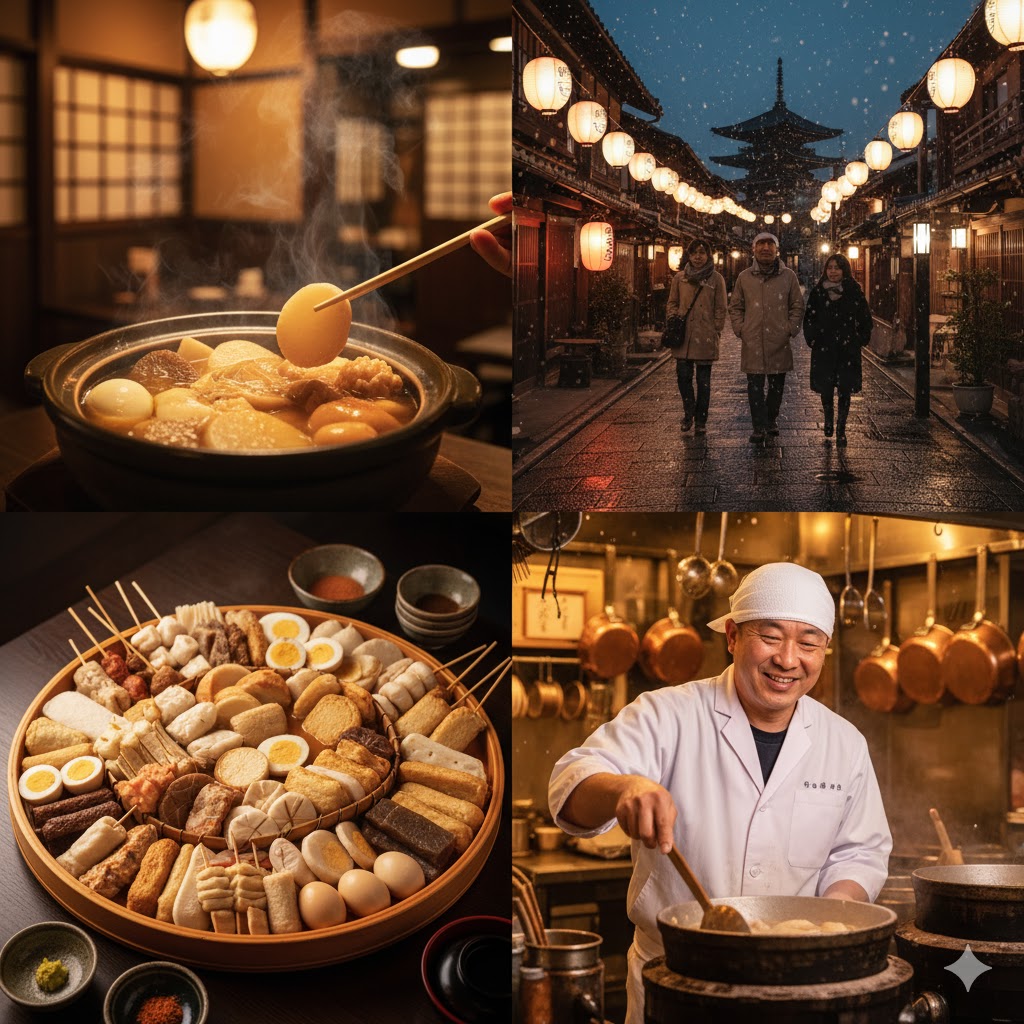
1. Introduction: More Than Just Food—A Winter Experience
If you’ve ever visited Japan during winter, you’ve probably seen street vendors selling steaming bowls from metal carts, or convenience store shelves lined with bubbling hot containers. That’s oden—Japan’s ultimate cold-weather comfort food. But here’s what most tourists don’t realize: oden isn’t just a convenient snack or quick meal. It’s a cultural institution, a social experience, and a gateway to understanding Japanese comfort food philosophy.
Whether you’re planning a winter trip to Kyoto or simply curious about Japanese cuisine beyond sushi and ramen, oden deserves serious attention. In this guide, we’ll explore what oden actually is, why Japanese people love it, and most importantly, where to experience authentic oden while exploring one of Japan’s most beautiful cities.
Welcome to Kyoto’s oden season—and to Kyo Udon Ishin, your perfect culinary companion for experiencing both traditional oden culture and contemporary Japanese cuisine.
2. What Is Oden? Understanding Japan’s Favorite Winter Dish
2-1. The Basics: Defining Oden
Oden is a traditional Japanese hot pot dish featuring an array of ingredients—vegetables, proteins, eggs, and more—slowly simmered in a delicate dashi broth. Unlike stew or soup where ingredients merge into a unified flavor, oden celebrates each component individually. Each piece maintains its integrity while absorbing the subtle umami-rich broth.
The concept is deceptively simple: select your preferred ingredients from a display, add them to hot broth, and enjoy. Ingredients vary by region and season, but common choices include daikon radish, eggs, fishcakes, konjac (konnyaku), tofu, mushrooms, and various processed seafood products. The magic happens as these items simmer together, creating layers of flavor while remaining distinctly recognizable.
The name “oden” comes from an old cooking method called “dengaku,” where ingredients were grilled and topped with miso paste. Over centuries, oden evolved into the hot pot experience we know today, becoming more accessible and forgiving—perfect for home cooks, street vendors, and restaurants alike.
2-2. Why Winter? Understanding Seasonal Eating in Japan
Japanese food culture deeply respects seasonality. Winter eating in Japan centers on warming, nourishing dishes that comfort the body during cold months. Oden embodies this philosophy perfectly. The hot broth warms you from inside, the ingredients provide nutrition and substance, and the leisurely pace of eating encourages contemplation and presence.
In winter, you’ll notice oden everywhere in Japan—at convenience stores (where it’s astonishingly cheap, typically ¥100-300 per item), at traditional restaurants, at street food stalls, and at home dinner tables. Office workers grab a quick oden set for lunch. Families gather around oden pots at home. Friends meet at restaurants to enjoy oden while chatting about their weeks.
This isn’t coincidental. Oden appears seasonally because Japanese culinary traditions align eating patterns with climate and agricultural cycles. Winter is oden season, just as spring means taking advantage of fresh bamboo shoots and summer emphasizes cold noodles.
2-3. The Philosophy Behind Oden: Simplicity and Depth
At its heart, oden represents the Japanese culinary philosophy of achieving extraordinary depth through humble simplicity. You’re not looking at elaborate cooking techniques or rare exotic ingredients. You’re looking at common vegetables and proteins, combined with attention to detail and patience.
The broth might simmer for hours, developing flavor through gentle heat rather than aggressive boiling. Each ingredient choice represents centuries of culinary tradition. The dipping sauce—typically mustard or a small dab of karashi (hot mustard)—enhances rather than masks.
This approach contrasts sharply with cuisines that rely on exotic ingredients or dramatic presentation. Oden says: “Let quality ingredients, proper technique, and time create excellence.” It’s a fundamentally humble yet sophisticated culinary statement.
3. The Essential Oden Components: What Goes in the Pot?
3-1. Proteins and Main Players
Eggs (Tamago): One of oden’s most popular items, eggs are hard-boiled, sometimes peeled and sometimes left with shells. Some restaurants offer eggs marinated in soy sauce beforehand, giving them a distinctive dark brown exterior. The contrast between creamy yolk and firm white is perfectly complemented by the dashi broth.
Fishcakes (Satsuma-age and Chikuwa): These processed seafood products might sound unappealing to those unfamiliar with Japanese cooking, but they’re crucial to oden. Satsuma-age are fried fishcakes with a slightly crispy exterior and fluffy interior. Chikuwa are tube-shaped fishcakes often served with a stick of gobo (burdock root) running through the center. Both absorb broth beautifully while adding textural variety.
Octopus (Tako): Traditionally cooked separately until tender, octopus pieces are added to oden pots. The broth keeps them warm while accentuating their delicate, slightly sweet flavor.
Other Seafood: Some restaurants include squid, shrimp, or scallops, depending on availability and specialization.
3-2. Vegetables and Plant-Based Options
Daikon Radish (Daikon): Perhaps oden’s most iconic ingredient, daikon is cut into thick half-moon shapes and simmered until tender. The mild radish flavor absorbs the broth beautifully, and the texture becomes almost creamy inside while maintaining slight firmness at edges. Many consider perfectly cooked oden daikon the standard against which oden restaurants are judged.
Potatoes (Jaga): Small, waxy potatoes are popular, especially in winter. They maintain shape while becoming fluffy inside, absorbing broth and warming you from within.
Bamboo Shoots (Takenoko): When in season, fresh or canned bamboo shoots add pleasant texture and subtle flavor.
Mushrooms (Kinoko): Shiitake mushrooms are common, especially in Kyoto restaurants that source from local producers. Their umami richness complements the dashi broth perfectly.
Konnyaku: This gelatinous substance made from plant starch has essentially no flavor but absorbs broth wonderfully and provides unique, slightly bouncy texture. It’s popular because it’s low-calorie and adds variety.
Taro Root (Satoimo): In autumn and winter, taro appears in oden pots. Its creamy texture and subtle flavor make it a favorite for many enthusiasts.
3-3. Tofu Products
Tofu (Tofu): Soft or silken tofu absorbs broth like a sponge. Eating oden tofu requires care (it’s delicate), but the reward is pure, silky comfort.
Fried Tofu (Atsuage): Thicker and more substantial than regular tofu, fried tofu maintains texture better while still absorbing broth throughout its interior.
4. How Oden Differs from Other Japanese Dishes
Understanding oden’s unique position in Japanese cuisine helps appreciate its cultural significance. Unlike ramen, which features the noodles as the star with broth as supporting player, oden celebrates all components equally. Unlike sukiyaki or shabu-shabu (hot pot dishes), which emphasize dramatic cooking theater, oden is about patient simmering.
This democratic approach to ingredients reflects oden’s humble origins. When it developed as accessible, affordable food for common people, there was no hierarchy—ingredients were selected for availability and nutritional value, not status or prestige. This egalitarian philosophy persists today. A simple boiled egg appears as proudly on oden menus as premium fishcakes.
The Umami Foundation
Understanding umami (the fifth taste—savory-deliciousness) is crucial to appreciating oden. The dashi broth that binds everything together is umami-rich, created through patient extraction of flavors from kombu (kelp) and bonito flakes. This umami foundation enhances every ingredient’s natural flavors rather than overpowering them.
Japanese culinary philosophy views umami as the bedrock of authentic flavor. Rather than adding heavy spices, sauces, or bold flavors (the Western approach), Japanese chefs maximize natural umami through technique, ingredient selection, and patience. Oden exemplifies this philosophy perfectly—the dish whispers rather than shouts its deliciousness.
5. How to Eat Oden: Culture, Etiquette, and Enjoyment
5-1. The Traditional Restaurant Experience
In a traditional oden restaurant, you’ll typically find a long counter with a large steaming pot visible behind it. The pot contains dozens of ingredients, each on skewers or in separate compartments. You approach the counter, select items you’d like (usually by pointing), and staff retrieves them with long chopsticks or tongs.
The items are then placed in a small bowl with fresh hot broth and given to you. You sit at the counter or a nearby table, take your time, and enjoy while the restaurant’s warmth envelops you. The pace is leisurely. There’s no pressure to finish quickly. Regular customers chat with staff. First-time visitors are treated with patience and enthusiasm.
5-2. Convenience Store Oden Culture
Japan’s convenience stores (Lawson, FamilyMart, etc.) offer oden at astonishingly low prices—typically ¥100-300 per item. While it might seem like casual convenience-store food wouldn’t match traditional restaurants, quality is often surprisingly good. Convenience store oden serves a crucial social function: it’s affordable, accessible, and respects the dignity of oden as a dish.
Many Japanese office workers grab oden items for lunch or after-work snacks. Students use oden as affordable sustenance. Travelers discover oden through convenience stores and develop appreciation for the dish. This democratic accessibility is actually a feature, not a limitation.
5-3. Etiquette and Eating Tips
Patience matters: Don’t burn your mouth. Items are genuinely hot. Wait a moment for initial heat to radiate away, then carefully taste. This isn’t just comfort—it’s respect for the food’s quality and your own safety.
Spoon optional: You’re welcome to use chopsticks or a small spoon provided. Some people use both. There’s no single “correct” technique. Do whatever feels natural. Japanese diners are remarkably non-judgmental about eating styles.
Mustard is your friend: A tiny dab of karashi (hot mustard) on the side of your bowl provides a wonderful counterpoint to oden’s gentle, comforting flavors. Use sparingly—a little goes a long way and transforms the flavor profile beautifully.
Build your own combinations: Oden isn’t a fixed dish but a canvas for personal preferences. If you don’t like certain textures or flavors, simply avoid them. Your perfect oden might look completely different from someone else’s ideal combination, and that’s entirely appropriate.
Enjoy the broth: When you’ve eaten most solid ingredients, sip the remaining broth from your bowl. It’s considered delicious and respectful to drink it—no need to leave anything behind. Many Japanese diners consider the remaining broth the best part.
Conversational eating: One of oden’s pleasures is the social aspect. If you’re at a counter, it’s completely appropriate to strike up conversations with other diners or staff. Oden eating culture actively encourages this kind of informal connection. Accept these interactions warmly.
Quality appreciation: If something is particularly delicious, don’t hesitate to compliment the restaurant. A sincere “Oishii desu!” (This is delicious!) or “Gochisousama!” (Thank you for this meal!) means more to restaurant staff than you might realize.
5-4. Restaurant Selection: Where to Eat Oden in Higashiyama
Beyond Kyo Udon Ishin, Higashiyama features numerous oden-ya, from casual neighborhood spots to refined establishments. When selecting where to eat oden, look for these indicators of quality:
Visible Broth: Can you see the oden pot with ingredients? Restaurants that hide their oden behind counters or serve from hidden kitchens typically aren’t highlighting their product. Quality oden restaurants proudly display their work.
Ingredient Variety: How many different items are available? Quality restaurants offer 20-30 different options, allowing you to create personalized combinations. Limited selections suggest ingredients aren’t sourced carefully.
Regular Customers: Are local people eating there during lunch hours? Tourist-targeted establishments often have sparse lunch crowds. Authentic oden-ya draws neighborhood regulars who vote with their feet about quality.
Staff Engagement: Do staff seem to care about what you’re ordering? Do they offer recommendations? This indicates the restaurant views oden as craft requiring knowledge, not simple convenience food.
Broth Appearance: Is the broth clear or murky? Does it look clean and well-maintained? Quality restaurants maintain pristine broth throughout service, regularly skimming impurities and adjusting seasoning.
6. Oden’s Unique Culinary Position
6-1. How Oden Differs from Other Japanese Dishes
Understanding oden’s unique position in Japanese cuisine helps appreciate its cultural significance. Unlike ramen, which features the noodles as the star with broth as supporting player, oden celebrates all components equally. Unlike sukiyaki or shabu-shabu (hot pot dishes), which emphasize dramatic cooking theater, oden is about patient simmering.
This democratic approach to ingredients reflects oden’s humble origins. When it developed as accessible, affordable food for common people, there was no hierarchy—ingredients were selected for availability and nutritional value, not status or prestige. This egalitarian philosophy persists today. A simple boiled egg appears as proudly on oden menus as premium fishcakes.
Unlike tempura (which requires immediate consumption after frying), oden actually improves with time. The longer ingredients simmer, the more deeply they absorb broth flavors. A perfectly aged oden pot—one that’s been simmering for hours—produces superior results to freshly made batches. This reflects oden’s Japanese philosophical roots: patience and time create excellence.
6-2. The Umami Foundation
Understanding umami (the fifth taste—savory-deliciousness) is crucial to appreciating oden. The dashi broth that binds everything together is umami-rich, created through patient extraction of flavors from kombu (kelp) and bonito flakes. This umami foundation enhances every ingredient’s natural flavors rather than overpowering them.
Japanese culinary philosophy views umami as the bedrock of authentic flavor. Rather than adding heavy spices, sauces, or bold flavors (the Western approach), Japanese chefs maximize natural umami through technique, ingredient selection, and patience. Oden exemplifies this philosophy perfectly—the dish whispers rather than shouts its deliciousness.
This umami-centered approach reflects deeper Japanese values about subtlety and restraint. The chef’s mastery isn’t revealed through dramatic presentation or assertive flavors but through the quiet excellence of perfectly balanced elements. Once you understand this philosophy, you begin appreciating Japanese food (and Japanese aesthetics generally) at deeper levels.
6-3. Kyoto’s Refined Aesthetic
While oden exists throughout Japan with regional variations, Kyoto’s version reflects the city’s refined, elegant culinary traditions. Kyoto oden tends toward subtle broth flavors (rather than dark, assertive broths), high-quality ingredients, and beautiful presentation.
Kyoto restaurants often emphasize seasonal ingredients and local sourcing. The aesthetic leans toward simplicity—you’ll see fewer crowded pots and more carefully curated selections. This reflects Kyoto’s broader culinary philosophy: quality over quantity, refinement over spectacle.
6-4. Kyoto-Specific Ingredients
Some oden items are particularly popular in Kyoto:
Kyoto Vegetables: Kyoto’s agricultural heritage means vegetables in Kyoto oden reflect local production. You might encounter mizuna (mustard greens), kyoto-negi (thin scallions), or other local varieties rarely seen in other regions.
Premium Fishcakes: Kyoto restaurants sometimes source fishcakes from traditional makers who’ve operated for generations, creating products distinctly different from mass-produced versions.
Tofu Emphasis: Kyoto’s tofu-making tradition means tofu products in Kyoto oden are often exceptional—sourced from dedicated tofu makers rather than generic suppliers.
7. Kyoto’s Higashiyama District: Where History Meets Gastronomy
7-1. Winter Light and Photography Opportunities
Winter in Higashiyama offers exceptional photographic opportunities that other seasons can’t match. The bare branches reveal building architecture normally hidden by foliage. The low-angle sun (due to the season) creates dramatic shadows and golden light in late afternoon. Temple grounds, normally crowded with tourists, become peaceful enough for contemplative photography.
If you’re interested in photography, winter is ideal. Plan your temple visits for golden hour (4:00-5:00 PM in winter), when light is most beautiful. The trade-off is colder temperatures, but proper layering makes this manageable.
7-2. The Japanese Approach to Winter
Japanese culture has long revered winter beauty. Classical poetry celebrates winter’s austere elegance. Zen gardens are designed to be most appreciated when snow covers their rock arrangements. Winter temples feel spiritually more powerful than summer versions crowded with tourists.
This cultural appreciation of winter’s subdued beauty extends to food. Heavy, warming dishes appear in winter because the season demands them both physically and spiritually. Eating oden in winter isn’t just about calorie consumption—it’s participating in seasonal Japanese philosophy.
7-3. The Complete Higashiyama Experience in Winter
The beauty of Higashiyama is its geographic compactness. All major attractions are walkable, typically 10-20 minutes apart, making it possible to combine temple visits, cultural exploration, and culinary discovery in a single satisfying day. Here’s what awaits you:
7-4. Major Attractions in Higashiyama: Your Complete Guide
Kiyomizu-dera Temple: Kyoto’s Most Iconic Temple
Kiyomizu-dera sits majestically on a hillside, drawing nearly two million visitors annually. This UNESCO World Heritage Site, founded in 778 CE, features a massive wooden stage (the main hall’s veranda) that juts dramatically over the surrounding landscape. The view encompasses Kyoto’s southern districts, and on clear days, the perspective is absolutely stunning.
The temple’s name means “pure water,” referring to the sacred Otowa Waterfall within the complex. Tradition holds that drinking water from this waterfall grants wishes or health benefits. Visitors queue to drink from the three streams, each believed to offer different blessings.
Winter visits to Kiyomizu-dera offer distinct advantages. Fewer crowds mean you can actually contemplate rather than simply navigating through masses of tourists. Morning visits around 7:00-8:00 AM provide the most peaceful experience, often with just you and a handful of other early risers enjoying the temple’s spiritual energy.
Distance from Kyo Udon Ishin: 15-20 minute walk
Winter visiting hours: 6:00 AM – 5:00 PM (subject to change)
Admission: Around ¥400 ($3 USD)
Kiyomizu-dera’s Five-Story Pagoda (Gojo Pagoda)
This stunning red pagoda sits separately from the main temple, perched dramatically on a hillside. The structure’s five tiers represent earth, water, fire, wind, and sky according to Buddhist cosmology. Photography of this pagoda is iconic—its traditional lines against Kyoto’s landscape create one of the city’s most memorable images.
Winter light in late afternoon creates particularly beautiful illumination on the pagoda. If you’re exploring in December through February, plan your afternoon temple exploration to reach this spot around 3:00-4:00 PM for optimal lighting.
Distance from Kyo Udon Ishin: 15-20 minute walk
Best time: Late afternoon during winter months
Nene-no-Michi: Kyoto’s Most Romantic Walking Path
This charming canal-side path stretches about 2 kilometers through the heart of Higashiyama. Named after Nene, wife of warlord Toyotomi Hideyoshi, the path features traditional wooden buildings, art galleries, restaurants, and small shops. Walking Nene-no-Michi feels like stepping into historical Kyoto—the modern world simply melts away.
During winter, when deciduous trees are bare, you can see through to buildings and landscape features normally hidden by foliage. The few other visitors create a contemplative atmosphere perfect for reflection. Evening walks, when lanterns glow softly around 5:00-6:00 PM, create almost magical lighting conditions.
Distance from Kyo Udon Ishin: 10-12 minute walk
Best visited: Early morning (7:00-8:00 AM) or early evening (5:00-6:30 PM)
Kodai-ji Temple: The Hidden Gem
While Kiyomizu-dera draws crowds, Kodai-ji remains relatively peaceful despite its stunning beauty. Founded in 1606 by Nene (from Nene-no-Michi) after her husband’s death, this temple features beautiful moss gardens, a moon-viewing pavilion, and two-story pagoda reflected perfectly in a pond.
The temple’s peaceful atmosphere makes it ideal for genuine spiritual contemplation. You’ll likely encounter more Japanese visitors and fewer tour groups, creating a more authentic experience. Winter’s bare branches reveal the temple architecture’s elegant lines while maintaining greenery in the moss and bamboo groves.
Distance from Kyo Udon Ishin: 12-15 minute walk
Admission: Around ¥600 ($4 USD)
Hours: 9:00 AM – 5:00 PM
Yasui Konpiragu (Shrine of the Broken Coupling): Japan’s Most Honest Shrine
One of Kyoto’s most unique attractions, Yasui Konpiragu specializes in “breaking bad relationships” and improving good ones. The shrine features a massive stone tablet with a tunnel drilled through its center. Legend holds that crawling through the tunnel breaks negative relationships and strengthens positive ones.
This shrine embodies Japanese pragmatism about relationships—acknowledging that some partnerships need ending rather than forcing every connection. The hundreds of prayers written on wooden plaques (ema) hanging throughout the shrine reflect genuine human concerns and hopes.
Distance from Kyo Udon Ishin: 3-5 minute walk
Admission: Free
Best for: Understanding modern Japanese spirituality
Kenninji Temple: Zen Mastery in Stone
Founded in 1202, Kenninji is Kyoto’s oldest Zen temple. The temple features stunning rock gardens, traditional architecture, and the famous “Wind God and Thunder God” screens painted by Sotatsu. Walking through Kenninji’s meditation halls provides profound peace.
The temple’s rock gardens embody Zen philosophy—carefully placed stones and sand represent landscapes and ideas rather than literally depicting them. Winter’s clean lines and lack of seasonal foliage make the garden’s principles even more visible.
Distance from Kyo Udon Ishin: 5-8 minute walk
Admission: Around ¥800 ($5.50 USD)
Hours: 10:00 AM – 4:00 PM
Rokuhara Mitsu-ji: Hidden Spiritual Sanctuary
This lesser-known temple near Kodai-ji is an absolute gem for travelers seeking authenticity over tourism. Rokuhara Mitsu-ji features a beautiful garden, traditional architecture, and an atmosphere of genuine spiritual practice rather than touristic experience.
The temple is sacred to Jizo, a bodhisattva associated with children and travelers. The temple garden includes hundreds of Jizo statues, creating a touching visual representation of prayers for protection. Winter visits feel particularly poignant.
Distance from Kyo Udon Ishin: 10-12 minute walk
Admission: Around ¥600 ($4 USD)
Peaceful atmosphere: Highly recommended for genuine spiritual experience
Yasaka Koshindo (Koshindo Eight-Legged Toad): Quirky Charm
This small structure dedicated to an eight-legged toad deity might seem odd to Western visitors, but it perfectly represents Japanese spirituality’s quirky, accepting nature. The shrine acknowledges that benevolent forces can come from unexpected sources.
The space is tiny, intimate, and serves mainly local visitors rather than tour groups. Visiting provides authentic insight into daily Japanese spiritual practice.
Distance from Kyo Udon Ishin: 8-10 minute walk
Free admission
Yasaka Shrine (Gion Shrine): Protective Guardian of Gion
At the southern edge of Maruyama Park, Yasaka Shrine (also called Gion Shrine) represents a gentler, more communal spirituality compared to Kyoto’s larger temples. The shrine originates the famous Gion Matsuri festival (July), one of Japan’s three major festivals.
The shrine’s intimate size and neighborhood location create a sense of local community that larger temples lack. Many residents pray here regularly, and geishas from the nearby Gion district visit during festivals and important occasions.
Distance from Kyo Udon Ishin: 8-10 minute walk
Free admission
Best visited: Early morning when locals pray
Gion District: Where Tradition Lives
No visit to Higashiyama is complete without exploring Gion, Kyoto’s most famous geisha district. Walking through Gion’s narrow streets feels like traveling back in time. Traditional wooden machiya (townhouses) line the streets, and evening walks often reward you with glimpses of geishas in stunning kimonos traveling between teahouses.
Gion’s restaurants range from casual to Michelin-starred, representing every price point and culinary style. The district embodies Kyoto’s blend of tradition and contemporary vitality.
Distance from Kyo Udon Ishin: Adjacent—practically within walking distance
Best explored: Early morning or early evening
The Famous Shopping Streets: Ninenzaka, Sannenzaka, Ichinen-zaka
These three interconnected cobblestone streets form Higashiyama’s shopping heart. Ninenzaka connects the district’s upper sections to lower areas and features souvenir shops, sweet shops, and casual eateries. Sannenzaka is quieter and more upscale, featuring galleries and refined boutiques. Ichinen-zaka is the steepest and most Instagram-famous, lined with photo-worthy spots.
These streets merit exploration both for shopping and simply for the experience of walking through traditional Kyoto streetscapes. Each shop owner carefully maintains their space, respecting the historic aesthetic while meeting contemporary needs.
Distance from Kyo Udon Ishin: 2-5 minute walk
Best explored: Early morning (before crowds) or late afternoon
Maruyama Park: Kyoto’s Oldest Park
When temple-hopping and shopping exhaust you, Maruyama Park offers respite. This peaceful green space features walking trails, garden areas, and the famous weeping cherry tree (though winter means bare branches, the tree’s graceful form remains beautiful).
Winter in Maruyama Park emphasizes greenery—moss, evergreens, and carefully maintained gardens provide color against gray skies. The park’s elevation offers lovely views over Kyoto, especially in early morning or late afternoon.
Distance from Kyo Udon Ishin: 8-10 minute walk
Free admission
Best for: Recovery breaks between attractions
8. Kyo Udon Ishin: Your Perfect Higashiyama Dining Experience
8-1. Why Kyo Udon Ishin Deserves Your Attention
Located at Masuyacho in the heart of Higashiyama, Kyo Udon Ishin represents the evolution of Kyoto’s noodle traditions. The name “Ishin” (維新) recalls the Meiji Restoration, when Japan modernized while preserving cultural identity. The restaurant embodies this philosophy—respecting traditional udon-making while embracing contemporary culinary understanding.
Kyo Udon Ishin isn’t just convenient to major attractions. It’s deliberately positioned as a destination itself, where meals become cultural experiences rather than functional breaks in sightseeing.
8-2. Beyond Udon: Oden Season Specialties
While Kyo Udon Ishin specializes in artisanal udon, the restaurant’s winter menu embraces oden culture. During cold months, the restaurant offers seasonal oden preparations that showcase Kyoto’s refined approach to this traditional dish.
Expect exceptional ingredient sourcing—daikon radish from Kyoto farmers, premium fishcakes from traditional makers, and artisanal tofu from dedicated producers. The broth reflects hours of patient development rather than shortcuts. Every element receives careful attention.
8-3. The Experience You’ll Have
Upon arrival at Kyo Udon Ishin, you’ll be greeted warmly whether you’re a regular or first-time visitor. Staff recognize the value of each customer regardless of spending level. The space balances casual accessibility with genuine quality—you’re welcome in comfortable clothes after hiking, and you’ll be treated with the same respect as formally dressed guests.
Order at the counter using the picture menu. Select your noodle or oden base, choose toppings, then find a seat. Your order typically arrives within 10-15 minutes. Take your time. Savor. Notice the broth’s depth, the noodle’s texture, the ingredient quality. This is genuine Kyoto food culture, not tourism performance.
8-4. Menu Highlights for Winter Visitors
Seasonal Oden Sets: Carefully curated selections featuring ingredients at their peak. The restaurant changes these regularly as seasons progress through winter.
Premium Kake Udon: Sometimes simplicity is perfection. Perfectly crafted noodles in exceptional broth, nothing more. This dish reveals whether a restaurant truly understands quality.
Vegetable-Forward Options: Reflecting Kyoto’s Buddhist cuisine heritage, these preparations feature seasonal vegetables prepared thoughtfully.
Specialty Broths: Beyond standard dashi, winter brings experimental broths featuring mushrooms, seasonal vegetables, or other ingredients reflecting the moment’s culinary focus.
8-5. Location Convenience
Kyo Udon Ishin’s Masuyacho location puts it within 10-20 minute walks of virtually every major Higashiyama attraction. After visiting Kiyomizu-dera, you can descend directly toward Kyo Udon Ishin. After exploring Gion or Nene-no-Michi, the restaurant appears naturally on your route.
This isn’t incidental. The restaurant’s founders deliberately chose a location that becomes natural to your itinerary rather than requiring special effort to reach. Quality dining, intelligently positioned.
8-6. Budget Expectations
A typical oden or udon meal costs ¥1,000-2,000 (approximately $7-14 USD). This represents exceptional value for ingredient quality and preparation care. In Kyoto, where meals often cost more, Kyo Udon Ishin offers premium quality at genuinely accessible prices.
9. Your Perfect Winter Day: Complete Higashiyama Itinerary
9-1. Early Morning: 7:00 AM – 9:00 AM
Arrive at Kiyomizu-dera by 7:00 AM. The temple opens at 6:00 AM, and these early hours are magical. Few visitors roam the temple grounds. Silence reigns. Monks prepare the day. The sun rises over Kyoto, illuminating the landscape gradually. Spend an hour exploring the temple, visit the Otowa Waterfall, and absorb the peaceful energy.
9-2. Mid-Morning: 9:30 AM – 11:30 AM
Descend from Kiyomizu-dera toward the famous shopping streets. Walk Ichinen-zaka or Ninenzaka before they become crowded. Browse shops, maybe purchase a small souvenir or sweet snack. The streets are charming and less overwhelming at this hour.
9-3. Lunch: 11:30 AM – 1:00 PM
Arrive at Kyo Udon Ishin for a leisurely lunch. Order oden items or noodles depending on season and preference. Take your time. Chat with locals or fellow travelers. Rest your feet while warming your core with hot food.
9-4. Early Afternoon: 1:00 PM – 3:00 PM
After lunch, rest in Maruyama Park or explore nearby temples like Kodai-ji. By this time, morning crowds have thinned, and you can appreciate these sites more peacefully. Attend to any shopping you still wish to do, visit galleries, or simply walk and observe.
9-5. Late Afternoon: 3:00 PM – 5:00 PM
Walk Nene-no-Michi, visiting Yasui Konpiragu and exploring Gion district. These areas become increasingly beautiful as afternoon light angles low across streets and buildings. Photography opportunities abound. Energy returns as you’ve rested and refueled with lunch.
9-6. Evening: 5:00 PM – 7:30 PM
Return to Kyo Udon Ishin for dinner, or explore other dining options in the neighborhood. By evening, Nene-no-Michi glows with lantern lighting. Shrines take on contemplative atmosphere. Gion’s geishas begin their evening rounds. A perfect way to end your Higashiyama day.
10. Eating Oden in Winter Kyoto: Why Now?
10-1. The Cultural Significance
Eating oden in winter Kyoto connects you to centuries of Japanese tradition. You’re not simply consuming food—you’re participating in a culturally significant practice that continues today much as it did generations ago. This continuity matters profoundly in Japan’s approach to culture.
10-2. The Physical Experience
Winter cold makes hot oden genuinely appealing rather than incidental. Your body actually needs the warmth. The steam rising from your bowl warms your face. The hot broth warms you internally. This isn’t theatrical—it’s genuine physical and psychological restoration that only fully cozy foods can provide.
10-3. The Seasonal Mindfulness
In modern Western culture, we eat the same foods year-round, disconnected from seasons. Japan’s approach teaches seasonal awareness. Winter eating centers on warming, nourishing foods. Spring emphasizes fresh vegetables. Summer focuses on cooling and hydration. Fall celebrates harvest abundance.
Eating oden in winter Kyoto teaches you this seasonal philosophy viscerally. You’re not eating out of habit—you’re eating what the moment requires.
10-4. The Social Dimension
Oden culture emphasizes community. Eating at counters, chatting with strangers, watching chefs work—these social elements distinguish oden from isolated dining. In our increasingly isolated world, this communal eating practice offers refreshing connection.
11. Practical Tips for Your Winter Higashiyama Visit
11-1. Layering Is Essential
December through February temperatures in Kyoto typically range from 35-50°F (2-10°C), with occasional dips below freezing. Proper layering makes the difference between uncomfortable cold and pleasant briskness.
Recommended layering system:
- Base layer: Thermal underwear or merino wool leggings and long-sleeved shirt
- Middle layer: Comfortable sweater or fleece
- Outer layer: Quality winter jacket that blocks wind
- Accessories: Gloves, hat, scarf
Winter walking becomes much more enjoyable when dressed appropriately. Additionally, layering allows flexibility—when you’re moving or in crowded temples, you might remove outer layers; when sitting at restaurants, the warmth of layers feels luxurious.
11-2. Comfortable Footwear Is Non-Negotiable
Kyoto’s cobblestone streets, uneven temple grounds, and constant walking demand comfortable, broken-in footwear. Your feet will thank you or curse you depending on shoe choice. Trail-tested hiking boots or very comfortable walking shoes beat fashion heels or new sneakers every time.
Consider these options:
- Waterproof hiking boots (especially important if rain occurs)
- Very comfortable walking shoes from brands known for support
Avoid: brand new shoes (blisters), fashion heels (pain), minimalist shoes (inadequate cushioning)
11-3. Pack Strategically
Bring a small daypack (15-20 liters) that holds essentials without feeling heavy:
- Water bottle (refill at convenience stores)
- Hand warmers (available at convenience stores in winter)
- Blister prevention supplies
- Phone and offline maps
- Small snacks
- Camera or phone for photography
- Light scarf (doubles as bag organizer)
Avoid heavy backpacks that cause shoulder fatigue during long walking days.
11-4. Download Offline Maps Before Arrival
While Google Maps works in Kyoto, download offline map backups to ensure navigation even if signal drops. This is particularly helpful in smaller streets and temple grounds where GPS occasionally becomes unreliable. Consider also taking screenshots of specific routes before leaving your accommodation.
11-5. Study a Few Japanese Phrases
Learning basic phrases shows respect and usually earns warmer responses from locals:
- “Arigatou gozaimasu” (ありがとうございます) – thank you very much
- “Sumimasen” (すみません) – excuse me
- “Oishii desu” (おいしいです) – this is delicious
- “Kudasai” (ください) – please (when ordering)
- “Kore onegaishimasu” (これをお願いします) – I’ll have this
Japanese people genuinely appreciate when visitors make language effort, even if imperfect.
11-6. Bring Cash
While urban Kyoto increasingly accepts credit cards, some smaller shops and traditional restaurants operate cash-only. Convenience store ATMs with English menus allow easy cash withdrawal. Having ¥10,000-20,000 ($70-140 USD) in cash ensures you’re never caught without payment options.
11-7. Respect Temple Etiquette
Temples are active places of worship, not museums. Basic respect requires:
- Remove shoes entering covered areas
- Maintain quiet reverence and avoid loud conversations
- Don’t touch religious items or statues
- Follow photography restrictions (look for signage; ask staff when uncertain)
- Move slowly and deliberately through meditation areas
- If you see people praying, give them space
This respect matters both culturally and spiritually.
11-8. Visit Early or Late to Avoid Crowds
Peak hours (10 AM – 4 PM) bring tour groups and heavy crowds. Early morning (7-8 AM) or late afternoon (4-6 PM) visits dramatically improve your experience. Morning light is also better for photography and the spiritual atmosphere is noticeably different.
11-9. Temperature Expectations Throughout the Day
Winter temperatures fluctuate significantly during a single day:
- Early morning (7-9 AM): Coldest (often just above freezing)
- Midday (11 AM-2 PM): Slightly warmer (40-45°F)
- Late afternoon (3-5 PM): Cooling again
- Evening (5 PM+): Cold returns
Dress warmly for morning/evening temple visits, with the flexibility to remove layers midday if needed.
12. Conclusion: Your Winter Kyoto Oden Adventure Awaits
Oden represents far more than sustenance. It embodies Japanese philosophy about seasonal eating, community, comfort, and the extraordinary achieved through humble simplicity. This isn’t exotic cuisine requiring expensive ingredients or advanced cooking techniques. This is food that celebrates what’s accessible, how patience creates excellence, and why sharing meals creates human connection.
Eating authentic oden in Kyoto during winter connects you to cultural practices that span centuries while remaining vibrantly contemporary. You’re participating in rituals that your server’s grandparents participated in, that Japanese office workers depend on today, that travelers discover and love year after year.
12-1. Why This Matters for Your Travel Experience
Most tourists rush through Kyoto—hitting major temples, taking photos, moving to the next attraction. This approach captures images but misses the essence. Winter oden culture invites a different rhythm. It asks you to move more slowly, notice more deeply, connect with locals, and respect seasonal cycles.
When you sit at a counter eating oden in midwinter, you’re not performing tourism. You’re experiencing genuine Japanese life. The person next to you might be a regular who’s been coming to this spot for twenty years. Staff recognize when you’re genuinely appreciating their work. Other travelers become companions rather than competitors for photo opportunities.
This is why Kyo Udon Ishin matters as a destination. The restaurant doesn’t market itself as a “tourist attraction.” It positions itself as a genuine place where excellent food is served to anyone appreciating quality. That authenticity is what transforms meals from functional breaks into memorable cultural experiences.
12-2. The Profound Beauty of Winter Kyoto
There’s a reason Japanese poets celebrated winter. The season’s austere beauty, when fully appreciated, reveals layers of elegance that other seasons don’t offer. Temple gardens look more elegant without obscuring foliage. Streets feel more authentic with fewer crowds. The cold creates urgency for connection and warmth that sunny seasons don’t inspire.
Winter travelers to Kyoto are self-selected for genuine cultural interest rather than casual tourism. You encounter more thoughtful visitors, more patient locals, more peaceful temples, more authentic experiences. The trade-off—colder temperatures—is absolutely worth the reward.
12-3. The Future of Japanese Food Culture
In an increasingly globalized world, oden represents something precious: a centuries-old food tradition that remains unchanged in its essentials. No one has reinvented oden into something trendy or “modern.” It remains what it’s always been—simple, comforting, community-oriented, and deeply seasonal.
Eating oden isn’t just experiencing Japanese history. It’s participating in cultural preservation. Each bowl you eat, each conversation you have at a counter, each moment you choose slow, intentional eating over rushed convenience—these choices support traditions worth preserving.
Kyo Udon Ishin carries forward this tradition while embracing contemporary understanding of ingredient sourcing, technique, and seasonal awareness. Supporting restaurants that respect tradition while embracing thoughtful innovation ensures these precious food cultures survive and thrive into future generations.
12-4. Your Unique Winter Advantage
If you’re reading this during November through February, you have an advantage most tourists don’t. You’re visiting at the season when Kyoto reveals itself most authentically. The temples feel spiritually powerful. The streets feel genuinely Japanese rather than carefully staged for tourism. Oden isn’t a curious exotic dish—it’s the actual food people eat because it’s exactly what winter requires.
Don’t dismiss winter as a disadvantage. Embrace it. Wear layers. Eat hot oden. Walk quiet temples. Strike up conversations with locals. This is when Kyoto’s true essence emerges for those patient enough to experience it.
13. Quick Reference: Higashiyama Winter Itinerary Summary
Morning (7:00-11:30 AM): Kiyomizu-dera Temple → Shopping streets
Lunch (11:30 AM-1:00 PM): Kyo Udon Ishin (Masuyacho)
Afternoon (1:00-5:00 PM): Maruyama Park → Kodai-ji Temple → Local exploration
Evening (5:00-7:30 PM): Nene-no-Michi → Gion District → Dinner options
Key Attractions:
- Kiyomizu-dera Temple (15-20 min walk)
- Kiyomizu-dera’s Five-Story Pagoda
- Gion District (adjacent)
- Nene-no-Michi (10-12 min walk)
- Kodai-ji Temple (12-15 min walk)
- Yasui Konpiragu (3-5 min walk)
- Kenninji Temple (5-8 min walk)
- Rokuhara Mitsu-ji (10-12 min walk)
- Yasaka Koshindo (8-10 min walk)
- Yasaka Shrine (8-10 min walk)
- Maruyama Park (8-10 min walk)
- Shopping Streets: Ninenzaka, Sannenzaka, Ichinen-zaka (2-5 min walk)
- Dining: Kyo Udon Ishin (Masuyacho) – Your perfect culinary companion for every meal break
Ready to experience authentic oden, explore historic Kyoto temples, and discover why winter is Higashiyama’s hidden season? Plan your visit now, and let Kyo Udon Ishin be your culinary home base for an unforgettable Kyoto adventure.