
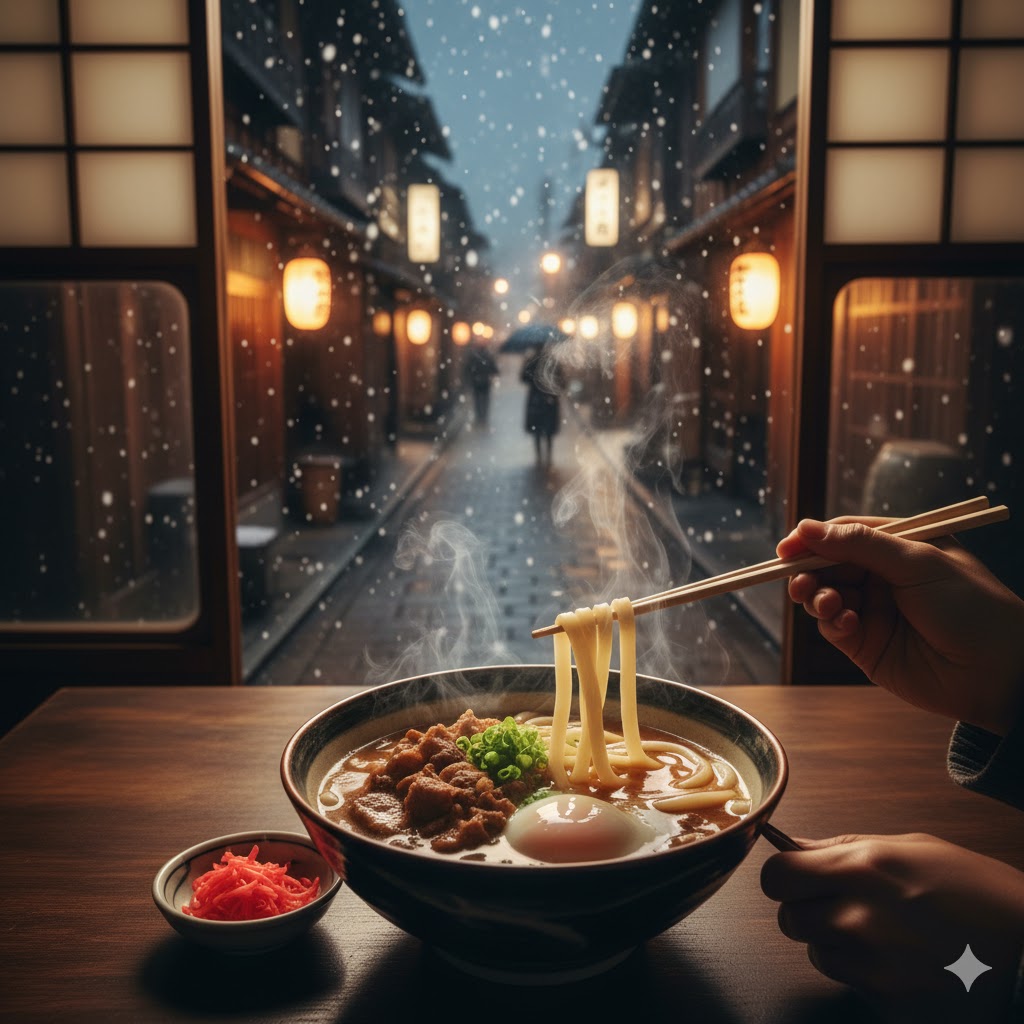
1. Introduction: Why Winter in Kyoto Is Actually Perfect (And Why Most Tourists Miss It)
When people plan Kyoto trips, they often think spring cherry blossoms (sakura season in late March/early April) or fall foliage (kouyou season in November). These seasons dominate tourist guides and social media. But here’s what experienced travelers quietly know: winter in Kyoto is genuinely the best season, and it’s dramatically underrated.
While cherry blossom season brings millions of visitors creating crowded temples and difficult photography, winter offers something increasingly rare—authentic spiritual atmosphere, manageable crowds, and genuine cultural engagement. While fall foliage creates postcard-perfect scenery, winter creates space for actual contemplation and meaningful temple experiences.
The cold weather also means something wonderful that directly impacts your dining experience: you get to experience authentic Japanese comfort food culture at its peak. This is when warm bowls of udon become not just meals, but essential parts of your Kyoto experience. They’re how locals sustain themselves through chilly mornings and how visitors like you recharge after temple-hopping in crisp mountain air.
That’s where Kyoto Udon Ishin comes in. Located in the heart of Higashiyama at Masuyacho, this isn’t just another restaurant serving noodles. It’s a warm refuge during winter exploration, a place where centuries-old tradition meets modern culinary craft, and honestly? It’s the perfect centerpiece for your winter Kyoto adventure. This restaurant understands seasonal cooking better than most establishments in the city—they don’t just serve udon year-round; they embrace what winter uniquely offers.
Let’s explore why winter Kyoto is underrated among travelers, which attractions make December through February genuinely special, and how Kyoto Udon Ishin becomes your perfect meal anchor throughout the day—transforming a simple restaurant stop into a cultural highlight of your entire trip.
2. Why Winter in Kyoto Deserves Your Attention
2-1. The Crowd Factor: Peaceful Temple Exploration
Let’s start with the obvious advantage: fewer tourists. While spring and fall temples feel like crowded department stores, winter offers something increasingly precious—actual peace. You can stand in front of Kiyomizu-dera’s famous wooden terrace and take contemplative moments without jostling through crowds of selfie-stick-wielding tourists. You can walk Ninenzaka without feeling like a sardine in a tin.
This isn’t just comfort—it’s genuinely better for experiencing what these temples actually are. These are sacred places built centuries ago for spiritual contemplation, not Instagram backdrops. Winter allows you to engage with the temples as they were intended to be experienced.
2-2. The Weather: Cold That Feels Right
Kyoto winters are cold but clean. Temperatures typically hover between 35-50°F (2-10°C), which is genuinely chilly but not paralyzing. The air feels crisp and clear, especially after rain when the temple stones and wooden structures glisten. Snow occasionally falls, transforming temples and gardens into something from classical Japanese paintings.
This weather creates perfect conditions for walking exploration. You stay warm through movement, and physical exertion becomes enjoyable rather than exhausting like summer heat makes it. Your body naturally craves warm meals, making udon arrival feel like genuine reward rather than obligation.
2-3. The Aesthetic: Kyoto in Its Most Photogenic Season
Bare branches reveal temple architecture hidden during leafy seasons. Stone pathways glisten after morning rain. Early light cuts through winter air with unusual clarity. Lanterns glow with more presence against dark skies. Kyoto’s aesthetic shifts from lush and colorful to minimalist and refined—which honestly aligns better with Zen Buddhist philosophy than the “postcard perfect” versions tourists usually imagine.
For photographers and contemplative travelers, winter Kyoto offers a completely different aesthetic than any other season. The city feels more “itself”—less decorated by nature, more defined by human architecture and spiritual intention.
2-4. The Experience: Authentic, Not Performative
Here’s something real: winter is when you meet actual Kyoto, not tourism Kyoto. Locals go about their lives. Shops aren’t packed with tour groups. Restaurants serve locals their regular meals, not specially designed “tourist-friendly” versions. Your December udon at Kyoto Udon Ishin will be the same bowl a regular customer ate that morning—not a modified, tourist-adjusted version.
This authenticity changes everything. You’re not consuming Kyoto as a packaged experience; you’re living it, however briefly, as a real person in a real place.
3. Winter Attractions That Make Kyoto Special
3-1. Gion: Kyoto’s Historic Entertainment District
Gion is famous for geishas and historic wooden machiya buildings, but winter reveals dimensions visitors usually miss. Without summer crowds, you can actually see the architecture. You can walk slowly through narrow streets and appreciate how the district preserves centuries-old traditions.
Winter evenings in Gion are particularly special. When geishas walk to appointments and evening lanterns glow against cold, dark skies, the district transforms into something genuinely historic rather than tourist-oriented. The atmosphere becomes contemplative and mysterious.
Winter Advantage: Far fewer tourists mean actual geisha sightings happen more naturally. You’re genuinely wandering historic streets rather than pushing through crowds.
Distance from Kyoto Udon Ishin: About 10-minute walk
3-2. Kiyomizu-dera Temple: Clearer Than Ever
Kiyomizu-dera’s famous wooden terrace overlooking Kyoto becomes genuinely breathtaking in winter. Without the summer haze or spring crowds, visibility extends for miles. On clear days, you can see across the entire city—a perspective completely different from other seasons.
The temple complex itself feels peaceful in ways that reward slow exploration. Interior spaces, usually rushed through, become places for genuine contemplation. The spiritual atmosphere becomes tangible rather than abstract.
Pro Tip: Arrive around 7:00 AM when the temple opens but crowds haven’t arrived. You’ll have nearly solo access to the main terrace.
Distance from Kyoto Udon Ishin: About 15-20 minute walk
3-3. The Five-Story Pagoda: Winter Minimalism
The iconic Five-Story Pagoda (Gojo Pagoda) is genuinely stunning year-round, but winter reveals its clean lines in ways other seasons obscure. Without surrounding foliage, the pagoda’s geometric perfection becomes the focus. Early morning frost or rare snow create photographic opportunities unmatched in other seasons.
The pagoda complex includes multiple smaller temples and gardens worth exploring at a leisurely pace—something winter’s smaller crowds actually encourage.
Best Time: Early morning or late afternoon when winter light angles create maximum drama.
Distance from Kyoto Udon Ishin: About 15-20 minute walk
3-4. Nene-no-Michi: Quiet Contemplation
This famous canal-side path becomes genuinely atmospheric in winter. The water reflects bare branches and stone pathways. Evening lanterns glow against winter darkness. The usual crowds thin dramatically, revealing what made this path originally special—peace and historic beauty.
Winter walks here transition naturally into warming up with udon—making Kyoto Udon Ishin the perfect endpoint for an afternoon walk.
Distance from Kyoto Udon Ishin: About 10-minute walk
3-5. Kodai-ji Temple: The Hidden Gem
While Kiyomizu-dera draws crowds, Kodai-ji Temple remains relatively peaceful even during popular seasons. Winter almost guarantees you’ll explore this absolutely stunning temple with minimal company.
The temple features a beautiful pond that freezes occasionally in December or January, creating stunning aesthetic effects. Moss gardens reach their deepest green in winter moisture. The spiritual atmosphere feels palpable.
Why Winter Specifically: Far fewer visitors, plus occasional magical moments like frozen ponds.
Distance from Kyoto Udon Ishin: About 12-minute walk
3-6. Yasaka Shrine: The Protective Guardian
Also known as Gion Shrine, this spiritual center is where the famous Gion Matsuri festival originates each July. In winter, the shrine offers peaceful contemplation without summer festival bustle. The spiritual energy feels concentrated rather than scattered.
Evening visits are particularly special when lanterns glow and the shrine becomes genuinely atmospheric. This is perfect timing before evening udon at Kyoto Udon Ishin.
Distance from Kyoto Udon Ishin: About 8-minute walk
3-7. Hokanji Temple: The Leaning Pagoda
Home to a pagoda famous for appearing to lean, Hokanji Temple is less visited than major sites but absolutely worth exploring. The temple offers a genuine feeling of discovery that’s increasingly rare in central Kyoto.
Winter visits here feel like genuine exploration rather than checking off a tourist checklist. The peaceful atmosphere rewards slow wandering.
Distance from Kyoto Udon Ishin: About 12-minute walk
3-8. Kenninji Temple: Zen Buddhism’s Headquarters
This historic temple, founded in 1202, represents the heart of Japanese Zen Buddhism. While less famous than other temples, Zen enthusiasts and contemplative travelers consider it essential. The main hall houses stunning ink paintings and the famous “Wind God and Thunder God” screens.
Winter’s quiet atmosphere makes this temple particularly powerful for those interested in Buddhist philosophy. You can actually spend meaningful time in meditation halls without feeling rushed.
Pro Tip: The temple offers sitting meditation (zazen) sessions some mornings. Check ahead if interested.
Distance from Kyoto Udon Ishin: About 5-minute walk
3-9. Rokuhara Mitsui Temple: Historical Significance
This temple holds significant historical importance but remains less touristy than major sites. It offers genuine cultural exploration for those seeking deeper engagement with Kyoto’s history beyond surface-level sightseeing.
Winter’s peaceful conditions make this ideal for those wanting to understand Kyoto’s spiritual and historical layers.
Distance from Kyoto Udon Ishin: About 8-minute walk
3-10. Yasaka Koshin-do: The Quirky Instagram Spot
This unique temple features colorful hanging dolls that have become Instagram-famous in recent years. While newer arrivals find it gimmicky, it actually represents genuine folk religious traditions. Winter crowds thin enough that you can appreciate its authentic spiritual purpose rather than just viewing it as a photo opportunity.
The temple’s unique aesthetic actually photographs better in winter’s clearer light.
Distance from Kyoto Udon Ishin: About 10-minute walk
3-11. Anneiji Gold Hikaran-gu Shrine: The Wish-Granting Shrine
This historic shrine is famous for wish-granting and features unique wooden plaques where visitors write their hopes. The intimate size makes it feel less touristy than larger shrines. Winter’s peaceful atmosphere means you can actually engage with the spiritual practice of wish-making.
Distance from Kyoto Udon Ishin: About 10-minute walk
3-12. Gion Shopping Streets: Ninenzaka, Sannenzaka, Ichinen-zaka
These famous shopping streets actually become genuinely enjoyable in winter. Without summer crowds and heat, walking through feels like actual exploration rather than survival. You can browse shops, enjoy tea at cafes, and take your time without feeling rushed.
Winter sales often start in early December, making this perfect timing for souvenir shopping. The streets feel festive but not overwhelming.
Distance from Kyoto Udon Ishin: Adjacent—2-5 minute walk
4. Your First Winter Kyoto Experience: What To Expect
4-1. The Welcome You’ll Receive
Arriving at Kyoto Udon Ishin during winter, you’re entering a space designed for comfort. The restaurant atmosphere shifts subtly in winter—warmer, more welcoming, filled with the aroma of simmering broths. If you arrive during early morning hours, the contrast between cold outside air and warm restaurant interior creates immediate sensory satisfaction.
Staff at Kyoto Udon Ishin are accustomed to international visitors, particularly those unfamiliar with Japanese restaurant customs. The process is straightforward: you’ll select your dish (typically via ticket vending machine or direct ordering with staff), pay, receive a ticket, and collect your meal when called. Most modern tourist-friendly establishments in Kyoto have English menu options or picture-based selections, and Kyoto Udon Ishin maintains this accessibility standard.
4-2. Ordering: Simplified Even If You Don’t Speak Japanese
For first-time visitors nervous about ordering, understand this: it’s genuinely simple. Menus display large photos of available dishes. You can simply point to a bowl of udon you want and say “This, please” in English. That’s sufficient. Alternatively, if you’re comfortable with basic phrases, “Kake udon kudasai” (one regular udon, please) or “Seasonal special kudasai” (seasonal special, please) works perfectly.
Staff anticipate confusion from international visitors and handle it gracefully. They’re patient, helpful, and genuinely interested in ensuring you enjoy your meal. This isn’t the formal service of high-end restaurants; it’s practical hospitality from people who understand their neighborhood serves tourists and locals equally.
4-3. The Eating Experience Decoded
When your udon arrives—typically within 10-15 minutes of ordering—the bowl will be genuinely full and genuinely hot. Winter broths, particularly, arrive at proper temperature for maximum warming effect. Some tourists hesitate initially, wondering if they should let it cool. The answer is no—Japanese cuisine intends for udon to be consumed hot. The hot broth is the point.
The eating technique is simple: use chopsticks to grab noodles, lift them to your mouth, and eat. Slurping is not just acceptable—it’s culturally encouraged. The sound indicates you’re enjoying the meal and shows respect for the chef’s work. This might feel unusual if you’re accustomed to silent eating, but in Japan, audible eating of noodles is standard and appreciated.
Many travelers use both chopsticks and a ceramic spoon provided. Some simply lift the bowl to their mouth to catch falling noodles and drink remaining broth directly. There’s no single “correct” technique—you’ll see Japanese locals using various methods. Do whatever feels natural.
Complete your meal at whatever pace feels comfortable. Standard udon meals typically take 15-20 minutes from start to finish, though lingering longer is perfectly acceptable if you’re enjoying the experience.
4-4. After Your Meal: Cultural Participation
When finished, place your chopsticks on the provided rest (or balance them across the bowl), and push your bowl slightly forward. This universal signal tells restaurant staff you’re finished. They’ll collect the bowl promptly but never rush you.
Pay at the counter as you exit—Japanese restaurants typically operate on a pay-on-exit basis rather than payment before eating. This is when cultural courtesy shines: saying “Gochisousama deshita” (literally “thank you for the meal”) with genuine warmth means more than you might expect. It connects you to a cultural practice that resonates across generations of Japanese people.
If the udon was exceptional, adding “Totemo oishii deshita” (it was very delicious) receives genuine appreciation from staff. These simple phrases cost nothing but reflect respect for their work.
4-5. Payment Logistics
Most tourist-friendly restaurants in central Kyoto accept both credit cards and cash. Kyoto Udon Ishin, given its Higashiyama location attracting international visitors, likely accommodates both payment methods. However, having cash backup is wise—Japan’s system still favors cash more than many Western countries, and some small establishments operate cash-only.
Tipping is not customary in Japan and can actually confuse staff. The price displayed is what you pay—nothing more. This differs from Western tipping culture but reflects genuine respect: staff receive regular wages rather than relying on tips, so tipping isn’t necessary or expected.
5. The Social and Spiritual Dimensions
5-1. Udon Becomes Essential
In summer, udon is one dining option among many. In winter, it becomes essential. Your body craves warmth, comfort, and nourishment. Udon delivers all three while providing genuine cultural engagement.
A warm bowl of udon after temple-hopping in cold air feels like genuine reward rather than casual meal choice. The contrast between cold air outside and warm broth inside creates a satisfaction that’s practically impossible during warmer seasons.
5-2. Winter Udon at Kyoto Udon Ishin
Kyoto Udon Ishin specializes in exactly what winter requires: deeply warming broths, hearty noodles, and ingredients that sustain through cold weather exploration.
The restaurant sources locally grown winter vegetables—root vegetables, hearty greens, mushrooms—that peak in quality during colder months. These ingredients create completely different flavor profiles than summer preparations. December through February menus emphasize warming spices, rich broths, and nourishing elements that align perfectly with seasonal needs.
The Winter Philosophy: Rather than treating udon as year-round menu items, Kyoto Udon Ishin embraces genuine seasonality. Winter udon tastes different, warms differently, and satisfies differently than other seasons.
6. Why Winter Dining Matters: The Udon Moment
6-1. Udon Becomes Essential, Not Optional
In summer, udon is one dining option among many. Spring offers kaiseki (Japanese haute cuisine), cold noodles, sushi—dozens of choices. Fall brings seasonal dishes celebrating autumn’s harvest. Winter is different. Winter is when udon becomes genuinely essential.
Your body craves warmth and comfort. Cold air outside creates genuine hunger for warm nourishment. Udon delivers all three simultaneously: warmth, comfort, and genuine cultural engagement. The contrast between cold winter air outside and warm broth inside creates a satisfaction that’s practically impossible during warmer seasons. This isn’t nostalgia or imagination—it’s physiological and cultural reality.
6-2. The Winter Culinary Philosophy
Kyoto Udon Ishin stands out specifically for embracing genuine seasonality rather than maintaining static year-round menus. In winter, the restaurant doesn’t just serve “the same udon” that summer tourists ate. Instead, broths deepen, ingredients shift to winter specialties, and the entire dining experience transforms to align with the season.
This philosophy reflects traditional Japanese culinary thinking where seasons aren’t marketing angles but actual cooking realities. Winter produces different vegetables at peak flavor than any other season. Winter cold creates different broth possibilities than summer heat allows. Winter dining becomes participation in agricultural and culinary cycles rather than consumption of static products.
6-3. How Winter Changes Everything
Temperature Becomes Primary: Winter broths emphasize genuine heat—not spicy heat, but warming temperature that penetrates your core. The broth achieves thermal purpose beyond flavor, becoming essential nourishment for cold-weather survival. This ancient relationship between seasons and food becomes tangible.
Flavor Deepens: Winter vegetables—root vegetables, hardy greens, mushrooms—provide different flavor profiles than summer produce. These ingredients require longer cooking for optimal flavor development, which winter broths naturally accommodate through their 24+ hour preparation.
Noodle Texture Matters More: Winter allows thicker, heartier noodle preparations that summer would find too heavy. These thicker noodles carry warming broth more effectively and provide greater substance for sustained exploration energy.
Accompaniments Shift: Winter udon often includes proteins or substantial toppings that summer versions skip. Tempura-fried mushrooms, soft-boiled eggs, or miso-flavored preparations add depth impossible during warm seasons.
Social Atmosphere Changes: Winter dining at udon shops transforms from quick business lunch to communal warming ritual. You see fewer solo tourists and more actual locals, families, and groups gathering for warmth and connection. The social energy shifts toward genuine community rather than tourism consumption.
7. The Temple Experience: Why Winter Changes Everything
Here’s how successful winter Kyoto travelers structure their days:
Morning (7:00-9:00 AM): Early breakfast udon at Kyoto Udon Ishin before crowds arrive. Light but warming preparation to fuel exploration.
Mid-Morning (9:00 AM-12:00 PM): Temple exploration while morning light is clean and air is clearest.
Afternoon (12:00-3:00 PM): Either late lunch udon or explore nearby shopping streets, cafes, and secondary temples.
Late Afternoon (3:00-5:00 PM): Visit major temple or shrine if not covered this morning. Winter daylight ends around 5:00 PM, so timing matters.
Evening (5:00-7:30 PM): Return to Kyoto Udon Ishin for warming dinner before or after evening exploration. Winter evenings in Gion and temple areas become magical around 6:00-7:00 PM when lanterns glow.
8. Winter Specifics: What You Need to Know
8-1. The Temple Experience: Why Winter Changes Everything
Spiritual Atmosphere Becomes Palpable
Winter transforms temple experiences in ways that spring and fall cannot replicate. These changes are subtle but profound:
Silence Becomes Powerful: Winter cold reduces ambient sound. Fewer tourists mean quieter grounds. The absence of crowd noise creates space for genuine spiritual atmosphere. Temples aren’t just quiet—they’re profoundly quiet in ways that amplify contemplative energy.
Architecture Reveals Itself: Bare branches show structural lines hidden during leafy seasons. Stone pathways glisten after morning rain or frost. Lanterns glow more prominently against winter darkness. The human design of temples becomes visible in ways nature’s seasonal display obscures other times.
Spiritual Purpose Clarifies: Without throngs of selfie-taking tourists, temples reveal their actual purpose—sacred spaces for contemplation and spiritual practice. You’re not navigating an Instagram location; you’re in an active place of worship. This shift, subtle as it sounds, profoundly changes your experience.
Physical Atmosphere Matters: Cold air itself carries spiritual dimension in Japanese aesthetic tradition. Zen Buddhism embraces emptiness, silence, and cold as states conducive to enlightenment. Winter weather aligns with Buddhist philosophy in ways no other season does.
8-2. Why Winter Temple Visits Feel “Real”
Experienced travelers use different language for winter temple experiences versus other seasons. Spring temples are “beautiful.” Fall temples are “stunning.” Winter temples are “transcendent.” This difference reflects genuine psychological and spiritual shifts.
Winter temple exploration becomes meditation rather than sightseeing. Your breath creates visible clouds in cold air. Your steps echo on quiet stone pathways. Interior temple spaces feel genuinely sacred rather than historically interesting. These environmental factors combine creating experiences that resonate long after departure.
9. The Timing Strategy for Winter Kyoto
Kyoto winters aren’t brutally cold like northern Japan, but they’re genuine cold. Dress in layers—lightweight thermal base layer, sweater, and a good winter coat. Gloves, hat, and scarf are essential, but they need to be removable as you move between outdoor exploration and warm indoor spaces like temples and restaurants.
The key: you’ll be removing and adding layers throughout the day. Outdoor exploration requires full bundling. Temple interiors are unheated (traditional aesthetic), so you’ll stay bundled inside. Restaurant interiors are warm, so you’ll remove outer layers. This constant adjustment is normal and expected. Pack items small enough to carry in a day backpack.
Timing Around Daylight
Winter daylight in Kyoto extends from roughly 6:30 AM to 5:00 PM. This seems shorter than you might expect after summer experiences. Plan major temple visits before 4:00 PM to ensure adequate light.
Many temples require removing shoes and have interior areas that feel dimmer in winter. This adds charm but requires planning time accordingly.
9-1. Hot Drinks Between Meals
Beyond udon, winter Kyoto offers wonderful hot beverage culture. Convenience stores sell quality hot coffee and tea. Small cafes throughout tourist areas offer excellent matcha, hot chocolate, or traditional hot sake. These warming moments between temple visits become part of the experience.
Budget ¥500-1,000 ($3-7 USD) daily for warm beverages as strategic warmth breaks.
9-2. Winter’s Gift: Fewer Tourists Means Better Pricing
Hotels, restaurants, and attractions often offer winter discounts since tourism slows. You might find restaurants with shorter wait times and better meal prices than peak seasons. This makes winter genuinely affordable for budget-conscious travelers.
9-3. Temple Closures and Holiday Schedules
While temples remain mostly open year-round, some adjust winter hours. Check ahead on specific temples you want to visit, particularly around New Year holidays (December 25 onwards). Most temples remain accessible, but hours may differ.
10. The Perfect Winter Day Itinerary
7:00 AM Start: Warm Beginning
Arrive at Kyoto Udon Ishin early for breakfast udon. The restaurant is quieter at this hour, and warm noodles provide energy for exploration. Order a standard or specialty warm udon. The early start means you’ve eaten before most of Kyoto awakens.
Distance walked: Minimal
Cost: ¥900-1,500 ($6-10 USD)
8:30 AM-11:30 AM: Primary Temple Exploration
Head to Kiyomizu-dera (opens 6:00 AM in winter). Spend 90 minutes exploring this magnificent temple without crowds. The early morning light creates stunning photography conditions.
Afterward, walk through Ninenzaka and Sannenzaka. Morning shopping streets feel completely different from afternoons—peaceful, authentic, genuinely explorable.
Distance walked: About 3-4 miles total through temple and streets
Cost: ¥400 temple admission + optional souvenir purchases
12:00 PM-1:00 PM: Mid-Day Break
Rather than full lunch, grab a hot beverage at a cafe. This is optional depending on hunger, but many travelers find early breakfast plus main dinner works better than split meals.
Explore secondary temples like Kodai-ji if you haven’t yet, or continue shopping street browsing.
Cost: ¥500-1,000 for beverage/light snack
1:00-4:00 PM: Secondary Temple Complex
Visit Kenninji, Hokanji, or Yasaka Shrine based on interests. These less-crowded temples reward slower exploration. The peaceful winter atmosphere makes this genuinely contemplative rather than rushed.
Walk through Gion district noting historic architecture, geisha sightings (if fortunate), and historic ambiance.
Distance walked: About 2-3 miles
Cost: Temple admissions vary (¥400-600 each)
5:00-7:30 PM: Evening Udon and Reflection
Return to Kyoto Udon Ishin for warming dinner. Order a heartier preparation—perhaps a specialty winter bowl with seasonal vegetables and rich broth.
After dinner, walk through Nene-no-Michi or Gion as evening lanterns glow. The atmosphere becomes genuinely magical in early winter darkness.
Distance walked: Minimal to moderate depending on after-dinner exploration
Cost: ¥1,200-1,800 dinner + optional tea
Total Daily Cost: ¥3,400-6,300 ($22-42 USD) including two udon meals, temple admissions, and beverages
11. Kyoto Udon Ishin: Your Winter Anchor
11-1. Why This Specific Restaurant?
Kyoto Udon Ishin stands out for several reasons specific to winter dining:
Genuine Seasonal Philosophy: Unlike chain restaurants with static menus, Kyoto Udon Ishin treats winter as a distinct season requiring different approaches. Winter broths emphasize depth and warmth. Winter vegetables arrive from local farmers experiencing peak harvest. Winter preparations differ genuinely from summer versions.
Local Ingredient Focus: The restaurant partners directly with Kyoto farmers growing winter specialties. Root vegetables, hardy greens, mushrooms, and seasonal proteins appear in winter menus based on what’s actually available and excellent right now—not what’s contractually committed months in advance.
Water and Technique Excellence: The restaurant sources Kyoto’s pristine water and uses 24+ hour broth development processes that create complexity impossible in rushed preparations. Winter broths, particularly, benefit from this patient technique.
Location Perfection: Masuyacho’s central location makes Kyoto Udon Ishin naturally become part of your itinerary rather than special trip. You’re tired, you’re hungry, you’re exploring Higashiyama, and here’s an exceptional restaurant right where you are.
11-2. Winter Menu Highlights
Hearty Winter Bowls: Special winter preparations feature warming broths infused with deeper flavors. Root vegetables like burdock, daikon, and carrots appear prepared to highlight their natural sweetness. Sometimes proteins like tempura-fried mushrooms or soft-boiled eggs provide additional substance.
Rich Broth Variations: Winter allows exploring miso-based broths or sesame-infused preparations that would feel heavy in summer. These broths coat your tongue and deliver warming comfort that light summer broths don’t provide.
Specialty Winter Vegetables: As winter progresses, different vegetables peak. Early winter emphasizes fall vegetables lingering into December. Mid-winter brings root vegetables at their prime. Late winter (February) sees early spring vegetables arriving. This progression creates natural reasons to return multiple times.
Thick, Satisfying Noodles: Winter preparations often feature slightly thicker noodle preparations that provide more substance and better carry warming broth.
Temperature Advantage: Warm udon becomes genuinely essential in winter rather than optional. The comfort contrast creates satisfaction far beyond summer udon dining.
12. Practical Winter Travel Tips
12-1. Layering Is Your Best Friend: Practical Dressing Guide
Kyoto winters aren’t brutally cold like northern Japan’s deep winter, but they’re genuine cold that requires thoughtful preparation. Temperatures typically hover between 35-50°F (2-10°C), which feels genuinely chilly but doesn’t reach paralyzing extremes. However, this range is deceptive—cold air impacts your body differently than you might expect, particularly when standing still in temples or walking slowly through outdoor shrine grounds.
The key to comfortable winter Kyoto exploration is layering strategy. Your first layer should be lightweight thermal underwear (merino wool is ideal for temperature regulation and odor resistance). Your second layer should be a warm sweater or fleece. Your outer layer should be a waterproof winter coat that blocks wind—critical since Kyoto sits in a basin where wind creates chill factor beyond actual temperature.
Accessories matter more than you might think. Gloves are essential, but they should be removable—you’ll remove them to take temple photographs, manipulate chopsticks at restaurants, and pay for purchases. Scarves provide both warmth and versatility—you can unwind them when indoors. A winter hat protects your head where heat loss concentrates.
What many first-time winter travelers miss: you’ll be removing and adding layers throughout the day. Outdoor exploration requires full bundling. Temple interiors are unheated (traditional aesthetic), so you’ll stay bundled inside. Restaurant interiors are warm, so you’ll remove outer layers. This constant adjustment is normal and expected. Pack items small enough to carry in a day backpack rather than bringing large items you can’t easily manage.
Socks deserve special mention. Wool socks provide superior warmth and moisture management compared to cotton. You’ll be standing on cold temple stone floors, walking through cold gardens, and occasionally encountering ice or frost. Quality socks matter more than you might assume.
12-2. Shoe Selection: Non-Negotiable Importance
Proper footwear is genuinely important for winter Kyoto comfort. You’ll walk 3-5 miles daily through cobblestone streets, temple grounds with uneven stone, occasional stairs, and potentially ice or frost. Your shoes need to be genuinely waterproof (not just water-resistant), provide real arch support, and offer grip for potentially slippery surfaces.
Avoid fashion boots, loose-fitting shoes, or brand-new footwear requiring break-in. Waterproof hiking shoes or quality trail-tested walking shoes work perfectly. Many experienced Kyoto travelers bring two pairs—one for daily wearing (rotating to dry if damp) and one for rainy days.
Consider bringing blister prevention supplies. After extended walking, even comfortable shoes can create hot spots. Preventative blister treatment (moleskin or similar products) available at pharmacies costs minimal money but prevents suffering later.
12-3. Understanding Winter Light and Photography
Winter light in Kyoto is genuinely excellent for photography, though it requires understanding its unique characteristics. Clear, cold air provides sharp focus without the haze that humidity creates other seasons. Winter sunlight angles create dramatic shadows that enhance architectural photography. Occasional snow or frost creates stunning effects for landscape photography.
However, winter daylight is limited. In Kyoto, the sun rises around 6:30 AM and sets around 5:00 PM in late December, extending slightly by late February. This means you have roughly 10.5 hours of daylight at winter solstice, expanding to about 11.5 hours by February. This seems limiting until you plan accordingly.
Major temple visits should occur before 4:00 PM to ensure adequate light. Early morning exploration (starting at sunrise) captures magical light conditions inaccessible other times. Evening photography after 4:30 PM benefits from warm, low-angle sunlight creating golden tones.
For serious photographers, winter Kyoto offers superior light quality to any other season, despite shorter duration. The light feels cleaner, colors appear more saturated, and the mathematical angles of light geometry create compositions impossible with haze or overhead sun.
12-4. Winter Holiday Considerations
December 25-January 5 represents Japan’s primary holiday period. While temples remain open, some adjust hours, and commercial establishments may close. Restaurants typically stay open for tourists, but some local favorites might reduce hours.
Late December in particular sees increased domestic tourism as Japanese families travel. Tourist areas remain less crowded than spring/fall peak, but expect more crowds than mid-January through mid-February. If you prefer maximum solitude, January represents ideal timing.
New Year celebrations (January 1-3) create special temple energies as locals visit for blessing prayers. This creates crowds but offers unique cultural perspectives on Japanese spiritual traditions.
13. Kyoto Udon Ishin: Your Winter Refuge and Cultural Gateway
Winter doesn’t significantly impact Kyoto’s excellent public transportation. Buses run normally and trains operate regularly. Cold weather occasionally brings ice on rare mornings, but this rarely disrupts service.
Pro Tip: Purchase a day pass for unlimited bus/subway travel if taking multiple rides. It typically pays for itself after three trips.
13-1. Why This Specific Restaurant for Winter
Kyoto has thousands of restaurants, many serving udon. Kyoto Udon Ishin distinguishes itself through specific characteristics particularly valuable during winter exploration:
Genuine Seasonal Philosophy: Unlike chain restaurants with static menus, Kyoto Udon Ishin fundamentally changes its approach each season. The chefs don’t just rotate dishes; they rethink ingredients, broth styles, and preparation methods based on what winter specifically demands. This isn’t marketing strategy—it’s genuine culinary philosophy grounded in seasonal cooking traditions.
Local Farmer Partnerships: The restaurant maintains direct relationships with Kyoto farmers rather than sourcing through commercial wholesale networks. This means winter menus reflect what’s actually harvesting at peak quality right now—not what was contractually committed months in advance. Early December udon features lingering autumn vegetables. Mid-January emphasizes root vegetables at peak flavor. Late February hints at arriving spring ingredients.
Water and Broth Mastery: Kyoto Udon Ishin sources pristine water from Kyoto’s surrounding mountains—water selected for specific mineral composition that interacts ideally with wheat flour during noodle-making. The 24+ hour broth development process creates complexity impossible through rushed preparation. Winter broths specifically benefit from this patient technique, developing flavors that warm from inside.
Location Perfection for Exploration: Masuyacho’s central position in Higashiyama means Kyoto Udon Ishin becomes natural anchor for your day rather than special trip requiring research. You’re tired, you’re hungry, you’re exploring nearby attractions, and here’s an exceptional restaurant right where you are. This convenience paradoxically enhances the experience—you’re not making compromises for location; you’re benefiting from logical positioning.
Staff Accustomed to Visitors: International tourists visiting temples and shopping streets naturally discover Kyoto Udon Ishin. Staff handle language barriers gracefully, understand visitor confusion about ordering processes, and genuinely welcome the cultural exchange that tourism represents. This creates stress-free dining regardless of your Japanese language abilities.
13-2. Winter Menu Mastery
Winter menus at Kyoto Udon Ishin emphasize several key characteristics:
Hearty Root Vegetable Preparations: Burdock (gobo), daikon radish, carrots, and Japanese yams appear prepared to highlight their natural sweetness and earthiness. These vegetables require longer cooking for optimal flavor development—something winter broths naturally accommodate through their extended preparation.
Rich Broth Variations: Winter allows exploring broths impossible in summer. Miso-based preparations provide depth and umami satisfaction. Sesame-infused broths create nutty complexity. Some winter specials feature bone broths developed over extended cooking creating layers of flavor.
Protein Integration: Summer udon often skips protein, while winter preparations frequently include tempura-fried mushrooms, soft-boiled eggs, or occasionally light meat broths. This provides nutritional substance matching the calories your body requires during cold exploration.
Thick, Textured Noodles: Winter preparations sometimes feature slightly thicker noodle variations that provide more substance and better carry warming broths. The texture changes aren’t dramatic but create different eating experiences suited to winter’s demands.
Specialty Mushrooms: Autumn mushroom season overlaps into early winter, followed by different winter varieties. The restaurant’s farmer partnerships mean limited seasonal mushroom variations appear when peak and disappear when supply ends—genuine seasonality rather than year-round availability.
13-3. What To Order: Winter Recommendations
Classic Hearty Kake Udon: The fundamental bowl—thick udon in deeply warming broth with minimal toppings. In winter, this transforms into genuine comfort food. Watch the chefs’ expertise shine through simplicity.
Seasonal Winter Special: Always order this. It represents the restaurant’s current focus and showcases what’s best in Kyoto right now. Early December differs from mid-January, which differs from late February. These specials represent reasons to return seasonally.
Root Vegetable Nabe-Style: Some winter preparations feature udon served in nabemono style—a personal hot pot where broth continues simmering throughout your meal, allowing continued cooking. The theatrical presentation adds to winter’s special atmosphere.
Miso-Based Winter Bowl: If available, this provides different flavor profile than traditional dashi broths. The richness and umami satisfaction creates warming comfort beyond temperature.
Mushroom Specialties: Winter mushroom availability creates limited-time offerings. These disappear as seasons change, making their seasonal appearance meaningful rather than permanent menu items.
14. Making Kyoto Udon Ishin Your Winter Anchor
・Thermal base layers
・Warm sweater or fleece
・Waterproof winter coat
・Gloves, scarf, hat (removable)
・Warm socks (wool recommended)
・Comfortable, waterproof walking shoes
・Day backpack for layers/souvenirs
・Reusable water bottle (fill at convenience stores)
・Phone charger (temples don’t have outlets)
・Small umbrella (occasional rain/snow)
14-1. Budget Expectations
Winter offers surprisingly good value:
・Udon meal: ¥900-1,500 ($6-10)
・Temple admission: ¥400-600 ($3-4)
・Hotel rooms: Often 20-30% cheaper than peak seasons
・Restaurants: Many offer winter discounts
・Daily budget: ¥5,000-8,000 ($33-53) including meals, temples, and minimal shopping
14-2. Photography Conditions
Winter light is genuinely excellent for photography. Clear, cold air provides sharp focus. Winter sunlight angles create dramatic shadows. Occasional snow or frost creates stunning effects. Plan photography during daylight hours (6:30 AM-5:00 PM).
15. Why Winter Is Actually Your Best Kyoto Opportunity
15-1. The Spiritual Dimension
Cold, quiet temples feel genuinely sacred rather than touristy. The spiritual atmosphere becomes tangible. This matters if you’re seeking authentic cultural experience rather than just collecting photographs.
Kyoto’s temples were built for contemplation and spiritual practice. Winter conditions align with that original purpose better than crowded spring or fall seasons.
15-2. The Authenticity Factor
Meeting locals, experiencing authentic Kyoto rhythms, and engaging with the city as a living place rather than museum happens more naturally in winter. Your udon at Kyoto Udon Ishin will be served by staff used to locals, prepared with ingredients for actual Kyoto residents, in an atmosphere genuinely reflecting the city’s character.
15-3. The Personal Transformation
Here’s something deeper: winter Kyoto changes travelers. The peace, the spiritual atmosphere, the authentic engagement, and the genuine comfort of warming food create experiences that resonate long after departing. Many travelers find winter Kyoto becomes their favorite season once experienced.
15-4. The Photography Truth
Winter photographs actually capture Kyoto more authentically than other seasons. Without spring cherry blossoms or fall foliage overwhelming the composition, Kyoto’s architecture and spiritual nature become the focus. Your winter Kyoto photographs will look genuinely different and often more striking than seasonal postcard versions.
16. Planning Your Winter Visit
16-1. Best Time: Late November Through Early March
While winter technically runs December-February, late November still feels autumnal and early March hints at spring. Late December through mid-February represents genuine winter—cold, clear, and atmospheric.
Sweet Spot: Mid-January through mid-February offers excellent balance of cold weather atmosphere with fewer crowds than holiday periods.
16-2. How Long to Stay
A 2-3 day Higashiyama-focused trip works perfectly. Day 1 covers major temples, day 2 explores secondary temples and shopping districts, day 3 allows deeper exploration or relaxation. A single day is possible but rushed; more than 3 days risks repetition unless incorporating other Kyoto districts.
16-3. Getting There
From Kyoto Station: Take bus 100 or 106 heading east toward Gojo-zaka or Kiyomizu-dera stops (about 20 minutes). Cost: ¥220 ($1.50).
By Train: Keihan Line to Kiyomizu-Gojo Station, then 15-minute walk east toward Higashiyama attractions.
Walking: If staying downtown, 45-60 minutes walking is manageable for morning temple visits before returning for breakfast.
16-4. Where to Stay
Higashiyama offers accommodations ranging from budget hostels (¥3,000-5,000/$20-33) to upscale hotels (¥15,000-40,000/$100-270). Gion area offers traditional ryokan experiences. Budget accommodation in central Kyoto near subway works perfectly if you don’t mind bus/train rides to Higashiyama.
17. Final Thoughts: Winter Kyoto Awaits
Winter in Kyoto isn’t the “ideal season” according to peak-season tourism. It’s better. It’s authentic. It’s peaceful. It’s genuine.
Kyoto Udon Ishin represents the perfect centerpiece for this experience—a restaurant that embraces winter’s genuine character rather than fighting it with summer-style preparations. Your warm bowl of udon becomes part of deeper Kyoto engagement rather than casual meal between sightseeing.
So bundle up, embrace the cold, walk temple-lined streets in crisp morning air, and experience what millions of spring/fall tourists miss. Winter Kyoto is waiting, and a perfect bowl of warming udon is calling your name.
Kyoto Udon Ishin: Where cold mornings lead to warm noodles, where tradition meets comfort, where winter transforms Kyoto into its most authentic self.
Welcome to your next unforgettable Kyoto winter.
18. Quick Reference: Winter Attractions Map
Kyoto Udon Ishin (Masuyacho) – Your meal anchor
・Gion District – 10-minute walk
・Kiyomizu-dera Temple – 15-20 minute walk
・Five-Story Pagoda – Adjacent to Kiyomizu-dera
・Nene-no-Michi – 10-minute walk
・Kenninji Temple – 5-minute walk
・Kodai-ji Temple – 12-minute walk
・Yasaka Shrine – 8-minute walk
・Hokanji Temple – 12-minute walk
・Rokuhara Mitsui Temple – 8-minute walk
・Yasaka Koshin-do – 10-minute walk
・Anneiji Gold Hikaran-gu Shrine – 10-minute walk
・Shopping Streets (Ninenzaka/Sannenzaka/Ichinen-zaka) – 2-5 minute walk
Ready to experience authentic winter Kyoto? Visit Kyoto Udon Ishin and discover why this cozy restaurant becomes an essential part of experiencing Kyoto during its most spiritual and peaceful season.