
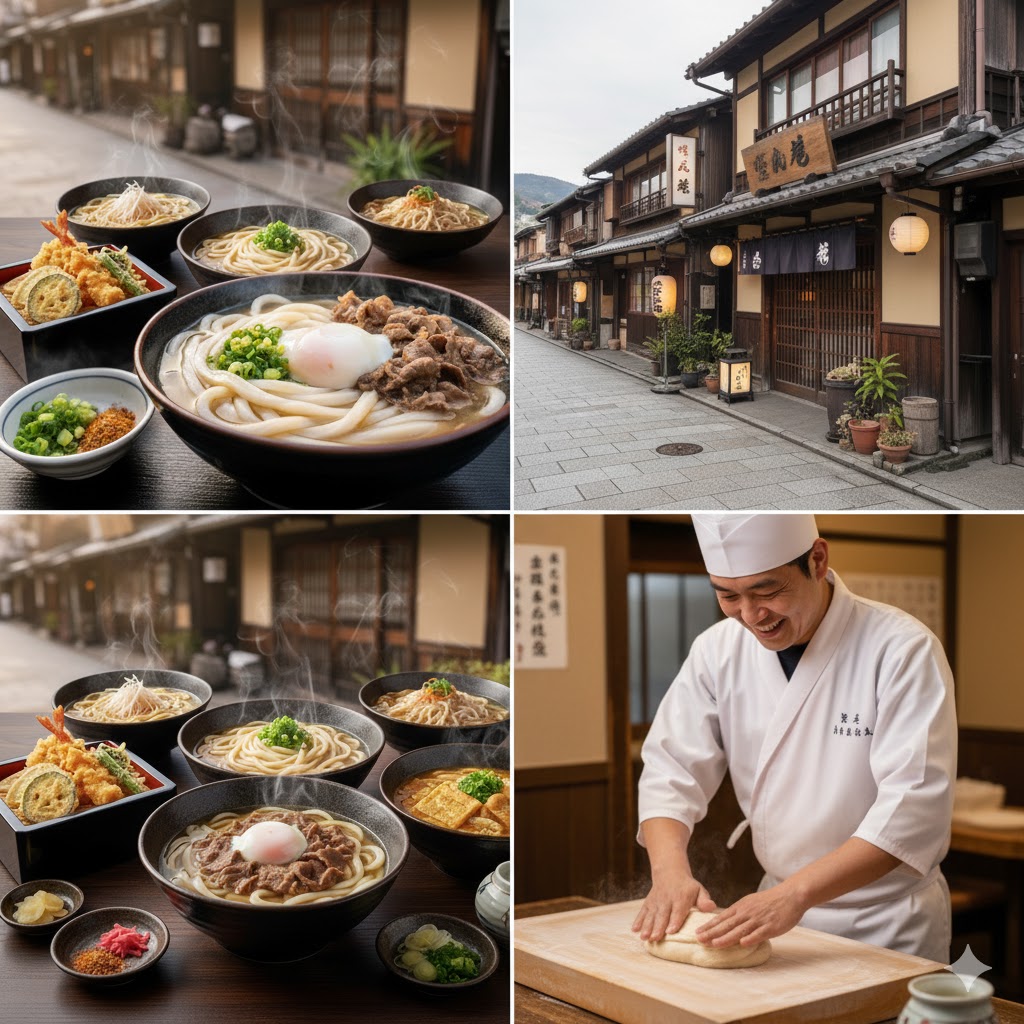
1. Introduction: Why Udon Is Your Secret to a Perfect Kyoto Day
Let’s be honest: planning a Kyoto trip can feel overwhelming. There are hundreds of temples, countless shrines, multiple geisha districts, and more photo spots than you could possibly visit in a week. Between sightseeing, shopping, and cultural experiences, one thing often gets overlooked—finding genuinely excellent food that doesn’t require hours of research or advance reservations.
Enter Kyo Udon Ishin.
If you’re exploring Kyoto’s historic districts, especially the atmospheric Higashiyama area with its temples, cobblestone streets, and spiritual energy, you need a reliable place to refuel. You need somewhere that’s not just convenient, but actually exceptional. Somewhere that understands what travelers need: delicious food, reasonable prices, accessible locations, and an authentic cultural experience.
That’s exactly what Kyo Udon Ishin delivers.
Located at Masuyacho in the heart of Kyoto’s most vibrant historic quarter, this restaurant sits perfectly positioned between some of Japan’s most important cultural sites. Whether you’re visiting the iconic Kiyomizu Temple, exploring the atmospheric Gion geisha district, or discovering the hidden spiritual gems like Kodai-ji or Yasaka Shrine, Kyo Udon Ishin becomes the natural gathering point of your day—a place where weary feet rest, hungry stomachs find satisfaction, and you discover why udon has sustained Japanese people for over 1,000 years.
This isn’t just another tourist restaurant. It’s your gateway to understanding Kyoto through one of its most important culinary traditions.
2. Understanding Your Kyoto Geography: Where Everything Connects
2-1. The Magic of Masuyacho’s Location
Before we dive into specific attractions, let’s understand why Kyo Udon Ishin’s location matters so much. Masuyacho (益屋町) isn’t a randomly chosen tourist trap—it’s strategically positioned in the soul of Kyoto’s historic eastern districts.
Think of Kyoto like a series of concentric circles, with major attractions radiating outward. Masuyacho sits at an intersection point where virtually every major Higashiyama attraction is walkable. Nothing feels far, nothing feels lost, and everything connects naturally to everything else.
This matters because good travel planning isn’t about checking off attractions in isolation. It’s about creating natural flow through your day. You start here, walk to there, naturally arrive at lunch time at a great restaurant, refuel, and continue to the next destination. Kyo Udon Ishin enables exactly that flow.
2-2. The Three Districts That Define Kyoto’s Soul
Higashiyama (Eastern Mountain): This is the biggest draw for most visitors. It’s where you’ll find Kiyomizu Temple, the Five-Story Pagoda, Nene-no-Michi, and the shopping streets (Ninenzaka, Sannenzaka, Ichinen-zaka). It’s the most atmospheric district, most photographed, and most crowded. But it’s also the most essential.
Gion: Just west of Higashiyama, Gion is Kyoto’s most famous geisha district. It’s where you’ll see geisha hustling between appointments in the evening, where traditional wooden machiya buildings line the streets, and where you can experience traditional Kyoto nightlife. Gion feels different from Higashiyama—more refined, more adult, more about appreciating beauty than sightseeing.
Central/Northern Higashiyama: This area includes temples like Kodai-ji, Yasaka Shrine, Ryoanji, and others. It’s slightly less crowded than the main Higashiyama tourist corridor but equally important culturally. Many serious temple-goers prefer this area.
Kyo Udon Ishin’s location gives you access to all three areas without feeling like you’re constantly relocating your home base.
3. Major Attractions Near Kyo Udon Ishin: Your Complete Guide
3-1. Kiyomizu-dera Temple: Kyoto’s Most Iconic Landmark
Let’s start with the big one. If you’re visiting Kyoto and only see one temple, it’s probably going to be Kiyomizu-dera (清水寺). This UNESCO World Heritage Site is undeniably the most photographed landmark in Kyoto, and for good reason.
Founded in 1798, Kiyomizu-dera sits dramatically perched on a hillside with an incredible wooden terrace—one of the most stunning architectural achievements in Japan—that juts out over the surrounding landscape. Standing on this terrace, you get an absolutely breathtaking view of Kyoto spreading out below you. During cherry blossom season or fall foliage, this view becomes almost surreal.
The name “Kiyomizu” means “pure water,” referring to the Otowa Waterfall within the temple complex. Visitors traditionally fill small cups with water from three different channels believed to represent different blessings (longevity, success, and good relationships). The practice has been happening for over 1,000 years.
Pro Travel Tip: Arrive by 7:00 AM if possible. You’ll have nearly an hour of peaceful temple time before the crowds arrive. Most visitors show up between 9 AM and 4 PM, so early morning visits completely transform the experience. After exploring for 1-2 hours, you’ll be naturally tired and genuinely hungry—perfect timing to walk down to Kyo Udon Ishin for a late breakfast or early lunch.
Distance from Kyo Udon Ishin: About 15-20 minute walk downhill
Entry Fee: ¥400 (approximately $3 USD)
3-2. The Five-Story Pagoda: Photography Gold
While technically part of the broader Kiyomizu temple complex, the Five-Story Pagoda (Gojo Pagoda) deserves its own mention. This stunning structure sits separately from the main temple on a hillside, and its classic Japanese architectural lines are absolutely photo-worthy from every angle.
The pagoda was originally built in the 1400s and represents the epitome of Japanese architectural elegance. Every photograph you see of “traditional Kyoto” that shows a five-story pagoda with perfect symmetry? That’s probably this one. It’s particularly beautiful at night during special illumination seasons (usually spring and autumn), when the structure is lit dramatically against the night sky.
Best Time to Visit: Early morning for soft light, or evening during illumination seasons for magical nighttime photography. Late afternoon offers the best warm golden light for photography.
4. Exploring Gion: Kyoto’s Most Atmospheric Geisha District
4-1. Why Gion Deserves Your Time
Gion (祇園) is Kyoto’s most famous geisha district, and unlike many geisha areas that cater primarily to nightlife, Gion is genuinely atmospheric during the day. Walking through Gion’s narrow streets lined with traditional wooden machiya buildings creates the most authentic “old Kyoto” experience possible. This is where you’ll see geisha in full makeup and formal dress heading to evening appointments, where tourists and locals naturally coexist, and where every corner offers photo opportunities.
The district is divided into two areas: Gion Kobu (the main geisha district) and Gion Higashi (the eastern section). Most visitors explore Gion Kobu, which centers around Hanami-koji Street and Shijo-dori. This area genuinely feels like stepping back in time—the wooden buildings, stone pathways, atmospheric lighting in the evening, and the presence of geisha create an experience that’s uniquely Kyoto.
4-2. Evening Gion Experience: When the District Transforms
Gion at night transforms into something entirely different from daytime atmosphere. As the sun sets and evening approaches, the district fills with professionals heading to work, tourists seeking dinner experiences, and locals enjoying the refined evening ambiance. This is when Gion’s character as Kyoto’s most sophisticated entertainment district becomes evident.
Daytime Gion (9 AM – 5 PM): Relaxed, atmospheric, exploration-focused. Perfect for walking, photographing architecture, shopping in small galleries, and grabbing casual lunch or coffee.
Early Evening Gion (5 PM – 7 PM): Transition period. Day activities wind down, evening preparations begin. Some shops close, restaurants start filling for dinner service. The atmosphere becomes more refined and adult-focused.
Night Gion (7 PM onwards): The district reaches its peak atmosphere. Geisha and maiko hurry to evening appointments in formal dress, restaurant lanterns glow warmly, the energy becomes refined yet energetic. This is genuinely the most beautiful and magical time to experience Gion.
4-3. Dining in Gion: A World of Options
The district is packed with restaurants ranging from casual ramen shops to high-end kaiseki establishments. Your dining approach depends on your preferences and budget:
Casual Dining: Small ramen shops, izakayas (Japanese pubs), and yakitori (grilled chicken) places offer authentic, affordable experiences. Expect ¥1,500-¥4,000 ($10-$27 USD) per person.
Mid-Range Traditional: Traditional Kyoto restaurants serving set menus, okonomiyaki (savory pancakes), or specialized dishes. Expect ¥3,000-¥8,000 ($20-$54 USD) per person.
Premium Kaiseki: Multi-course traditional haute cuisine. Typically requires advance reservations and costs ¥8,000-¥20,000+ ($54-$135+ USD) per person.
Pro Tip: For dinner, either commit fully to Gion’s restaurant scene or plan to eat at Kyo Udon Ishin before evening Gion exploration. Kyo Udon Ishin offers better value and quicker service than most Gion restaurants while still providing authentic, excellent food. After dinner at Kyo Udon Ishin, you can fully explore evening Gion without time pressure from restaurant reservations.
Distance from Kyo Udon Ishin: About 8-10 minute walk
Photography Etiquette: Geisha are real people, not living exhibits. Avoid photographing them directly without permission. They’re often heading to private appointments and understandably value privacy. Focus on architectural photography and street scenes instead.
5. The Pedestrian’s Paradise: Ninenzaka, Sannenzaka, and Ichinen-zaka
5-1. Three Interconnected Streets of Pure Kyoto Character
These three cobblestone streets form the heart of Higashiyama’s shopping and sightseeing experience. Each has distinct character, but together they create an interconnected shopping loop that feels like stepping into another era.
Ninenzaka (Second Year Slope): This is the main thoroughfare connecting Kiyomizu Temple to the rest of Higashiyama. It’s packed with souvenir shops, traditional sweet vendors, casual eateries, and galleries. Here you’ll find everything from matcha ice cream to traditional Kyoto crafts like washi paper and ceramics. It’s the most touristy of the three streets but also the most convenient.
Sannenzaka (Third Year Slope): Slightly less crowded than Ninenzaka, Sannenzaka offers more upscale shops, contemporary galleries, and atmospheric cafes. If Ninenzaka is about souvenirs, Sannenzaka is about discovering unique local artists and designers. It’s where you’ll find handmade ceramics, contemporary art, and small boutiques you won’t find anywhere else.
Ichinen-zaka (First Year Slope): This is the steepest and most Instagram-famous of the three. If you’ve seen dozens of photos of people wearing colorful kimonos or traditional dress on beautiful Kyoto streets, they were probably taken on Ichinen-zaka. It’s absolutely packed during peak hours (11 AM – 3 PM), especially on weekends, but offering magical early-morning and late-afternoon experiences.
5-2. Strategy for Maximum Enjoyment
Rather than fighting crowds during peak hours, consider this approach: explore one or two of these streets early in the morning (7-8 AM) when they’re nearly empty, take a break for lunch at Kyo Udon Ishin around 11:30 AM or 1 PM, then return to explore the streets again in late afternoon (after 4 PM) when crowds thin out. This strategy gives you the best of both worlds—seeing the streets without feeling constantly jostled.
Distance from Kyo Udon Ishin: Just a 2-5 minute walk
6. Nene-no-Michi: The Path That Stopped Time
6-1. Walking Through Kyoto’s Most Romantic Streetscape
Nene-no-Michi (寧々の道) translates to “Nene’s Path,” named after Yodo-dono (nicknamed Nene), the wife of Toyotomi Hideyoshi, one of Japan’s legendary warlords. This charming canal-side path stretches about 2 kilometers through the heart of Higashiyama, lined with traditional wooden buildings, small galleries, atmospheric restaurants, and shops.
What makes Nene-no-Michi special isn’t just the architecture or shops—it’s the feeling of walking through it. You genuinely feel like you’ve stepped back in time. The canal water reflects traditional buildings, maples provide dappled shade in summer and brilliant color in fall, and every corner offers a natural photo opportunity. In the evening, when lanterns glow softly and day-trippers have departed, Nene-no-Michi becomes genuinely magical.
6-2. The Experience at Different Times
Morning (7-9 AM): Peaceful, quiet, local-feeling. You might see shop owners preparing for the day, a few dedicated photographers, and early risers. Perfect for contemplative walks.
Midday (11 AM – 3 PM): Busy, energetic, social. Crowds are significant, but the energy is positive. Restaurants are full, shops are bustling, and the atmosphere is lively.
Late Afternoon (4-6 PM): The sweet spot. The big day-tripper crowds have moved on, but the evening atmosphere hasn’t fully kicked in. It’s energetic without being overwhelmingly crowded.
Evening (6 PM onwards): Absolutely magical. The lanterns glow, the crowds are minimal, the atmosphere is refined and romantic. Perfect for evening walks or dinner.
Distance from Kyo Udon Ishin: About 10 minute walk
7. Kodai-ji Temple: The Peaceful Alternative
7-1. Why Many Experienced Travelers Prefer This Over Kiyomizu
While Kiyomizu-dera draws the massive crowds, Kodai-ji (高台寺) offers a more peaceful, contemplative temple experience. Founded in 1606 by Yodo-dono (the same Nene from Nene-no-Michi), this temple is absolutely stunning yet surprisingly peaceful compared to other major temples.
The temple features beautiful moss gardens, a moon-viewing platform that reflects perfectly in a pond, and a graceful two-story pagoda. Unlike some of Kyoto’s more crowded temples, you can actually enjoy the space here, take your time with photographs, and feel genuinely connected to the temple’s spiritual essence.
7-2. The Temple Experience
Walking through Kodai-ji, you’ll notice the careful attention to garden design, the simplicity of architectural lines, and the abundance of moss-covered stones creating a meditative atmosphere. There are fewer crowds, which means you can actually hear the sounds of nature—water flowing, leaves rustling, birds singing. This creates a profoundly different experience than busy temples.
The temple’s key features include the Okutsu-in mausoleum, where Yodo-dono (the temple founder) is enshrined; the moon-viewing platform (Tsukimidai) that reflects perfectly in the pond below; and the graceful two-story pagoda that exemplifies Kyoto architectural elegance. The gardens showcase different seasonal beauty—cherry blossoms in spring, cool greenery in summer, stunning fall foliage, and snow-covered moss gardens in winter.
Many experienced Kyoto travelers specifically visit Kodai-ji over Kiyomizu because it offers equal beauty with a fraction of the crowds. It represents Kyoto’s spiritual side more genuinely than some of the mega-tourist temples. The temple’s history connects to one of Japan’s most powerful women—Yodo-dono—adding human dimension to the architectural beauty.
The moss-covered temple grounds are particularly special. In Japanese aesthetics, moss represents age, permanence, and the passage of time. Walking through moss gardens creates an almost meditative state where modern concerns fade away and you connect with something timeless.
Distance from Kyo Udon Ishin: About 12 minute walk
Entry Fee: ¥600 (approximately $4 USD)
Hours: Typically 9 AM – 5 PM (open daily)
Pro Tip: Visit late in the afternoon (after 3 PM) for the fewest crowds. The golden afternoon light through the garden creates particularly beautiful photography opportunities. Alternatively, visit during special evening illumination seasons (typically spring and fall) when the temple glows beautifully after dark.
Seasonal Highlights:
Spring: Cherry blossoms throughout the grounds
Summer: Lush green gardens with cool, shaded pathways
Fall: Brilliant red and orange foliage peaks mid-to-late November
Winter: Peaceful atmosphere with occasional snow
8. Yasaka Shrine: The Protective Guardian of Kyoto
8-1. More Than Just a Shrine
Yasaka Shrine (八坂神社), also known as Gion Shrine, sits at the heart of Kyoto’s spiritual life. This shrine is dedicated to deities of good health, prosperity, and protection. It exudes a wonderful spiritual energy and plays a central role in Kyoto’s most important summer festival—the legendary Gion Matsuri.
The main gate of Yasaka Shrine is iconic—a massive red torii gate that marks the entrance to the shrine grounds. Walking through this gate, you leave the bustling streets of Gion behind and enter a peaceful sanctuary. The shrine’s main hall is beautiful, and the surrounding grounds offer quiet spots for reflection.
8-2. Gion Matsuri Connection
Yasaka Shrine is where the famous Gion Matsuri festival originates every July. This festival, one of Japan’s most important and spectacular, has been celebrated for over 1,100 years. If you visit Kyoto in late July, you’ll witness this incredible festival with massive floats, traditional music, and thousands of celebrants in traditional dress. Even if you’re not visiting during festival season, understanding this connection gives you deeper appreciation for the shrine.
Distance from Kyo Udon Ishin: About 8 minute walk
Entry: Free
Best Time to Visit: Early morning or late evening for peaceful contemplation; daytime for busy energy.
9. Hidden Gems Worth Discovering
9-1. Yasaka Koshintsu-do: The Quirky Instagram Favorite
This small temple is famous for its hanging bell-shaped charms called “Ohakusan.” Thousands of these red and white carved wooden charms hang from the ceiling and walls, creating an almost surreal, otherworldly appearance. It’s incredibly photogenic and has become one of Kyoto’s most popular Instagram spots among younger travelers.
Why Visit: It’s unique, photogenic, and genuinely interesting. The temple’s spiritual purpose—helping people wash away negativity—adds meaningful depth beyond the visual appeal.
Distance from Kyo Udon Ishin: About 15 minute walk
Entry Fee: ¥500 (approximately $3.50 USD)
Yasaka Ankoku-ji (Yasaka Koshintsu-do’s Mother Temple)
This is the actual “parent” temple where the famous wooden charms originate. It’s less crowded than the hanging charms temple but equally spiritually significant.
9-2. Kenninji Temple: Kyoto’s Oldest Zen Temple
Just on the border of Gion, Kenninji (建仁寺) stands as Kyoto’s oldest Zen temple, founded in 1202. This temple represents the introduction of Zen Buddhism to Kyoto and remains an active monastery where monks practice meditation and study Buddhist philosophy daily.
What distinguishes Kenninji from more touristy temples is its genuine spiritual atmosphere. This is a functioning monastery, not primarily a tourist attraction. You’re entering a place where spiritual practice continues exactly as it has for over 800 years. The energy feels different—more meditative, less commercialized, more connected to authentic Buddhism.
The temple features beautiful gardens including the “Wind and Thunder” doors (Raijin-zu), painted by famous artist Sotatsu. The gardens showcase traditional Zen design with carefully placed rocks, raked gravel, and minimal plantings creating profound spiritual meaning through apparent simplicity.
Why Visit: To experience authentic Zen Buddhism without the overwhelming crowds. The temple offers genuine spiritual practice rather than tourist experience.
Distance from Kyo Udon Ishin: About 15 minute walk
Entry Fee: ¥800 (approximately $5.50 USD)
Spiritual Experience: Consider sitting quietly in the main hall for 10-15 minutes. Many visitors report this as the most spiritually meaningful moment of their Kyoto visit—just sitting with the silence and the monks’ practice around you.
9-3. Rokuhara Mitsui-ji: The Hidden Historical Gem
This beautiful temple, originally founded in 991, features a lovely garden and spiritually significant main hall. Because it’s less famous than the big-name temples, it attracts far fewer crowds. The temple’s history connects deeply to Kyoto’s past—it served important roles during multiple historical periods and continues as an active temple today.
The temple’s main attraction is the Jodo Hall, representing Pure Land Buddhism concepts. The surrounding gardens showcase multiple seasonal variations, each offering different beauty. The atmosphere here is notably more peaceful than crowded temples, allowing genuine spiritual connection.
Why Visit: Authentic temple experience with minimal crowds; deep historical significance; beautiful gardens; genuine spiritual atmosphere.
Distance from Kyo Udon Ishin: About 10 minute walk
Entry Fee: ¥600 (approximately $4 USD)
Hours: 9 AM – 4 PM
9-4. Anneiji Temple: The Peaceful Bamboo Alternative
Kyoto has a famous bamboo forest near Arashiyama on the western side of the city—incredibly beautiful but extremely crowded and requiring a 30+ minute journey from Higashiyama. Anneiji Temple offers a less-crowded bamboo experience within easy walking distance.
While smaller than Arashiyama’s bamboo grove, Anneiji still provides that magical feeling of walking through a bamboo forest tunnel. The temple also features beautiful moss gardens and a peaceful pond. The combination of bamboo, moss gardens, and temple structures creates an almost fairytale atmosphere.
Why Visit: Bamboo experience without Arashiyama crowds; peaceful temple atmosphere; beautiful photography opportunities.
Distance from Kyo Udon Ishin: About 20 minute walk (or 10 minutes by bus)
Entry Fee: ¥700 (approximately $4.75 USD)
Pro Tip: Visit early morning (before 8 AM) or late afternoon (after 4 PM) for the most peaceful experience.
10. Kyo Udon Ishin: Where Culinary Excellence Meets Strategic Location
10-1. What Sets This Restaurant Apart
We’ve talked about the location being strategic. Now let’s discuss why Kyo Udon Ishin itself deserves your attention beyond just proximity to attractions.
The Philosophy: The name “Ishin” (維新) refers to the Meiji Restoration—a period when Japan modernized while preserving cultural identity. Kyo Udon Ishin borrows this concept deliberately. The restaurant doesn’t abandon traditional udon; instead, it elevates it through contemporary techniques and genuine ingredient sourcing.
Water Quality Obsession: Udon begins with water. Kyo Udon Ishin sources pristine water from Kyoto’s natural springs, carefully selected for specific mineral compositions that interact perfectly with their wheat flour. This technical precision distinguishes exceptional udon from ordinary udon.
Local Ingredient Partnerships: The restaurant maintains direct relationships with local Kyoto farmers rather than using wholesale suppliers. This means the menu adjusts seasonally based on what’s genuinely excellent right now, not what’s contractually committed. Spring brings fresh vegetables and light broths. Summer emphasizes cold udon and refreshing options. Fall showcases mushrooms and earthiness. Winter delivers hearty, warming preparations.
The 24-Hour Broth: Udon broth development takes minimum 24 hours. The process begins the previous day with kombu (kelp) steeping in cold water overnight—extracting umami flavors while avoiding bitterness. The next morning, this kombu-infused water combines with perfectly timed bonito flake additions, shiitake mushroom extracts, and other ingredients. Rather than single simmering, the broth evolves through multiple gentle heating cycles.
Artisanal Noodle-Making: Unlike industrialized noodle production, Kyo Udon Ishin’s chefs adjust their process constantly. Flour sourcing varies monthly as harvest patterns shift. Hydration ratios adjust based on seasonal humidity. Kneading technique changes to account for gluten development variations. The chefs taste test at multiple stages, responding to how the dough feels and tastes rather than following rigid recipes.
10-2. Menu Highlights
Classic Kake Udon: Pure simplicity showcasing ingredient quality. This is where technique and ingredients shine without elaborate toppings masking them.
Seasonal Specialty Bowls: Limited-time offerings reflecting what’s best in Kyoto now. Each season brings completely different specials, giving returning visitors reasons to come back year-round.
Cold Udon (Summer): Perfectly chilled noodles with concentrated dipping sauce. The cold preparation highlights noodle texture and creates an interactive eating experience.
Vegetable-Forward Options: True to Kyoto’s Buddhist cuisine heritage, vegetables are prepared thoughtfully—sometimes grilled, sometimes pickled, sometimes lightly fried—to highlight their best characteristics.
Specialty Broths: Beyond standard dashi, seasonal broths feature miso variations, sesame-infused options, or wild mushroom combinations available only during specific seasons.
11. Practical Information: Planning Your Perfect Day
11-1. Getting to Kyo Udon Ishin
By Bus: From Kyoto Station, take buses 100 or 106 heading east toward Gojo-zaka or Kiyomizu-dera. Journey time is approximately 20 minutes.
By Train: The Keihan Line has an exit at Kiyomizu-Gojo Station, about 15 minutes’ walk to the restaurant and nearby attractions.
By Foot: From central Kyoto (Kawaramachi area), it’s a pleasant 30-45 minute walk through increasingly historic neighborhoods.
11-2. Budget Planning for Your Kyoto Adventure
Understanding typical daily costs helps with planning:
Temple/Shrine Entry: Most temples cost ¥500-¥800 ($3.50-$5.50 USD). If visiting 3-4 temples daily, budget ¥2,000-¥3,000 for entries.
Meals: Udon at Kyo Udon Ishin (¥900-¥1,500), casual lunch elsewhere (¥1,000-¥2,500), casual dinner (¥1,500-¥4,000).
Transport: Bus day passes cost approximately ¥1,100 ($7.50 USD) and usually pay for themselves after 3-4 rides.
Shopping/Souvenirs: Highly variable, but budget ¥2,000-¥5,000 ($13-$34 USD) if interested in souvenirs.
Daily Budget Estimate: Budget ¥6,000-¥12,000 ($40-$80 USD) per day for comfortable experience including meals, temple entries, and shopping. Kyo Udon Ishin helps keep food costs reasonable while maintaining quality.
11-3. Seasonal Considerations
Spring (March-May): Cherry blossoms create stunning beauty. Expect crowds 24/7 during peak bloom (late March to early April). Daytime temperatures 50-65°F (10-18°C). Book accommodations early—places fill months in advance.
Summer (June-August): Hot (85-95°F/29-35°C) and humid. Fewer tourists than spring, making it ideal for experiencing authentic Kyoto. Cold udon becomes incredibly popular. Pack light clothing, umbrella for sudden rain.
Fall (September-November): Autumn foliage creates spectacular beauty, nearly as crowded as spring. Temperatures 55-75°F (13-24°C). Peak foliage typically mid-to-late November. Highly recommended season.
Winter (December-February): Cold (35-50°F/2-10°C), occasional snow, fewest tourists. This is when Kyoto feels most peaceful and authentic. Clear air makes photography exceptionally beautiful. Bundle warmly but don’t let cold deter you—winter Kyoto is magical.
Pro Recommendation: Visit in late fall (November) or early winter (December) for beautiful scenery, manageable crowds, and reasonable weather. These shoulder seasons offer the best combination of factors.
11-4. What to Pack: Essential Items
Footwear: Comfortable, broken-in walking shoes are absolutely essential. You’ll walk 15,000-25,000 steps daily on cobblestones and uneven surfaces. Consider bringing two pairs of socks or blister prevention supplies.
Clothing: Layers work best regardless of season. Morning temple visits can be cool, midday exploration warm, and evening atmospheric. Japan is conservative—avoid very short shorts, low-cut tops, or revealing clothing. Comfortable, modest clothing works best.
Rain Gear: Kyoto can experience sudden rain. A lightweight, compact umbrella (available at convenience stores if needed) prevents wet clothes and ruined photography.
Sun Protection: Sunscreen, hat, sunglasses. Kyoto’s summer sun is intense, and many sightseeing areas offer minimal shade.
Phone/Camera: Fully charged phone and portable power bank. The combination of GPS navigation, translation apps, photography, and constant use drains batteries quickly.
Refillable Water Bottle: Convenience stores throughout Kyoto have free water (usually near the bathroom entrance or at the register). A refillable bottle saves money and reduces plastic waste.
11-5. Accessibility Considerations
Physical Accessibility: Kyoto’s historic areas feature cobblestone streets, temple steps, and generally non-accessible infrastructure. Visitors with mobility challenges may find it difficult. Kyo Udon Ishin’s location on relatively level ground makes it accessible, but reaching it from some attractions requires navigating slopes.
Vegetarian/Vegan Options: Buddhist temple cuisine (shojin ryori) is common in Kyoto. Many restaurants accommodate dietary restrictions. Udon can be made vegetarian easily. Communicate dietary needs clearly—Japanese accommodates this well.
Allergen Information: Fish-based broths are standard in Japanese cooking. If you have severe allergies, communicate clearly with restaurant staff and use translation apps to ensure safety.
11-6. Timing Your Visit: Sample Itineraries
One Day Focus: Kiyomizu-dera (morning), Kyo Udon Ishin (late morning), shopping streets (afternoon), Yasaka Shrine/Gion (evening).
Two Days Focus: Day 1 as above, plus Day 2 dedicated to Gion morning exploration, Kenninji Temple, Kodai-ji Temple, afternoon rest, evening Nene-no-Michi walk.
Three Days Focus: Above activities plus Yasaka Koshintsu-do, Rokuhara Mitsui-ji, Maruyama Park, exploration of secondary streets, and deeper Gion evening experiences.
11-7. Best Times to Visit Without Crowds:
Breakfast/Late Morning (7-10 AM): Perfect for early visitors
Off-Peak Lunch (11:30 AM or after 1:30 PM): Avoid the 12-1 PM rush
Late Dinner (after 7 PM): Less crowded than peak dinner hours
Cost: A typical bowl costs between ¥900-¥1,500 (approximately $6-$10 USD). Premium bowls with special ingredients might reach ¥2,000.
11-8. What to Expect on Your First Visit
Ordering: Most Japanese noodle restaurants use ticket vending machines. Select your dish, pay, receive a ticket, and hand it to staff. Menus typically show pictures and English translations. Pointing to a picture works perfectly fine.
Seating: Expect simple counter or small table seating. You might eat alone or next to other diners—this is completely normal in Japan and part of the authentic experience.
Eating: Your udon arrives hot and likely very full. Use chopsticks to grab noodles while slurping enthusiastically—this is encouraged in Japanese noodle culture. Take time sipping the broth between noodle portions.
Pacing: A proper udon meal takes about 15-20 minutes. No rushing, but also not excessive lingering.
Payment: Pay at the exit counter as you leave. Tipping is not customary in Japan.
12. Insider Tips for Authentic Kyoto Exploration
12-1. Timing Strategy for Maximum Enjoyment
Rather than fighting crowds, use this strategy: visit major temples early (7-8 AM), take a 10-12 AM breakfast at Kyo Udon Ishin, explore shopping streets 1-3 PM, visit secondary temples 3-5 PM (fewer crowds), return to Kyo Udon Ishin for dinner around 5-6 PM, then enjoy Nene-no-Michi and evening Gion exploration 6 PM onwards.
12-2. Wear Appropriate Footwear
This cannot be overemphasized. You’ll walk miles through Kyoto’s cobblestone streets, climb temple steps, and navigate uneven traditional surfaces. Comfortable, broken-in shoes are absolutely essential. Leave fashion heels at home.
12-3. Bring Portable Essentials
Carry a small backpack with water bottle (refill at convenience stores), sun protection, and phone power bank. Kyoto’s summer heat can be intense, and you’ll appreciate having water without buying drinks constantly.
12-4. Respect Cultural Spaces
Remove shoes when entering temple covered areas. Be quiet and respectful in spiritual spaces. Avoid touching religious items. Photography restrictions vary by temple—look for signage and ask when uncertain.
12-5. Master Basic Japanese Phrases
Simple phrases earn appreciation: “Sumimasen” (excuse me), “Arigatou gozaimasu” (thank you very much), “Oishii desu” (this is delicious). Effort to speak Japanese creates genuine human connections.
12-6. Download Offline Maps and Translation Apps
Before arriving in Kyoto, download Google Maps offline and a translation app (Google Translate, Microsoft Translator). These provide backup navigation and language support in areas without WiFi.
12-7. Cash Strategy
While tourist areas accept credit cards increasingly, some establishments operate cash-only. Convenience stores have English-menu ATMs. Withdraw cash at the start of your day rather than scrambling later.
13. A Sample Perfect Day: Putting It All Together
7:00 AM – Temple Exploration Begins
Arrive at Kiyomizu-dera early to beat crowds. Spend 1-2 hours exploring the temple, enjoying peaceful morning energy, and absorbing the spiritual atmosphere. Take photos with minimal people in the frame. Experience the Five-Story Pagoda at its most beautiful.
9:00 AM – Shopping Street Exploration
Head down to Ichinen-zaka and explore it early when it’s nearly empty. Browse shops, grab a coffee at a quiet cafe, and experience the streets without shoulder-to-shoulder crowds.
11:30 AM – Lunch at Kyo Udon Ishin
Arrive naturally hungry from morning activity. Enjoy a leisurely udon bowl, refuel your energy, and prepare for afternoon exploration.
1:00 PM – Gion District
Spend 1-2 hours walking through Gion’s atmospheric streets. Explore shops, photograph the architecture, and soak in the refined atmosphere of Kyoto’s most famous geisha district.
3:00 PM – Secondary Temple Exploration
Visit Kodai-ji, Yasaka Shrine, or Yasaka Koshintsu-do. These temples have fewer crowds than morning attractions and offer peaceful exploration time.
5:00 PM – Rest and Reflection
Take a break in Maruyama Park or a quiet cafe. Rest your feet, hydrate, and prepare for evening.
6:00 PM – Dinner at Kyo Udon Ishin or Gion
Choose based on your preference: return to Kyo Udon Ishin for dinner, or explore Gion’s dining scene. Both options provide excellent experiences.
7:00 PM onwards – Evening Kyoto Magic
Explore Nene-no-Michi in the evening when it’s most magical. Watch lanterns glow, experience the refined atmosphere, and soak in Kyoto’s nocturnal beauty.
14. Why Udon? Understanding This Ancient Culinary Tradition
14-1. Historical Context
Udon is one of Japan’s three great noodle dishes, and its history stretches over 1,000 years. Unlike ramen, which is relatively recent to Japan, udon has deep roots in Buddhist vegetarian cuisine. Monks introduced noodle-making techniques from China, but udon developed its own distinctly Japanese character over centuries.
Different regions developed different udon styles—some prefer thin noodles, others thick; some use light delicate broths, others deeply savory ones. Kyoto’s udon style reflects the city’s refined culinary heritage: elegant, balanced, sophisticated.
Historically, udon served as affordable nutrition for common people—farmers, merchants, laborers could afford a filling bowl that sustained them through hard work. Today, it remains accessible while having evolved into a respected culinary art form.
14-2. Why Udon for Travelers
Udon represents the perfect traveler’s meal. It’s more sophisticated than casual fast food but more accessible than formal kaiseki. It’s distinctly Japanese—not a compromise attempting to appeal to international tastes. A quality udon bowl showcases genuine culinary skill and ingredient sourcing while costing a fraction of premium Kyoto dining.
Udon’s affordability matters significantly. When you can eat exceptionally for $7-10, you maintain budget flexibility for other experiences. Udon’s portability matters too—you can eat quickly or linger without pressure. The restaurant never makes you feel rushed either way.
Most importantly, eating udon connects you to centuries of Japanese culinary tradition. You’re participating in a practice that has sustained people for generations, learning about Japanese food culture, and supporting local agriculture through restaurants like Kyo Udon Ishin.
14-3. Udon Etiquette and Culture
Slurping is not just acceptable—it’s encouraged and expected. The sound indicates you’re enjoying the meal and appreciating the chef’s work. Many Japanese people judge udon quality partially by how satisfying it is to slurp.
Using chopsticks and spoon together is normal. Some grab noodles with chopsticks while lifting the bowl to their mouth. Others use the spoon to manage noodles and broth. Watch locals and follow their lead.
Finishing your bowl shows respect for the chef’s work. Leaving food behind can be perceived as wasteful.
After finishing, place chopsticks on the rest or bowl and push the bowl slightly forward. Say “Gochisousama deshita” (thank you for the meal) with genuine warmth as you leave. This phrase connects you to a cultural practice that resonates across Japan.
15. Connecting the Neighborhoods: Strategic Walking Routes
15-1. The Classic Higashiyama Loop (2-3 hours)
Start at Kiyomizu-dera (arrive by 8 AM to beat crowds), walk down through the Five-Story Pagoda area, continue down Ichinen-zaka exploring shops as you go, lunch at Kyo Udon Ishin around 11 AM or 1 PM, then explore Ninenzaka and Sannenzaka in afternoon hours. This natural downhill progression flows beautifully and ends you perfectly positioned for dinner and evening exploration.
15-2. The Spiritual Route (3-4 hours)
Begin with Yasaka Shrine’s peaceful morning energy, transition to the busier Kiyomizu-dera experience, lunch at Kyo Udon Ishin, then visit Kodai-ji Temple (less crowded afternoon experience), finish with evening walk through Nene-no-Michi. This route balances busy and peaceful experiences while keeping you naturally hydrated and fed at perfect times.
15-3. The Gion-Centric Route (4-5 hours)
Explore Gion’s atmospheric streets in the morning, grab lunch at Kyo Udon Ishin around 12-1 PM, visit Kenninji Temple, explore secondary temples, then return to Gion for evening exploration when it’s most magical. This route captures Gion’s complete character—peaceful morning exploration, midday refueling, afternoon temples, evening magic.
15-4. The Ryokan Stay Route (Full Day)
If you’re staying at a ryokan (traditional inn) in or near Higashiyama, use Kyo Udon Ishin as your lunch hub to centralize your exploration. Explore different attractions in different directions from the restaurant throughout the day, always returning for a quick efficient meal without wasting time on restaurant searches.
16. Understanding Kyoto’s Temple and Shrine Landscape
16-1. What Makes Each Type Distinct
Buddhist Temples (Tera): These focus on Buddha statues, meditation, and Buddhist spiritual practice. Many feature gardens designed for meditation and contemplation. They often feel more introspective and peaceful than shrines.
Shinto Shrines (Jinja): These honor Shinto deities and nature spirits. They feature torii gates, rock arrangements, and often feel more celebratory and festive. Shrines are often focal points for festivals and community celebrations.
Zen Temples (Rinzai Zen): These emphasize meditation and philosophical study. They feature minimalist gardens, rock arrangements representing concepts, and a contemplative atmosphere. Visitors often report Zen temples as the most spiritually powerful.
The Difference Your Experience: Buddhist temples like Kodai-ji or Kenninji invite contemplation and spiritual connection through design. Shinto shrines like Yasaka feel different—more energetic, more connected to living community, more celebratory.
16-2. Why Visiting Multiple Creates Depth
Visiting just one temple provides a snapshot. Visiting three or four reveals the deep diversity of Japanese spiritual practice. You begin understanding the nuances—how Zen philosophy differs from Pure Land Buddhism, how different architectural styles serve different spiritual purposes, how Japanese spirituality balances multiple traditions.
This depth of understanding transforms you from a casual sightseer into someone genuinely appreciating Japanese culture. And this is where meals at places like Kyo Udon Ishin matter—taking time to sit, reflect, and digest both food and experience creates the mental space for deeper understanding.
17. The Culinary Context: Why Food Matters in Kyoto Tourism
17-1. Food As Cultural Bridge
Many tourists view meals as interruptions to sightseeing—quick fuel necessary to continue exploring. But in Japan, food is cultural practice. What you eat, where you eat, and how you eat communicates respect for the culture. This is why fast food in Kyoto feels wrong. This is why eating udon at Kyo Udon Ishin—a restaurant that treats noodles with genuine respect—matters beyond mere nutrition.
17-2. Kyoto’s Culinary Traditions
Kyoto has unique culinary traditions developed over centuries:
Kaiseki Ryori: Multi-course haute cuisine showcasing seasonal ingredients, refined presentations, and philosophical balance. Typically ¥15,000+ per person.
Shojin Ryori: Buddhist vegetarian cuisine developed in temples. Demonstrates how to create sophisticated meals using only plant-based ingredients. Typically ¥3,000-¥8,000 per person.
Yudofu: Hot pot tofu dishes, often served in temple settings. Comfort food that’s distinctly Kyoto. Typically ¥1,500-¥3,000 per person.
Kyoto Vegetables: Local vegetables like kyoto daikon and mizuna are prized. Markets throughout the district sell these specialty items.
Udon: As discussed extensively, udon represents accessible, democratic dining while still honoring serious culinary traditions. Typically ¥900-¥1,500 per person.
17-3. Strategic Food Planning
Rather than eating every meal at expensive restaurants, consider this approach:
Breakfast/Light Meal: Inexpensive ramen or udon shop
Lunch: Kyo Udon Ishin (quality, affordable, strategic location)
Dinner: Mix between affordable casual dining and occasional splurge at nicer restaurant
This approach maintains your budget flexibility while experiencing diverse Kyoto dining. You’re not eating the same thing twice—you’re strategically choosing venues that balance experience, cost, and timing.
18. Common Traveler Questions: Practical Answers
“Will I Get Lost?”
Kyoto has excellent street signage, increasingly in English. Download offline Google Maps before arriving. If you get genuinely lost, locals are typically friendly and helpful, and most young people speak basic English. Getting lost in Kyoto often leads to discovering beautiful side streets and hidden cafes you wouldn’t otherwise find.
“Can I Rent a Bicycle?”
Yes, bicycle rentals are common throughout Kyoto (typically ¥1,000-¥1,500 daily). However, for exploring Higashiyama specifically, bicycles are often more trouble than helpful—streets are steep, crowded during peak hours, and difficult to navigate while taking photos. Walking remains ideal for this district.
“Is Kyoto Wheelchair Accessible?”
Partially. Major temples have some accessibility, but historic streets feature cobblestones and uneven surfaces. Modern shopping areas are more accessible. If accessibility is important, contact temples directly before visiting to understand specific accommodations.
“What’s the Best Way to Get Around Between Attractions?”
Walking is ideal for the Higashiyama area. Buses work for longer distances. The subway connects some areas. For exploring around Kyo Udon Ishin specifically, most attractions are walkable with 20-30 minutes being maximum distance.
“Can I Visit Temples Barefoot?”
You remove shoes when entering covered areas, but you don’t go barefoot outside. You’ll typically wear shoes or provided slippers. Some temples provide shoe lockers for storing your shoes while you explore.
“How Much Should I Tip?”
Don’t tip in Japan. It’s not customary and may confuse staff. Simply pay the listed price and express thanks through your words and demeanor. If you receive exceptional service, you might write a positive review online, but monetary tipping isn’t appropriate.
“What’s the Best Way to Take Photos Without People?”
Visit very early (7-8 AM) or very late (after 5 PM). Peak crowds are 11 AM – 3 PM. Tourist-heavy areas like Kiyomizu-dera and shopping streets can have minimal people during off-hours.
“Can I Visit in Bad Weather?”
Yes, but plan differently. Temples remain open in rain (though slippery surfaces are common). Many travelers prefer rainy Kyoto—fewer crowds, better atmosphere for temples, and dramatically reduced tourism creates more authentic experiences.
19. Your Kyoto Story: Making It Personal
Visiting Kyoto without exploring Higashiyama and its surrounding attractions is like visiting Paris without the Eiffel Tower. The temples, shrines, gardens, and historic streets define what makes Kyoto special.
But visiting Higashiyama without discovering authentic noodles at Kyo Udon Ishin means missing a crucial element of the experience. You’d be bypassing the opportunity to refuel your body, restore your spirit, and connect with centuries of Japanese culinary tradition.
The restaurant’s Masuyacho location puts it perfectly positioned between Gion’s refined atmosphere, Higashiyama’s spiritual temples, and the shopping streets’ vibrant energy. It becomes the natural gathering point of your day—a place where weary travelers rest, hungry explorers find satisfaction, and cultural curiosity gets genuinely fulfilled.
Kyoto’s temples and shrines will still be there after lunch. The cobblestone streets will be waiting. Gion’s geisha district remains eternally atmospheric. But having a place to refuel with exceptional food, prepared with centuries-old techniques and contemporary care, transforms a good Kyoto day into an unforgettable one.
Plan your visit, wear comfortable shoes, respect the temples, and prepare your appetite. Kyoto’s historic districts are calling. A perfect bowl of udon—and the warmth of Kyo Udon Ishin—is waiting to make your journey truly complete.
Kyo Udon Ishin: Where travelers become pilgrims, where hunger becomes satisfaction, where Kyoto’s soul reveals itself through a simple bowl of noodles.
Welcome to the warmth. Welcome to Ishin. Welcome to authentic Kyoto.
20. Quick Reference: Complete Attraction Map
Major Temples & Shrines:
・Kiyomizu-dera Temple (15-20 min walk) – Entry ¥400
・Five-Story Pagoda (adjacent to Kiyomizu) – Included in Kiyomizu entry
・Kodai-ji Temple (12 min walk) – Entry ¥600
・Yasaka Shrine (8 min walk) – Entry Free
・Yasaka Koshintsu-do (15 min walk) – Entry ¥500
・Anneiji Temple (20 min walk) – Entry varies
Historic Streets & Scenic Routes:
・Ninenzaka, Sannenzaka, Ichinen-zaka (2-5 min walk) – Free
・Nene-no-Michi (10 min walk) – Free
・Gion District (8-10 min walk) – Free to explore
Your Dining Hub:
・Kyo Udon Ishin (Masuyacho) – Bowls ¥900-¥1,500
Ready to experience the warmth of authentic Kyoto? Visit Kyo Udon Ishin and discover why this restaurant is becoming an essential stop for every thoughtful traveler exploring Kyoto’s historic districts. Your perfect Kyoto day—and a perfect bowl of udon—awaits.