
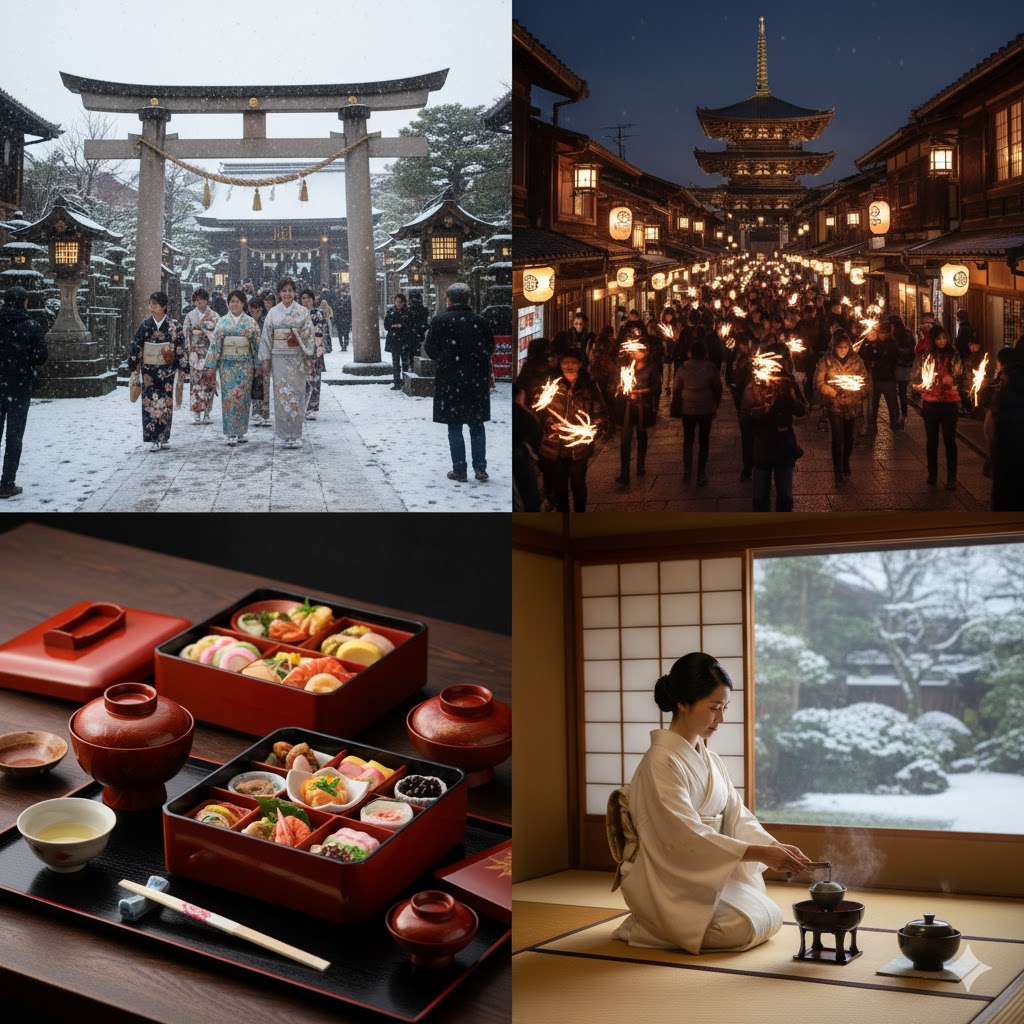
1. Introduction: Why Winter is the Perfect Time to Visit Kyoto
Are you dreaming of experiencing authentic Japanese culture at its most pristine and genuine form? If so, winter in Kyoto is absolutely calling your name with an irresistible invitation to discover a side of Japan that most tourists never experience. While many travelers flock to Japan during cherry blossom season in spring or the gorgeous fall foliage season, winter offers something equally magical and perhaps even more profound—misty mornings shrouding ancient temples in mystery, serene temples completely empty of overwhelming crowds, and vibrant New Year celebrations that truly capture the essence and spirit of traditional Japan in ways other seasons simply cannot replicate.
The winter season in Kyoto runs from December through February, bringing crisp, refreshing air and significantly fewer crowds compared to peak travel seasons. This means you’ll enjoy better access to temples and historical sites, more peaceful and meaningful exploration of historic districts, and more authentic interactions with local residents and long-held cultural traditions. Plus, the seasonal cuisine during winter months is absolutely spectacular and showcases Kyoto’s rich culinary heritage at its absolute finest.
Speaking of food, you’re absolutely in for a culinary treat—we’ll guide you through some of the best dining experiences winter has to offer, including a hidden gem for authentic udon lovers that locals have treasured for years. Winter is genuinely one of the best-kept secrets for planning your Kyoto adventure. Many international visitors skip this season, incorrectly assuming cold weather makes travel uncomfortable or unappealing. In reality, winter Kyoto offers unparalleled temple access, peaceful exploration opportunities, and authentic experiences that reveal the city’s true soul in profound and meaningful ways.
2. Understanding Kyoto’s Winter Climate and What to Pack
Before diving into what to see and do in Kyoto’s magical neighborhoods, let’s discuss practical considerations that will ensure your comfort and enjoyment throughout your stay. December and January in Kyoto typically see temperatures between 2-10°C (36-50°F), while February warms up slightly to 3-12°C (37-54°F). The overall climate is generally dry compared to other Japanese regions, and while snow is relatively rare compared to northern Japan, it’s not impossible, especially during January when occasional light snow creates picture-perfect scenes worthy of postcards.
Pack accordingly with warm, breathable layers—you’ll want to adjust your clothing as you move between sunlit areas and shaded temple paths. A comfortable, waterproof winter jacket is essential, along with sturdy, waterproof walking shoes with good grip since you’ll be exploring temples and walking along historic stone streets for hours at a time. The good news? Winter coats are fashionable in Kyoto, and the aesthetic of travelers in warm clothing actually complements the traditional cityscape beautifully and authentically.
Bring gloves, a scarf, and a warm hat to protect yourself from the biting wind that occasionally whips through temple grounds, especially during early morning visits when temperatures are at their lowest. Consider packing an umbrella or rain jacket, as winter occasionally brings drizzle or light rain. Waterproof backpacks are also helpful for protecting your camera equipment and valuables while exploring temples and historic areas. Local shops throughout the Higashiyama district sell charming umbrellas and winter accessories if you need them or forgot to pack.
3. Understanding Winter Weather Advantages
Unlike some East Asian cities that experience high humidity even in winter, Kyoto’s winter is relatively dry and comfortable. This makes the cold feel less penetrating than in more humid climates, where cold temperatures seem to penetrate more deeply into your bones and require constant heating. The dryness is actually beneficial for temple exploration—you won’t feel the sticky dampness that makes cold weather feel more uncomfortable and bone-chilling. Your hair will thank you, and you’ll find walking more comfortable than you might initially expect.
Winter in Kyoto means early sunsets that dramatically affect your sightseeing planning and daily schedule. During December, the sun sets around 4:30 PM, while February sunset extends to approximately 5:30 PM. This means you’ll want to start exploration early to maximize daylight hours and avoid missing important sights as dusk falls and darkness descends. The advantage? Long, dramatic golden-hour photography opportunities as the sun sets over temple roofs and historic streets, creating magical light conditions perfect for photography enthusiasts and professionals.
The air quality is generally excellent during winter months. While Kyoto can experience occasional air pollution from surrounding areas, winter weather patterns typically disperse pollutants effectively throughout the region. On clear winter days, visibility is exceptional, making temple photography particularly rewarding and allowing long-distance views of the city below from hillside temples like Kiyomizu.
4. Kyoto’s New Year Celebrations: A Cultural Experience Like No Other
4-1. Hatsumode: First Shrine Visit of the Year
The most significant and culturally important tradition during Kyoto’s winter season is Hatsumode (初詣), which translates to “first shrine visit of the New Year.” This deeply rooted custom dates back centuries and remains profoundly embedded in Japanese culture and spiritual practice throughout the country. Between January 1-7, millions of Japanese people visit shrines and temples throughout the country to pray for good fortune, health, prosperity, and happiness in the coming year.
If you’re visiting during this magical period, you absolutely must participate in this sacred ritual and experience this uniquely Japanese tradition firsthand. The atmosphere is electric and genuinely unforgettable—colorful lanterns illuminate pathways creating ethereal light, traditional music and sounds fill the air, and vendors line the temple grounds selling festive treats like takoyaki (octopus balls), yakitori (grilled chicken skewers), okonomiyaki (savory pancakes), and other delicious street food that fills the air with wonderful aromas.
The sense of community, celebration, and spiritual connection is absolutely moving and creates memories that genuinely last lifetimes. Visitors ring large bronze bells, throw coins into offering boxes while making wishes, and offer silent prayers or spoken wishes for the year ahead. Many people purchase small decorative wooden plaques called ema, write their wishes on them, and hang them in the temple grounds as offerings to the gods. The sight of thousands of ema hanging on wooden stands is genuinely breathtaking and deeply meaningful.
4-2. Special New Year Decorations and Displays
Kyoto’s temples, shrines, and shops transform dramatically during New Year season with elaborate and beautiful traditional decorations that have been used for centuries in Japan and East Asia. You’ll see absolutely beautiful kadomatsu (bamboo and pine arrangements) displayed at shop entrances and temple gates, symbolizing longevity and good fortune for the year ahead. Shimenawa (sacred straw ropes) adorn temple gates and shrine entrances, indicating sacred spaces where gods reside according to Shinto beliefs. Kumade (ornate bamboo rakes) symbolizing prosperity and good luck are sold at shrine stalls throughout the season.
These decorations are pure visual poetry—perfect for photography and cultural understanding of Japanese aesthetics and design principles developed over centuries. The attention to detail in each arrangement reflects Japan’s deep respect for tradition and traditional aesthetic principles developed over centuries of cultural refinement. Walking through Kyoto during New Year season means you’re surrounded by centuries-old tradition expressed through visual art, symbolism, and careful craftsmanship.
5. Exploring Kyoto’s Higashiyama District: A Winter Wonderland
The Higashiyama district (東山区), where our featured restaurant Kyo-Udon Ishin is beautifully located at 桝屋町 (Masuyacho) in Kyoto 605-0083, is hands-down one of Kyoto’s most atmospheric and historically significant neighborhoods. This enchanting area is a major haven for temple lovers, culture enthusiasts, photographers, and travelers seeking authentic experiences and genuine connections with Kyoto’s past. Higashiyama literally means “East Mountain,” referring to its location on the eastern side of the city near the foothills of surrounding mountains.
5-1. Kiyomizu Temple (Kiyomizu-dera): An Iconic Must-See Destination
Perched majestically on a hillside overlooking Kyoto, Kiyomizu Temple (清水寺) is one of Japan’s most famous temples and a UNESCO World Heritage site that draws millions of visitors from around the globe each year. Founded in 778 during the Nara period, this architectural masterpiece and spiritual destination features a legendary wooden stage that juts out from the main building at a height of 13 meters (43 feet) above the hillside below, creating a breathtaking visual effect.
The temple’s architecture is absolutely stunning—traditional Japanese design and craftsmanship at its finest and most refined. The main hall was constructed without using a single nail, showcasing the incredible and sophisticated carpentry skills of ancient Japanese craftsmen who built this structure over 1,200 years ago. From the famous wooden stage, you’ll experience breathtaking views of Kyoto’s expansive cityscape, surrounding valleys, and the valley below that stretches for miles, offering some of the best vistas in the entire city.
Pro tip for winter visitors: Arrive early, ideally between 6-7 AM, to beat the crowds and experience the temple in peaceful solitude and spiritual quietness that daytime crowds destroy. Winter mornings are particularly magical, with mist hovering mysteriously over the valley below, creating an almost otherworldly atmosphere that seems to exist outside of time itself. The temple opens at 1 AM on New Year’s Day for special Hatsumode celebrations, making it perfect for catching the first sunrise of the new year and joining thousands in this sacred and unforgettable tradition.
The name “Kiyomizu” means “pure water,” referencing the pure water waterfall that flows through the temple grounds. This sacred water, flowing from the hillside, has been considered spiritually purifying for over 1,200 years of continuous spiritual practice and pilgrimage by believers.
5-2. Understanding the Kiyomizu Waterfall and Its Sacred Significance
The Kiyomizu waterfall, flowing directly from natural springs in the hillside, is divided into three distinct streams, each with its own spiritual significance and purpose according to temple traditions. According to long-held tradition, drinking from different streams grants different blessings—longevity from one stream, success in studies and education from another, or success in love and relationships from the third. Many visitors take time to fill cups and drink from these sacred waters, making specific wishes as they do, hoping to receive the blessings associated with that particular stream.
The five-story pagoda visible from various points throughout the Higashiyama district is absolutely unforgettable and serves as one of Kyoto’s most photographed landmarks that appears on postcards and travel guides worldwide. This is the Higashiyama five-story pagoda, part of the Kiyomizu temple complex and a National Treasure of Japan officially designated by the government. In winter light, especially during golden hour at sunset, the pagoda’s silhouette stands beautifully against gray winter skies and creates absolutely stunning photographic opportunities for photography enthusiasts and professionals.
5-3. Nene no Michi: A Romantic Stone Path Through Time
Walking along Nene no Michi (Nene’s Path / 念の道) is genuinely like stepping back in time to feudal-era Kyoto of centuries past and long-gone eras. This beautifully maintained stone pathway runs through the historic Higashiyama geisha district, winding between traditional wooden machiya townhouses, charming boutique shops, and authentic restaurants serving traditional cuisine. The path is lined with perfectly preserved architecture, creating an atmosphere of timeless elegance and historical authenticity that is unmatched in modern Japan.
In winter, the path has an intimate, peaceful quality that’s simply enchanting and undeniably romantic, quite different from crowded summer months. The colder weather means significantly fewer crowds, allowing you to truly appreciate the architecture and absorb the atmosphere. Traditional music often drifts from nearby establishments, adding atmospheric layers to your walk and sensory experience. The sound of your footsteps on ancient stones, combined with distant shamisen music from tea houses, creates a multi-sensory experience of old Kyoto that feels authentic and timeless.
The path is especially romantic and magical at dusk when traditional paper lanterns illuminate the route, casting warm light on wooden facades and stone surfaces below. If you’re visiting with someone special, Nene no Michi at sunset is pure romantic magic and often considered one of Kyoto’s most enchanting and memorable locations by visitors and locals alike.
5-4. The Historic Shopping Lanes: Ninen-zaka, Ichinen-zaka, and Sannen-zaka
These three famous shopping streets branch off from the main Kiyomizu Temple area and absolutely deserve dedicated exploration time during your visit to the neighborhood. Each lane has developed its own distinctive character, charm, and specialty shops over centuries of commercial activity. These areas have been important commercial districts for centuries and continue to thrive as vital cultural and commercial hubs in modern Kyoto.
5-5. Ninen-zaka and Ichinen-zaka: Shopping, Culture, and Dining
These bustling lanes are packed with authentic shops selling everything from traditional crafts and souvenirs to contemporary artisan goods. Ninen-zaka (二年坂, Two-Year Lane) and Ichinen-zaka (一念坂, One-Year Lane) feature charming shops, traditional tea houses, and excellent restaurants housed in beautifully restored traditional buildings that have often been operating for generations of families. Winter is actually the perfect time to shop here—you’ll avoid the sweltering crowds and overwhelming tourist presence of summer and peak season completely.
You can leisurely browse pottery shops featuring beautiful ceramics, textile boutiques with traditional fabrics, sweet shops selling traditional wagashi (beautiful Japanese confections), and art galleries showcasing work by local artists. Many shops offer the chance to see artisans actually working in real time, giving you genuine insight into traditional Japanese craftsmanship and techniques passed down through generations of families.
5-6. Sannen-zaka: The Most Atmospheric and Best-Preserved Lane
Sannen-zaka (三年坂, Three-Year Lane) is arguably the most charming and best-preserved of the three shopping streets in Higashiyama neighborhood. This pedestrian-only street has maintained its old-town atmosphere better than many other Kyoto streets, with numerous family-run shops and established businesses operating here for decades or longer. Winter visitors will appreciate the noticeably quieter vibe—you can actually hear the ambiance and street sounds rather than being swept along by massive crowds.
Stop at a traditional tearoom for matcha and sweets, sample local specialties, or simply sit on a bench and soak in the surrounding atmosphere and energy. This is where many experienced travelers say they truly feel they’ve successfully time-traveled and experienced genuine old Kyoto. The careful preservation efforts, combined with the natural quietness of winter, make this street feel like a living museum of Kyoto’s past and history.
6. Kyo-Udon Ishin: Your Perfect Winter Meal and Dining Experience
Now let’s talk about something that will warm you from the inside out while refueling you for continued exploration and sightseeing—authentic Kyoto udon at Kyo-Udon Ishin. After exploring temples and walking historic streets for hours, you’ll definitely be hungry and ready for a satisfying meal. Here’s where this special gem comes in, offering exactly what you need at the perfect moment.
6-1. Why Stop at Kyo-Udon Ishin Between Sightseeing?
Located perfectly within the Higashiyama district at 桝屋町 (Masuyacho), Kyoto 605-0083, Kyo-Udon Ishin is ideally positioned for a satisfying lunch or dinner break while exploring nearby temples and neighborhoods. Whether you’re coming from Kiyomizu Temple (a short walk uphill), or heading toward Gojo Station, Nene no Michi, or Ichinen-zaka shopping streets, this restaurant is conveniently situated and easily accessible without excessive walking.
The restaurant’s strategic location means you won’t waste precious sightseeing time traveling far for meals. Walk through the charming streets, work up an appetite exploring, and find yourself at Kyo-Udon Ishin perfectly positioned for a delicious break before continuing your exploration and discovery of Higashiyama. The proximity to major attractions makes it ideal for lunch between morning and afternoon sightseeing.
6-2. Understanding the Restaurant’s Philosophy and Heritage
Kyo-Udon Ishin represents the perfect blend of Kyoto’s respected traditional heritage and contemporary appreciation for quality food and craftsmanship. The restaurant’s name itself—”Ishin” (維新) means “restoration” or “renewal”—reflects its core philosophy: respecting and honoring traditional udon-making techniques while bringing fresh energy, modern sensibilities, and contemporary appreciation to the ancient craft passed down through generations.
The chefs here are genuinely obsessed with quality in every aspect of their work and operations. They maintain relationships with locally sourced ingredient providers, work with vegetables from dedicated Kyoto farms, and carefully select wheat flour from regional partners who understand their specific requirements perfectly. Every element of every bowl is thoughtfully considered, tested, and refined multiple times to achieve perfection.
6-3. What Makes Kyo-Udon Ishin’s Udon Special and Different?
Authentic Kyoto udon differs subtly but significantly from other regional Japanese udon styles found throughout Japan. The noodles tend to be slightly thicker, with a different texture and mouthfeel than thinner regional varieties. What truly sets Kyo-Udon Ishin apart is the exceptional broth quality. Made from premium kombu (seaweed), carefully selected bonito flakes, and shiitake mushrooms, this deeply flavored broth is simmered slowly over many hours using traditional methods passed down through generations.
The restaurant’s commitment to quality extends to their sourcing practices and ingredient selection carefully considered. They work directly with local producers, ensuring ingredient freshness and supporting Kyoto’s agricultural community. This philosophy results in a taste that changes slightly with seasons, reflecting Kyoto’s natural rhythms and agricultural cycles throughout the year.
6-4. Recommended Menu Items and Seasonal Offerings
Kake Udon (Classic Hot Udon): The classic udon served in perfectly prepared hot broth allows you to fully appreciate the noodle quality and broth depth. This is absolutely perfect on a cold winter day when you need warming from within. The hot steam rises beautifully, warming your face as you eat.
Seasonal Winter Special Menu: During winter months, Kyo-Udon Ishin features limited-time offerings incorporating seasonal vegetables available only during cold months. These rotating specials showcase Kyoto’s winter agricultural bounty. Try whatever is currently featured—you absolutely won’t regret it.
Cold Udon with Dipping Sauce: Their chilled udon with concentrated dipping sauce is surprisingly satisfying even in winter months. Many Japanese locals prefer this year-round for its refreshing qualities.
Tempura Udon: Light and crispy vegetable tempura sitting atop steaming noodles creates beautiful textural contrast. The vegetable tempura specifically showcases Kyoto’s famous produce.
Specialty Broths: Beyond standard kake udon, the restaurant offers creative broth variations developed by their head chef over years of refinement.
6-5. The Perfect Winter Itinerary Integration
Here’s exactly how we suggest integrating Kyo-Udon Ishin into your ideal Higashiyama exploration itinerary for maximum enjoyment:
Early Morning (6-7 AM): Visit Kiyomizu Temple early for fewer crowds and peaceful, spiritual vibes.
Mid-Morning to Early Afternoon (9 AM-12 PM): Walk Nene no Michi and explore shopping streets. Browse shops and soak in the historic atmosphere.
Lunch Time (12-1:30 PM): Enjoy a hearty, warming udon bowl at Kyo-Udon Ishin. Arrive right at opening or slightly before the peak lunch rush.
Afternoon (2-5 PM): Continue exploring nearby temples, including Kodai-ji Temple.
Evening (5-7 PM): Return to watch lanterns illuminate Nene no Michi at dusk.
Dinner: Return to Kyo-Udon Ishin or explore other neighborhood restaurants.
7. Additional Must-Visit Temples and Attractions Near Kyo-Udon Ishin
7-1. Kodai-ji Temple: History, Gardens, and Peaceful Reflection
Located walking distance from Kyo-Udon Ishin, Kodai-ji Temple (高台寺) offers a more intimate, peaceful temple experience compared to the crowded Kiyomizu. Founded in 1606 as a memorial to Toyotomi Hideyoshi’s soul, this temple features beautiful gardens that are particularly serene in winter months. Winter visits mean you can enjoy gardens without thousands of tourists crowding you. The stone lanterns covered in frost, the bare branches against temple architecture, and water sounds create meditative atmosphere perfect for reflection and spiritual connection.
7-2. Yasaka Shrine (Gojo Shrine): Local Spirituality
At the base of Higashiyama, Yasaka Shrine (八坂神社) is where local residents actually worship regularly—not just tourists. This 1,500-year-old shrine lacks massive tourist crowds but offers authentic spiritual atmosphere. The massive vermillion torii gate is iconic. In winter light, especially during early morning or late afternoon, the gate’s colors pop beautifully against gray winter skies, creating stunning photographic opportunities for all skill levels.
8. Seasonal Winter Foods to Experience Beyond Udon
While at Kyo-Udon Ishin and throughout Higashiyama, you’ll discover winter is truly the season of excellent food in Kyoto. The cooler weather enables unique seasonal ingredients. Beyond udon, definitely consider trying sukiyaki and shabu-shabu (interactive hotpot dishes), yudofu (tofu hot pot), Kyoto’s famous winter vegetables, and traditional sweets like mochi and dango (dumplings).
9. Winter Events and Activities Beyond Temple Visits
9-1. Oji Shrine’s “Coming of Age” Ceremony
If visiting around January 15th, don’t miss the spectacular “Coming of Age” ceremony (Seijin-shiki). Young people wearing colorful traditional clothing gather for this joyful celebration marking transition to adulthood. The sight is absolutely spectacular—a kaleidoscope of color throughout the city.
9-2. Winter Illuminations at Various Temples
Several temples throughout Higashiyama offer special winter illuminations creating magical nighttime atmospheres. These evening light shows transform familiar locations into fairy-tale settings. Check local event calendars for specific dates and locations.
9-3. Traditional Tea Ceremony Experiences
Many establishments throughout Nene no Michi offer traditional matcha tea ceremony experiences. Sitting in a traditional tatami room, participating in the slow, ritualistic preparation of matcha tea, then gazing out at historic Kyoto—this is authentic Japanese culture at its finest.
10. Practical Information for Winter Visitors
10-1. Getting to the Higashiyama District and Kyo-Udon Ishin
From Kyoto Station, take Bus Number 100 or 101 toward Gojo Station (the closest transit stop). The journey takes approximately 15 minutes. Alternatively, take the Keihan Railway directly to Kiyomizu-Gojo Station for convenient access to the neighborhood.
The address for Kyo-Udon Ishin is 桝屋町, Higashiyama Ward, Kyoto 605-0083, Japan. It’s easily accessible and walkable from major temples, typically within 5-15 minutes walking distance depending on your starting point and chosen route.
10-2. Best Days and Times to Visit
Avoid January 1-7 if you prefer fewer crowds, although the Hatsumode atmosphere is incredible. Early mornings (before 9 AM) and late afternoons (after 4 PM) are significantly quieter than mid-day hours (11 AM-3 PM).
Weekdays are considerably less crowded than weekends. If possible, plan major sightseeing for Tuesday through Thursday for the most peaceful experience without overwhelming crowds and tour groups.
10-3. Restaurant Timing and Hours
Kyo-Udon Ishin opens around 11:30 AM and serves until typically 9 PM or later (hours may vary seasonally). Lunch rush is approximately 12-1 PM, so arriving earlier or later gives you a more relaxed dining experience without long waits.
11. Conclusion: Why Winter Kyoto Will Capture Your Heart and Soul
Winter in Kyoto is genuinely magical in ways that transcend typical travel experiences. The cooler temperatures, smaller crowds, and New Year atmosphere create special energy that other seasons cannot replicate. Exploring Higashiyama temples, wandering historic lanes, and nourishing yourself with authentic Kyoto cuisine at Kyo-Udon Ishin creates memories that last lifetimes.
This winter, discover Kyoto as Japanese people do—during the season when the city truly belongs to those who take time to explore it carefully. Whether you’re visiting temples, celebrating Hatsumode, or warming yourself with exceptional udon, you’ll understand why Kyoto remains Japan’s undisputed cultural heart. The spiritual energy, cultural authenticity, and genuine warmth of winter Kyoto create transformative travel experiences.
Plan your winter Kyoto adventure today. The temples are waiting with open arms, the streets are ready for your exploration, and Kyo-Udon Ishin has a perfectly prepared bowl with your name on it. Winter Kyoto is a life-changing experience waiting to unfold for those seeking authentic cultural experiences and meaningful connection with Japan’s heritage and traditions.