
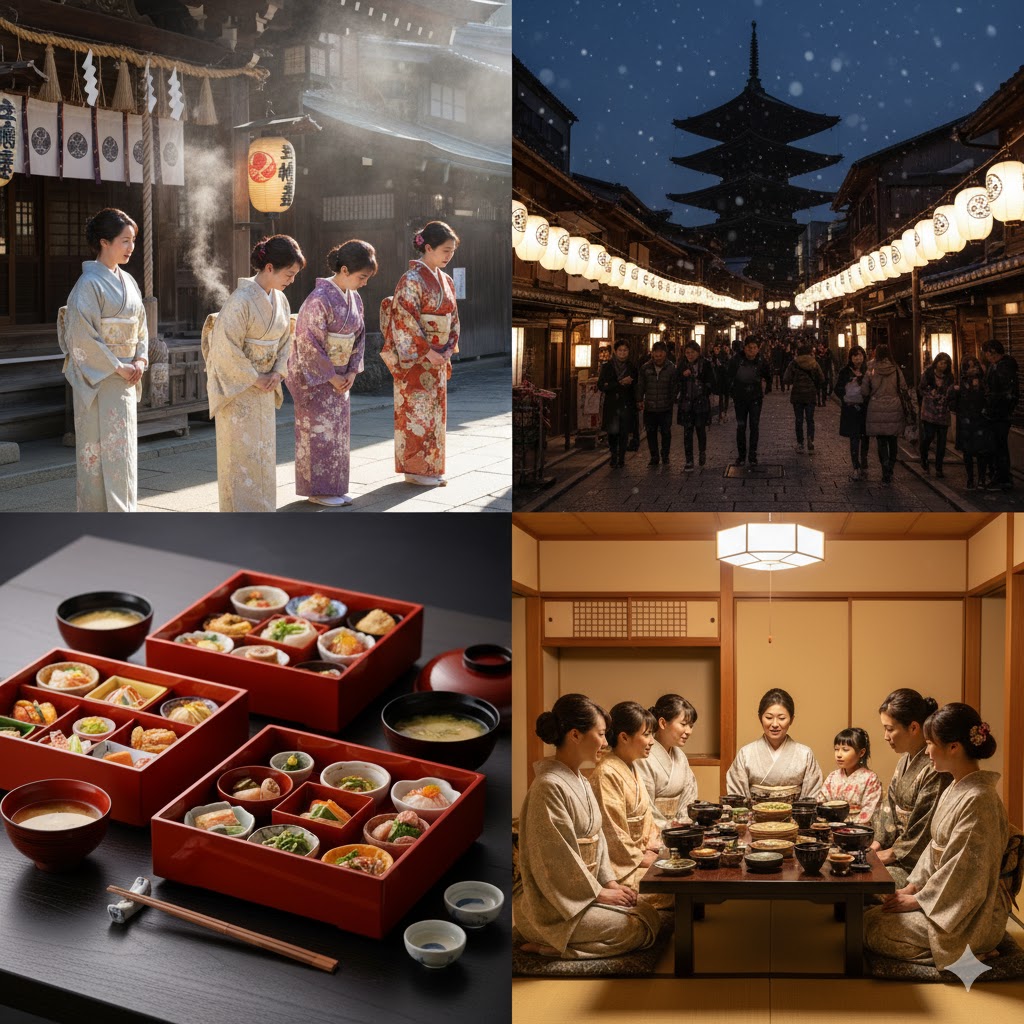
1. Introduction: Experience Kyoto’s Magic During the New Year Season
When winter rolls around and the New Year approaches, Kyoto transforms into something truly special. The ancient temples take on a mystical quality as frost kisses their roofs, the narrow stone-paved streets glow softly in the evening light, and everywhere you look, you’ll find Japanese families and travelers from around the world celebrating the new beginning together.
If you’re planning a trip to Kyoto during the 2025–2026 New Year season, you’re in for an unforgettable experience. This guide will walk you through the must-see attractions in the Higashiyama district, the cultural significance of New Year celebrations in Kyoto, and most importantly, where to refuel with incredible local food when your feet need a break.
Welcome to Kyoto. Let’s explore together.
2. Why Visit Kyoto During New Year?
2-1. The Spiritual Significance of New Year in Kyoto
The New Year, or “Shogatsu” (正月), holds deep cultural importance in Japan. Kyoto, being the ancient capital with over 1,200 years of history, is where this tradition feels most alive. Temples and shrines throughout the city host special ceremonies, and locals and visitors alike make pilgrimages to pray for good fortune in the coming year.
The energy is different during this season. There’s a sense of renewal, reflection, and hope that permeates the city. The crowds, though present, seem more purposeful and respectful. You’ll witness traditions that have been practiced for centuries—from making offerings at shrines to purchasing good-luck charms called “omamori.”
2-2. Weather and Practical Considerations
Kyoto winters are chilly, typically ranging from 32°F to 50°F (0°C to 10°C). Wear layers, comfortable walking shoes, and don’t forget a warm jacket. The upside? Fewer mosquitoes, clearer skies, and absolutely stunning photographs. The bare branches of temples framed against blue skies create a serene aesthetic you simply won’t find during cherry blossom season or summer.
3. The Higashiyama District: A Living Museum of Old Kyoto
Located in the eastern foothills of Kyoto, the Higashiyama district is where old Kyoto lives and breathes. If you’re visiting during New Year, this is your destination. Here’s what makes it so special:
3-1. Kiyomizu-dera Temple: The Iconic Masterpiece
No trip to Kyoto is complete without visiting Kiyomizu-dera, and during New Year, the experience becomes even more meaningful. This UNESCO World Heritage site sits perched on a hillside, offering panoramic views of Kyoto that will take your breath away.
What to expect: The main hall features a wooden stage built without a single nail—an engineering marvel from the Edo period. During New Year, the temple is beautifully decorated with traditional ornaments, and you’ll often see visitors purchasing ema (wooden prayer plaques) to write their wishes for the upcoming year.
Insider tip: Arrive early in the morning to avoid the largest crowds. The temple grounds are even more atmospheric when bathed in the soft light of sunrise.
Nearby point of interest: Don’t miss the Otowa Waterfall within the temple grounds. According to legend, drinking from its three streams grants longevity, love, and success in school. Join the queue respectfully—it moves quickly.
3-2. The Five-Story Pagoda: A Timeless Symbol
Standing tall above the temple roofs, the five-story pagoda (goju no to) is one of Kyoto’s most photographed landmarks. Built over 1,300 years ago, it represents the five elements in Buddhist philosophy: earth, water, fire, wind, and sky.
From various vantage points in the Higashiyama district, you’ll catch glimpses of this iconic structure. Each angle tells a different story. During New Year, when snow occasionally dusts its roof and morning mist clings to the hillside, the pagoda looks like something from a classical Japanese painting.
4. Strolling the Scenic Streets: Three Famous Stone Paths
One of the best experiences in Higashiyama isn’t visiting individual attractions—it’s simply walking through the district’s famous streets. Three interconnected stone-paved lanes form the heart of this area, each with its own character and charm.
4-1. Ninenzaka: The Gateway to Old Kyoto
Ninenzaka (二年坂) stretches downward from Kiyomizu-dera, and it’s an experience unto itself. The street is lined with wooden machiya houses (traditional Kyoto townhouses) that now operate as boutiques, cafes, and restaurants.
During New Year, many shops display special decorations featuring kadomatsu (pine and bamboo arrangements) and other auspicious symbols. You’ll find everything from traditional crafts to contemporary fashion. Even if you don’t purchase anything, the atmosphere alone is worth the walk.
Pro tip: The street gets crowded midday. Visit in early morning or late afternoon for a more intimate experience.
4-2. Sannenzaka: The Middle Child with Character
Just below Ninenzaka lies Sannenzaka (三年坂), literally translating to “Three Year Slope.” Local legend suggests that if you stumble on these slopes, you’ll have bad luck for three years—so watch your footing!
This street feels slightly quieter and more residential than Ninenzaka, yet equally photogenic. You’ll find local artisans’ workshops, galleries, and small eateries. It’s the perfect place to duck into a cozy cafe for matcha and mochi when you need a break.
4-3. Ichinen-zaka: The Local Favorite
Ichinen-zaka (一念坂) is the least crowded of the three main slopes, making it a favorite among travelers who prefer authenticity over Instagram moments. The narrower path feels more intimate, and you’re more likely to encounter locals going about their daily lives.
Why this matters for your visit: Walking these three streets gives you an authentic feel for how Kyoto has looked for centuries. During New Year, the sense of continuity—of tradition meeting modern life—becomes especially poignant.
5. Spiritual Stops: Temples and Shrines Worth Your Time
5-1. Yasaka Shrine: Power and Presence
Yasaka Shrine (八坂神社) sits at the base of the Higashiyama district and is Kyoto’s most active shrine during New Year. The atmosphere here is electric—locals and visitors crowd the pathways to make their first shrine visit of the year, called “hatsumode.”
If you visit between December 31st and January 1st, you’ll witness crowds in the thousands. While this might sound intimidating, it’s actually part of the authentic Japanese New Year experience. Bring a small coin (5 or 50 yen), say your prayer, and ring the bell. Thousands of others are doing exactly the same.
What to buy: Omamori (protective charms) are sold at small stalls around the shrine. These make perfect souvenirs and are believed to bring specific blessings—safe travels, health, academic success, and more.
5-2. Kodai-ji Temple: Quiet Contemplation
If Yasaka Shrine feels too crowded, Kodai-ji Temple (高台寺) offers a more peaceful alternative. Founded in 1606, this temple is dedicated to the wife of Toyotomi Hideyoshi, a powerful feudal lord.
The temple features stunning autumn colors (though you’ll miss peak fall by New Year), beautiful gardens, and a more contemplative atmosphere than some of Kyoto’s busier sites. The winter scenery here is particularly beautiful, with bare branches revealing architectural details usually hidden by foliage.
6. The Perfect New Year Meal: Why Kyoto Udon Matters
After hours of walking and sightseeing, your stomach will definitely remind you that it’s time to eat. This is where Kyo Udon Ishin (京うどん維新) comes into the picture.
6-1. Location and Accessibility
Situated at Masuyacho, Higashiyama Ward (京都市東山区桝屋町), Kyo Udon Ishin is perfectly positioned between the major attractions we’ve just discussed. Whether you’re heading to or coming from Kiyomizu-dera, Ninenzaka, or Yasaka Shrine, this restaurant is ideally placed to become your New Year meal destination.
6-2. Why Udon During New Year?
In Japanese culture, eating udon during New Year carries symbolic meaning. The long noodles represent longevity, prosperity, and good fortune in the coming year. So when you’re slurping a hot bowl of noodles at Kyo Udon Ishin, you’re not just eating—you’re participating in a tradition that extends back centuries.
6-3. What Makes Kyo Udon Ishin Special
Unlike generic udon chains, Kyo Udon Ishin represents a philosophy—combining Kyoto’s rich culinary heritage with contemporary sensibilities. Here’s what sets them apart:
Premium Water: Kyoto is blessed with pristine water from the surrounding mountains. This water, carefully selected for its purity, becomes the foundation of everything at Kyo Udon Ishin. The noodles’ texture and the soup’s clarity depend entirely on this element.
Carefully Sourced Wheat: The restaurant partners with local Kyoto farmers who cultivate wheat with specific characteristics. This isn’t industrial flour—it’s a product of careful agricultural practices and deep relationships between the restaurant and producers.
Broth That Tells a Story: The tsuyu (dipping broth) is prepared from kombu (kelp), bonito flakes, shiitake mushrooms, and other premium ingredients. The process takes over 24 hours, beginning the day before. There are no shortcuts in pursuit of umami perfection.
6-4. Menu Recommendations for New Year Visitors
Seasonal Specials: Kyo Udon Ishin changes its menu seasonally. During winter and early New Year, expect warm bowls of noodles with seasonal vegetables and proteins. The restaurant’s commitment to using what’s fresh and available means you’re eating in harmony with the season.
Kyoto Vegetables: The region is famous for vegetables like mizuna (Japanese mustard greens), kyoto eggplant, and bamboo shoots. These often appear as toppings, adding local flavor and texture to your bowl.
The Simple Choice: Don’t overlook the “kake udon”—a simple bowl with just noodles and hot broth. This is where the chef’s mastery truly shines. No elaborate garnishes can hide imperfection, so every element must be perfect. This is often what locals order.
6-5. Atmosphere and Experience
The restaurant captures what we might call “contemporary Kyoto”—it respects tradition while refusing to be bound by it. The space feels authentic without being a museum piece. Locals and tourists sit side by side, united by the simple pleasure of a perfect bowl of noodles.
During New Year, there’s an extra dimension to dining here. You’re surrounded by people celebrating renewal, fueling their bodies and spirits as they walk through Kyoto’s ancient streets. It’s a moment of connection.
7. Planning Your Perfect New Year Day
7-1. Morning: Spiritual Cleansing
Start your day early at Yasaka Shrine or Kodai-ji Temple. Arrive by 7 or 8 AM if possible. Make your first shrine visit, purchase an omamori, and soak in the spiritual atmosphere. This sets the tone for your entire day.
Time allocation: 1.5 to 2 hours
7-2. Mid-Morning: Vertical Exploration
Head to Kiyomizu-dera and spend time on the temple grounds. Explore the main hall, visit the Otowa Waterfall, and take photos from the viewing platform. The crowds are manageable at this hour, and the light is beautiful.
Time allocation: 1.5 to 2 hours
7-3. Late Morning/Early Afternoon: Street Wandering
Walk down Ninenzaka, Sannenzaka, and Ichinen-zaka. Stop at small shops, grab a snack or coffee, and soak in the atmosphere. These streets reward slow exploration.
Time allocation: 2 to 3 hours
7-4. Early Afternoon: Meal Time at Kyo Udon Ishin
By this point, you’re hungry and your feet need a break. Sit down at Kyo Udon Ishin, order your udon, and take time to truly taste it. This isn’t fast food—it’s a moment to pause, refuel, and reflect on your morning’s experiences.
Time allocation: 1 to 1.5 hours
7-5. Afternoon: Secondary Attractions
If energy permits, explore Kodai-ji Temple or wander the quieter streets of Higashiyama. Alternatively, visit nearby museums or smaller temples that dot the district.
Time allocation: 1.5 to 2 hours
7-6. Evening: Reflection and Return
As sunset approaches, find a quiet spot to watch the light change. The temples and streets take on an entirely different character as darkness falls. Many visitors find this to be the most magical part of their day.
8. Seasonal Considerations for 2025–2026
8-1. Late December (December 27–31)
The week leading up to New Year is when Kyoto feels most celebratory and crowded. Shrine visits increase dramatically toward December 31st. If you’re visiting during this period, book accommodations and restaurant reservations in advance.
Advantage: You’ll experience authentic New Year energy.
Challenge: Crowds can be substantial, particularly at major attractions.
8-2. Early January (January 1–7)
The New Year period, called “shogatsu,” extends through the first week of January. Shrines continue to be busy, but crowds thin out after January 2nd or 3rd.
Advantage: A good balance between festive atmosphere and manageable crowds.
Challenge: Some businesses may have reduced hours or be closed for staff holidays.
8-3. Late January to February (January 8–February)
By mid-January, Kyoto returns to a more normal rhythm. The city feels quieter and more intimate. If you prefer fewer crowds while still experiencing winter’s beauty, this is ideal.
Advantage: More peaceful exploration, shorter waits at attractions.
Challenge: Some seasonal decorations and events have concluded.
9. Practical Travel Tips
9-1. Getting Around
The Higashiyama district is best explored on foot. Wear comfortable, sturdy walking shoes with good grip—the stone paths can be slippery when wet or icy. The entire area is compact enough to explore in a day without taking public transportation, though buses do serve the area if you need a break.
9-2. What to Bring
- Warm layers: Kyoto winters are chilly, and you’ll be outdoors for extended periods.
- Comfortable walking shoes: This cannot be overstated.
- Small coins: For shrine donations and purchases.
- Camera or phone: The photo opportunities are endless.
- Portable charger: Your phone will be working hard today.
9-3. Dining Beyond Kyo Udon Ishin
While we highly recommend Kyo Udon Ishin, the Higashiyama district has numerous dining options. Small cafes serve traditional sweets and matcha. Restaurants offer kaiseki (multi-course haute cuisine) or casual ramen. Explore based on your mood and appetite.
9-4. Respecting Local Customs
- At temples and shrines, remove shoes when entering buildings.
- Keep noise levels respectful, especially in quieter areas.
- Ask permission before photographing people.
- Don’t touch religious objects or offerings.
- Follow signs indicating restricted areas.
10. Frequently Asked Questions
10-1. Q: Is January too cold to visit Kyoto?
A: It’s chilly, but not unbearably so. With appropriate clothing, you’ll be comfortable. The clear skies and fewer mosquitoes make it quite pleasant.
10-2. Q: Do I need to make reservations?
A: Reservations are highly recommended for restaurants during peak times. For temples and shrines, no reservations are needed—though expect crowds during peak hours.
10-3. Q: How much time should I spend in Higashiyama?
A: A full day allows you to explore thoroughly without rushing. You can see the main attractions in 4-5 hours if you’re moving quickly.
10-4. Q: Is it expensive to visit during New Year?
A: Accommodation prices may be higher than low season, but attraction admission fees remain standard. Dining costs vary—from budget udon to high-end kaiseki.
10-5. Q: Can I visit Kyo Udon Ishin even if I’m not vegetarian?
A: Absolutely. The restaurant offers options for all dietary preferences.
11. Conclusion: Your Kyoto New Year Awaits
Visiting Kyoto during New Year offers something increasingly rare in our modern world: the opportunity to slow down, connect with history, and participate in traditions that have sustained a culture for more than a thousand years.
From the spiritual experience of shrine visits to the sensory pleasure of walking ancient stone streets, from gazing at the five-story pagoda to savoring a perfect bowl of udon at Kyo Udon Ishin—every moment contributes to a deeper understanding of what Kyoto represents.
The city doesn’t just preserve the past; it lives it daily. Your visit becomes part of that ongoing story.
As you plan your 2025–2026 New Year journey, keep the Higashiyama district at the center of your itinerary. Take your time, embrace the season, and allow yourself to be transformed by the experience.
Welcome to Kyoto. Your new year begins here.
12. About Kyo Udon Ishin
Located at Masuyacho, Higashiyama Ward, Kyoto, Kyo Udon Ishin represents the perfect intersection of tradition and innovation. Whether you’re celebrating the New Year or simply needing sustenance for your sightseeing adventure, this restaurant offers authentic Kyoto flavors crafted with precision and care. Plan your visit today and experience udon the way it’s meant to be enjoyed.