
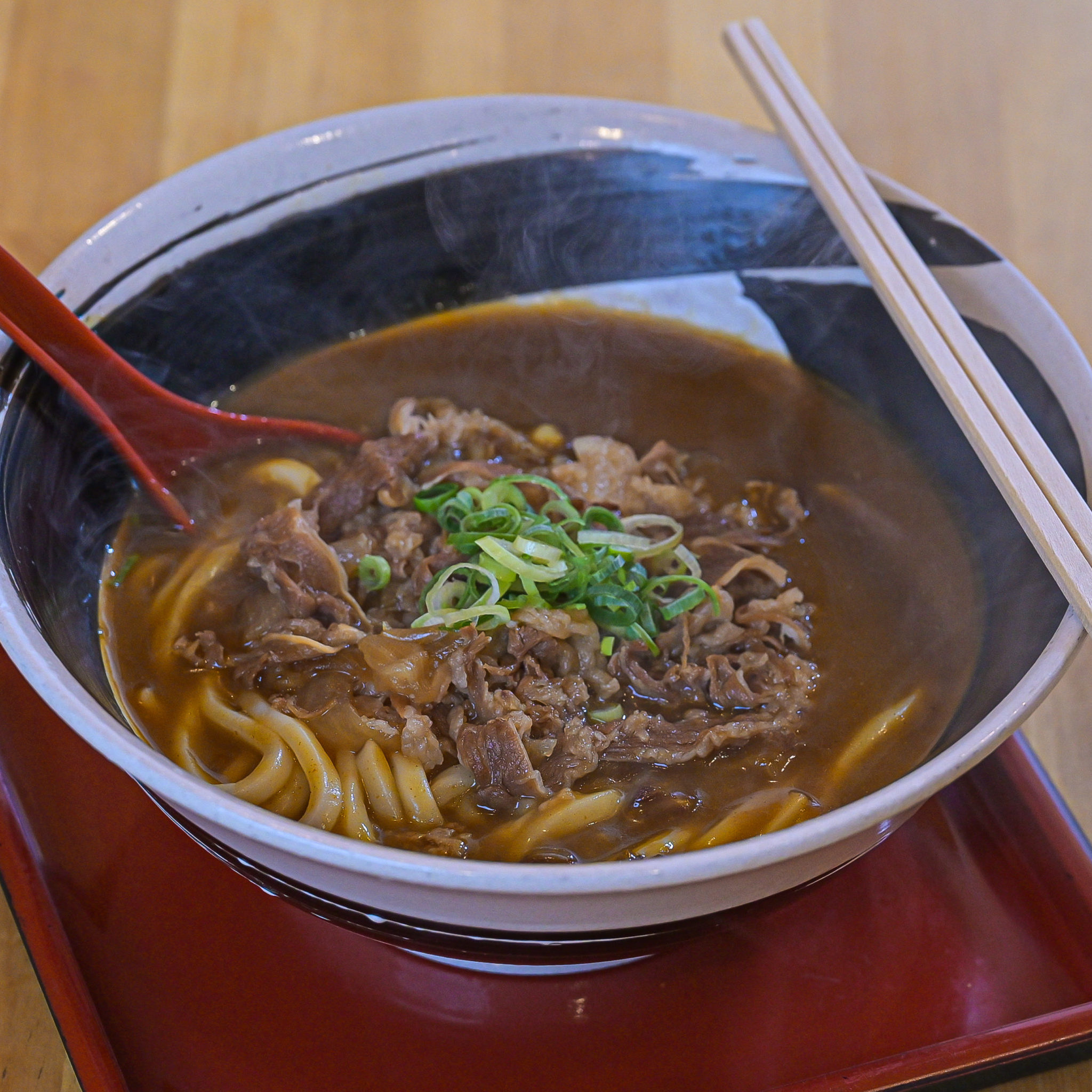
Introduction: What Makes Beef Curry Udon So Special?
If you’re planning a trip to Kyoto and wondering what local dishes you absolutely shouldn’t miss, we have a delicious recommendation for you: our famous beef curry udon. Now, you might be thinking, “Curry in Kyoto? Really?” But trust us, this isn’t just any curry dish. This is where tradition meets innovation, where the silky texture of perfectly cooked udon noodles dances together with the warm, complex flavors of carefully crafted beef curry.
At Kyoto Udon Ishin, we’ve spent years perfecting this dish, combining the best of Japanese culinary traditions with bold, satisfying flavors that appeal to both locals and international visitors alike. Whether you’re a first-time visitor to Kyoto or a seasoned traveler who thinks they’ve tried everything, our beef curry udon offers an experience that’ll make you want to come back again and again. It’s the kind of dish that stays with you long after you’ve left Kyoto, calling you back for another visit.
But what exactly makes our beef curry udon so special? What sets it apart from other curry udon dishes you might find elsewhere? Let’s dive into the details and explore why this humble bowl of noodles has captured the hearts and stomachs of so many people, from locals to international food enthusiasts.
1. The Story Behind Beef Curry Udon: A Culinary Evolution
Japanese cuisine has always been about respect—respect for ingredients, respect for tradition, and respect for the craft of cooking. However, great cooking is also about evolution. It’s about understanding what came before you, honoring that heritage, and then asking yourself: “How can we take this further? How can we create something that feels both timeless and contemporary?”
Our beef curry udon represents exactly that philosophy. When we first decided to create this dish, we asked ourselves some important questions: “How can we honor the traditional essence of udon while incorporating flavors that feel fresh and innovative? How can we blend two beloved elements of Japanese cuisine—udon and curry—into something that feels completely natural and inevitable?” The answer came to us after months of experimentation, testing, and refinement in our kitchen.
We started by studying the fascinating history of Japanese curry. Most people don’t realize that curry isn’t originally Japanese—it was introduced to Japan in the 1870s during the Meiji era, when Japan was actively absorbing influences from the Western world. However, rather than simply adopting curry as-is, Japanese chefs developed their own unique interpretation. They made it sweeter, smoother, and more mellow than its Indian or Thai counterparts. Over time, this Japanese curry tradition became deeply embedded in the nation’s food culture, finding its way into everything from curry rice to curry bread to curry ramen. This Japanese curry tradition became the foundation for our creation.
Then, we thought about udon. Udon is comfort food at its finest—simple, satisfying, and endlessly versatile. The thick, chewy noodles have been a staple in Japanese cuisine for centuries, featured in countless regional variations throughout Japan. Combining these two beloved elements seemed natural, almost inevitable. Yet, as obvious as the combination might seem in hindsight, it took considerable skill and creativity to execute it properly.
Here’s where the real work began: it took us months of testing to get it absolutely right. We experimented with different spice levels, various cooking times for the beef, different cuts of meat, and countless ratios of broth to noodles. Our team would taste a batch, adjust the formula, taste again, and adjust some more. We wanted to create something that felt perfectly balanced—spicy enough to be interesting and engaging, but not so hot that it overwhelmed the delicate, subtle flavors of the udon noodles themselves. Rich enough to be deeply satisfying, but not so heavy that you felt uncomfortable or sluggish afterward.
The result of all this dedication and experimentation? A dish that’s become our signature item and a favorite among thousands of customers who visit us year after year.
2. Understanding the Key Components: Why Quality Ingredients Matter
2-1. The Beef: Premium Selection and Perfect Preparation
At Kyoto Udon Ishin, we don’t compromise on beef quality. This isn’t the place where you’ll find shortcuts or cost-cutting measures. We source premium beef from carefully selected suppliers who share our commitment to excellence and quality. For our beef curry udon specifically, we use a particular cut that provides the perfect balance of tenderness and flavor—meat that becomes incredibly tender after slow-cooking but still maintains its distinct, recognizable beef character and personality.
Our beef arrives at the restaurant early each morning, delivered fresh and ready for preparation. Our culinary team begins the preparation immediately, treating each piece with the respect and attention it deserves. The meat is hand-cut into perfect, consistent portions, each one sized to provide the ideal bite when served with udon. This hand-cutting process, while more time-consuming than machine processing, ensures that every piece is exactly the right size and shape.
Next, the beef is seared briefly over high heat to lock in the natural juices and create a delicious, flavorful crust on the outside. This searing process is crucial to the final flavor—it adds remarkable depth and umami that you simply cannot achieve by just simmering the meat directly in the broth from the start. The Maillard reaction that occurs during searing creates complex flavor compounds that make the beef taste richer and more satisfying.
Once seared to a beautiful golden-brown color, the beef goes into the curry broth to simmer slowly throughout the morning and early afternoon. This hours-long cooking process is transformative. The tough muscle fibers gradually break down, the connective tissue dissolves into gelatin, and the meat transforms into something almost melt-in-your-mouth tender. Simultaneously, as the beef cooks, it releases its natural flavors, proteins, and nutrients into the broth, creating a richer, more complex, and more deeply satisfying sauce. By the time a bowl reaches your table, that beef has been perfecting its flavor for several hours, absorbing the spiced broth while imparting its own deep, meaty character.
2-2. The Curry Broth: A Carefully Guarded Recipe
If the beef is the heart of this dish, then the curry broth is undoubtedly the soul. This is not something we make from a packet or a can—and while there’s nothing wrong with that approach for home cooking, at a professional restaurant level, we make our curry broth completely from scratch, every single day.
Our head chef developed the curry broth recipe over years of careful refinement and experimentation. It all starts with a rich dashi stock made from premium kombu (kelp) and bonito flakes—the same fundamental ingredients that have been used in traditional Japanese cuisine for centuries. This dashi serves as the flavorful, umami-rich foundation, providing a base that makes everything taste better and feel more complete.
To this precious dashi base, we add our secret blend of Japanese curry spices and carefully chosen aromatics. We’re talking about turmeric, coriander, cumin, and several other spices that remain closely guarded secrets within our kitchen. But here’s what we can tell you: we don’t use the typical Japanese curry roux blocks that you find in supermarkets and grocery stores everywhere. Instead, we create our broth using whole spices that we toast, grind, and blend ourselves in our own kitchen. This gives us complete control over the flavor profile and allows us to achieve a level of sophistication, nuance, and complexity that pre-made curry roux simply cannot match, no matter how high-quality the commercial product is.
The broth is simmered gently and patiently for hours, allowing all the individual flavors to meld together beautifully and harmoniously. We also add carefully selected vegetables—carrots, potatoes, and sweet onions—which contribute both pleasant flavor and satisfying texture. Each vegetable is chosen for its specific qualities and how it contributes to the overall eating experience. By the time the broth is ready to serve to customers, it has transformed into something truly special: a rich, complex, deeply satisfying sauce that’s absolutely delicious.
2-3. The Udon Noodles: Silky, Chewy Textural Perfection
You might think udon noodles are simply udon noodles, with minimal variation between different restaurants and producers. But that’s where you’d be mistaken. The quality of udon varies dramatically depending on how they’re made, what specific ingredients are used, and precisely how they’re cooked and served.
At Kyoto Udon Ishin, we make our udon fresh in-house, daily, starting from scratch. We use a carefully selected blend of premium flour—sourced from wheat grown in specific, select regions of Japan that are known for producing exceptional grain. This flour gives our noodles their distinctive texture and character. The ratio of flour, water, and salt is carefully calibrated through years of experience to create noodles that are neither too thick nor too thin, neither too soft nor too firm, but perfectly balanced.
Our udon-making process follows time-honored traditions that have been passed down through generations of Japanese cooks. We mix the dough with precise attention to hydration and technique, allow it to rest properly to develop the gluten structure, and then cut the noodles with precision using both hand-cutting and machine-cutting methods depending on the desired final texture. The noodles are boiled fresh to order, which means they’re at their absolute best—still steaming hot and at the peak of their textural perfection—when they go into your bowl of curry broth.
The thing about udon in a curry broth is that you need noodles with enough inherent structure to withstand the cooking and soaking process without becoming mushy or losing their character. Our noodles are absolutely up to this challenge. They have a slight firmness—what Japanese cooks refer to as “kosi”—that provides a satisfying, pleasant bite, while still being tender enough to eat comfortably without excessive chewing. The chewy, springy texture contrasts beautifully with the creamy, rich curry broth, creating an interesting interplay of textures that makes each spoonful enjoyable and exciting.
2-4. Fresh Toppings: The Final, Crucial Touch
No bowl of beef curry udon is complete without thoughtfully selected, generous toppings. We firmly believe that presentation and the variety of textures and flavors matter as much as the core components of the dish itself. The toppings aren’t just decoration—they’re integral to the eating experience.
Each bowl is topped with fresh, carefully chosen garnishes that add both visual appeal and genuine flavor complexity. You’ll find tender pieces of perfectly cooked beef, of course, but also crispy fried onions for delightful texture contrast, fresh, aromatic scallions for a bright, herbaceous note that cuts through the richness, and sometimes a perfectly soft-boiled egg that adds richness and creaminess when you break into that golden yolk.
We also offer optional toppings including narutomaki, fresh cilantro, sesame seeds, and seasonal garnishes—each chosen intentionally to enhance your overall experience and ensure that every bowl feels special.
3. The Flavor Profile: A Symphony of Tastes and Textures
One of the things our customers consistently tell us is that our beef curry udon is genuinely different from anything they’ve experienced before. Comforting yet exciting, familiar yet surprising, traditional yet contemporary. The initial sip of broth greets your palate with warmth and a gentle, building spice over an umami-rich dashi base, sweet notes characteristic of Japanese curry, and deep meaty flavors from hours of beef simmering.
As you slurp the noodles (please do!), you get that springy chew against creamy curry, tender beef that practically melts, and crunchy-fresh toppings that keep each bite interesting.
4. Perfect for Every Season and Every Occasion
Winter warmth, spring and fall balance, even summer loyalists—beef curry udon works year-round. It’s casual enough for a quick lunch and special enough for a memorable trip meal.
5. Customer Stories: Why People Keep Coming Back
From Tuesday-ritual business lunches to annual pilgrimages from overseas, guests tell us this bowl becomes part of their Kyoto story—comfort, energy, and a flavor they seek out again.
6. Seasonal Variations and Limited-Time Offerings
- Spring: bamboo shoots and early greens.
- Summer: lighter broths or chilled noodles with curry dipping sauce.
- Autumn: mushrooms, chestnuts, and root vegetables.
- Winter: richer broth with warming spice accents.
7. Nutritional Value and Dietary Considerations
Balanced macros (carbs from noodles, protein from beef, fats from curry), minerals from dashi, vegetables for fiber. We can adjust spice, create vegetarian versions, and discuss allergen concerns—just ask our staff.
8. Why Choose Kyoto Udon Ishin for Your Beef Curry Udon Experience
- Uncompromising quality and daily from-scratch prep.
- Warm, attentive service and guidance for first-timers.
- Welcoming atmosphere and convenient location.
9. How to Order and Customize Your Perfect Bowl
Mild to spicy, extra beef or noodles, vegetarian options, garlic/ginger boosts, cilantro—tell us your preference. Multiple portion sizes available.
10. The Kyoto Udon Ishin Dining Experience
Simple, elegant space; watch the kitchen at the counter or relax at tables. Our team is happy to explain ingredients and methods—enjoy with confidence.
11. The Art and Science of Perfect Noodle Temperature
We time noodles and broth so heat unlocks flavor without softening texture. The hot curry gently softens the noodle surface (better flavor absorption) while the core stays satisfyingly chewy.
12. Understanding Japanese Curry: A Cultural Context
Arriving via Britain in the Meiji era, Japanese curry became its own tradition—mellower and subtly sweet. Our beef curry udon honors that heritage while pairing it with Kyoto-style udon craft.
13. The Relationship Between Tradition and Innovation
Respecting fundamentals while refining for today: we study classic curry and udon, then merge them thoughtfully so the result feels both authentic and fresh.
14. Health Benefits and Nutritional Considerations
Protein (beef), complex carbs (udon), antioxidants/spices (turmeric), and umami satiety—comfort food that can fit a balanced diet.
15. The Economics of Quality: Why We Don’t Compromise
Premium beef, whole-spice curry, 24-hour dashi, and fresh noodles cost more—but they’re why this bowl tastes the way it does. We aim to be the best, not the cheapest.
16. Stories from Our Head Chef
Decades of udon craft, dawn broth checks, and hundreds of test batches built this recipe. That dedication shows up in every bowl.
17. Planning Your Visit: Practical Information for Tourists
Easy access in Kyoto; lunch & dinner service; off-peak for quiet visits; English support available; groups welcome.
18. Final Thoughts: Why Beef Curry Udon Deserves Your Attention
In a city of timeless cuisine, seek the places shaping tomorrow’s favorites. Our beef curry udon is comfort elevated—tradition meeting innovation in a bowl you’ll remember.
Visit Official Site
Open in Google Maps