
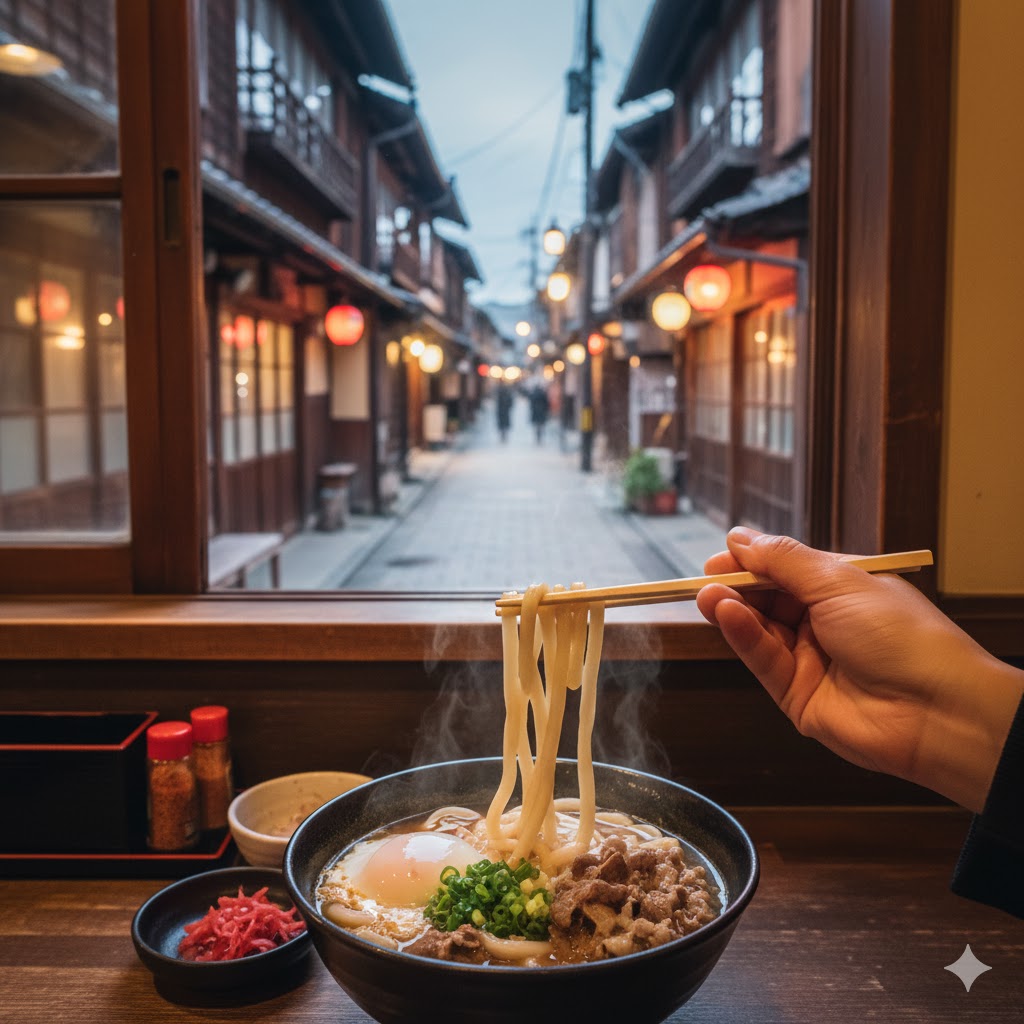
1. Introduction: Beyond the Guidebook
Kyoto is magical. Anyone who’s spent time wandering through its winding streets, stumbling upon hidden shrines, and getting genuinely lost in historic neighborhoods knows this truth. But here’s what many first-time visitors miss: the real Kyoto isn’t found in the most photographed spots or the restaurants packed with tour groups.
The real Kyoto? It’s in places like Masuyacho.
If you’ve been planning your Kyoto trip and religiously checking travel guides, you’ve probably heard about the major temples, the famous shopping streets, and the iconic views. But one element gets overlooked far too often: where locals actually eat. What places do Kyoto residents return to again and again? Where do you find genuine quality at prices that don’t make you wince?
Welcome to Kyo Udon Ishin, a hidden gem nestled in the heart of Higashiyama that embodies everything perfect about Kyoto dining: tradition, craftsmanship, authenticity, and genuine value.
This isn’t a story about a trendy fusion restaurant or a place designed for Instagram. This is about real udon—the kind of food that has sustained Japanese people for over a thousand years, prepared with such care and precision that every bowl tells a story about Kyoto’s agricultural heritage, water quality, and culinary philosophy.
Let’s explore why Kyo Udon Ishin deserves a place on your Kyoto itinerary, and how to structure your day to experience both this culinary secret and the countless treasures surrounding it.
2. Why Higashiyama Matters: More Than Just a Tourist District
2-1. The District That Defines Kyoto
Higashiyama isn’t just one neighborhood—it’s an entire philosophy of what historic Kyoto represents. The name literally means “eastern mountain,” and for good reason. This district sits on the eastern side of the city, climbing gradually upward toward the forested hills beyond. Throughout centuries, it’s served as Kyoto’s spiritual and cultural heartland.
What makes Higashiyama truly special isn’t that it has temples and shrines (though it certainly does—more than you could visit in a week). It’s that these sacred spaces coexist with residential neighborhoods, small shops, quiet alleys, and everyday life. You’ll turn a corner and suddenly find yourself looking at a thousand-year-old gate next to a grandmother hanging laundry. This juxtaposition is the real Kyoto.
Tourists often view Higashiyama as a checkbox to complete: visit temple, check; walk shopping street, check; take photos, check. But the magic happens when you slow down, notice the details, eat where locals eat, and understand that Higashiyama is primarily a lived neighborhood, secondarily a tourist destination.
2-2. The Compact Geography That Works in Your Favor
Here’s the practical beauty of Higashiyama: nearly everything worth seeing fits within an approximately 2-square-kilometer area. Major attractions are typically 10-20 minutes apart on foot. This compact geography means you can design an incredibly rich day without spending half your time on transportation.
Starting from Kyo Udon Ishin’s location at Masuyacho, you can reach Kiyomizu-dera Temple, descend through the famous shopping streets, wander into Gion proper, visit multiple shrines, explore hidden Buddhist temples, and walk through peaceful gardens—all within a realistic day’s itinerary.
The key is understanding the geography and planning strategically. This is where insider knowledge transforms a rushed, checklist-style tour into a genuinely memorable experience.
3. The Major Attractions: Your Complete Higashiyama Map
3-1. Kiyomizu-dera Temple: The Iconic Starting Point
Let’s begin with Kyoto’s most famous temple and arguably Japan’s most photographed religious structure. Kiyomizu-dera, officially Otowa-san Kiyomizu-dera, sits dramatically perched on a hillside with views that stretch across Kyoto’s rooftops to the distant mountains. The temple’s most distinctive feature is its massive wooden platform that extends out over the hillside, creating the sensation of floating above the city.
Founded in 778 CE (making it over 1,200 years old), Kiyomizu-dera represents more than just architecture or historical significance. It’s a living temple where Buddhist monks continue daily practices, and thousands of pilgrims and visitors arrive daily seeking everything from spiritual reflection to romantic blessings. The temple itself is dedicated to Kannon, the bodhisattva of compassion, and the atmosphere reflects this purpose.
The temple’s name means “pure water,” referring to the sacred Otowa Waterfall within the complex. According to tradition, drinking from this waterfall grants wishes or blessings related to longevity, success in studies, or romantic fortune. It’s a charming ritual that connects modern visitors to centuries of tradition.
Pro tip for visiting: Arrive by 7:00 AM to experience the temple before the main crowds arrive. The early morning light is ethereal, the atmosphere is peaceful, and you’ll have space to genuinely meditate or reflect. Most visitors don’t discover this quiet magic because they follow standard tour schedules.
Distance from Kyo Udon Ishin: About 20 minutes walk downhill
Entrance fee: ¥400 (approximately $3 USD)
3-2. The Five-Story Pagoda: A Postcard Come to Life
Standing independently from the main Kiyomizu-dera temple complex, the Five-Story Pagoda (Gojo Pagoda) is perhaps Kyoto’s most recognizable architectural element. This stunning structure, built in 1711, features the classic red and white coloring of traditional Buddhist architecture and rises majestically against Kyoto’s skyline.
What makes this pagoda special isn’t just its photogenic appearance (though it’s undeniably gorgeous). From a technical standpoint, the structure demonstrates sophisticated Japanese architectural knowledge about earthquakes and structural stress. The building has survived numerous earthquakes over three centuries, a testament to the ingenuity of its original builders.
Evening visits are particularly magical. As the sun sets and the pagoda is illuminated, the structure seems to float against the darkening sky. If you’re exploring Higashiyama for a full day, timing your evening walk to coincide with this illumination creates an unforgettable memory.
Best viewing times: Early morning for clarity, early evening for atmospheric photography
Distance from Kyo Udon Ishin: About 25 minutes walk
3-3. Gion: Japan’s Most Atmospheric Geisha District
Mention Kyoto to anyone who’s studied Japanese culture, and they’ll probably mention Gion. This historic geisha district, established over 300 years ago during the Edo Period, represents the last genuine stronghold of traditional Japanese entertainment culture. Walking through Gion is like stepping back in time—narrow wooden townhouses, willow trees drooping over a small river, wooden lattice windows, and if you’re lucky, glimpses of geishas in traditional dress heading to evening appointments.
Gion covers a surprisingly large area, but the most atmospheric section is Higashiyama-ku, the eastern part of Gion near Higashiyama’s other attractions. The neighborhood is primarily residential and working, not a museum. Real people live in these machiya (traditional townhouses), geishas work here, and small teahouses operate along narrow alleys.
Important cultural note: Gion residents and workers have requested that visitors refrain from photographing geishas or taking photos without permission. This request deserves respect. You’re visiting a living, working neighborhood—not a theme park. The magic of Gion isn’t diminished by following these courteous boundaries; in many ways, it’s enhanced by understanding you’re witnessing something genuinely authentic and living.
The district has several excellent small restaurants, traditional teahouses, and atmospheric cafes. However, finding these requires genuine exploration—they don’t advertise heavily to tourists. This is precisely the experience many travelers seek: discovering real, local places through exploration rather than guidebook recommendations.
Best time to visit: Early morning (before crowds) or early evening (when the district takes on romantic lighting and you might glimpse geishas heading to work)
Distance from Kyo Udon Ishin: About 15 minutes walk
3-4. Kiyomizu-dera’s Shopping Streets: Ichinen-zaka, Ninenzaka, and Sannenzaka
These three interconnected streets connect Kiyomizu-dera Temple to the lower parts of Higashiyama and represent the beating commercial heart of the district. Each street has distinct character:
Ichinen-zaka (First Year Slope) is the steepest and most Instagram-famous. If you’ve seen photos of people in colorful kimono rental outfits posing on Kyoto’s picturesque streets, they were likely taken here. The street is packed during peak hours (10 AM – 4 PM), but visiting early morning or after 5 PM reveals a completely different atmosphere. Late evening, when most shops close and tourists disperse, the street becomes genuinely atmospheric.
Ninenzaka (Second Year Slope) connects Kiyomizu-dera downward and is packed with souvenir shops, traditional sweet shops, and casual restaurants. This is where you’ll find matcha ice cream stands, traditional Kyoto crafts, and casual lunch options. It’s touristy, but authentically so—these shops serve both tourists and locals who appreciate quality.
Sannenzaka (Third Year Slope) is quieter and slightly more upscale. It features galleries, antique shops, and more upmarket restaurants. If Ninenzaka is the energetic commercial hub, Sannenzaka is the refined artisan district.
Shopping strategy: Rather than battling crowds on these streets, explore them either very early (before 8 AM) or after 5 PM. Alternatively, use them as connections between attractions rather than destinations themselves. Walk through efficiently on your way elsewhere, then return when crowds have cleared if you want to shop or photograph.
Distance from Kyo Udon Ishin: 5-10 minutes walk
3-5. Nene-no-Michi: Kyoto’s Most Romantic Walk
Nene-no-Michi, which translates to “Nene’s Path,” is named after the wife of Toyotomi Hideyoshi, one of Japan’s legendary warlords. This picturesque canal-side path stretches approximately 2 kilometers and is lined with traditional wooden buildings, galleries, boutique restaurants, and craft shops.
What distinguishes Nene-no-Michi from the busier shopping streets is its intimacy and atmosphere. The narrow path runs alongside a small canal, with maple trees providing shade and seasonal color. In spring, cherry blossoms seem to hang directly over the water. In summer, the canopy creates a cool, green tunnel. In autumn, the maple leaves create a fiery display. Even in winter, when bare branches reveal stone architecture and the occasional snowfall, the path maintains its romantic aesthetic.
Walking Nene-no-Michi during different times of day reveals different personalities. Morning brings quiet solitude and monk’s energy from nearby temples. Daytime brings manageable tourist crowds. Evening brings magical lighting and far fewer visitors. Late evening, after 8 PM, feels like you’ve discovered a secret that’s been lost to time.
Photography tip: If you want compelling photos without crowds, visit either before 8 AM or after 6 PM. The golden hour (last hour before sunset) creates particularly beautiful light.
Distance from Kyo Udon Ishin: About 10 minutes walk
Free to walk; many shops and restaurants along the path have their own entrance fees
3-6. Kodai-ji Temple: The Hidden Gem
While Kiyomizu-dera gets the crowds, Kodai-ji Temple remains comparatively peaceful despite being equally impressive. This temple, founded in 1606 by the widow of Toyotomi Hideyoshi (the same Nene referenced in Nene-no-Michi), features stunning architecture, beautiful gardens, and—crucially—far fewer visitors than Kyoto’s most famous temples.
The temple’s garden includes a moon-viewing platform reflected in a pond, creating perfect symmetry and profound tranquility. The two-story pagoda, while smaller than some of Kyoto’s most famous structures, possesses an understated elegance that appeals to those who prefer substance over spectacle.
Because Kodai-ji remains less crowded than Kiyomizu-dera, you can actually experience the space and architecture rather than competing with crowds to move through it. This represents what many travelers seek: authentic temple experience without the overwhelming tourism infrastructure.
Insider tip: Visit mid-afternoon (around 2-4 PM) when morning crowds have departed and evening crowds haven’t yet arrived. You’ll have the temple largely to yourself.
Distance from Kyo Udon Ishin: About 12 minutes walk
Entrance fee: ¥600 (approximately $4 USD)
3-7. Yasaka Shrine: The Spiritual Guardian
Also known as Gion Shrine, Yasaka Shrine sits at the southern boundary of Maruyama Park and serves as the spiritual nexus of the Gion district. This shrine is dedicated to deities of good health, prosperity, and protection. Unlike some of Kyoto’s larger, more formal temples, Yasaka maintains an approachable, community-focused energy.
The shrine gains prominence during the famous Gion Matsuri festival (held each July), one of Japan’s most important and visually stunning festivals. During the festival, the entire Gion district transforms with festival decorations, traditional music, and thousands of participants. However, even outside the festival period, the shrine radiates peaceful spiritual energy.
Best time to visit: Early morning for a quiet experience, or during festival season for the full cultural spectacle
Distance from Kyo Udon Ishin: About 8 minutes walk
Free entrance
3-8. Maruyama Park: Kyoto’s Oldest Green Space
When the constant moving and temple-visiting becomes overwhelming, Maruyama Park offers peaceful refuge. This expansive park, Kyoto’s oldest (established in 1886), features lush greenery, walking trails, and quiet spaces perfect for meditation or simple rest.
The park’s most famous feature is its weeping cherry tree, which becomes the focal point of the entire district during spring cherry blossom season. Even outside this season, the park provides genuine sanctuary from the surrounding urban energy and tourist activity.
Taking a 30-minute break to walk Maruyama Park’s trails, breathe fresh air, and sit peacefully under trees is as important to a quality Kyoto experience as visiting temples. Some of the most meaningful moments in travel happen in quiet moments of reflection.
Best for: Mid-day breaks, quiet contemplation, cherry blossom viewing (late March to early April)
Distance from Kyo Udon Ishin: About 8 minutes walk
Free entrance
3-9. Anraku-ji and Yasui Konpira-gu: Lesser-Known Spiritual Sites
While not as famous as Kiyomizu-dera, these two temples offer authentic, less-crowded spiritual experiences. Yasui Konpira-gu (also called Yasui Kompira-gu) is particularly famous among locals for its unique “breaking the bad luck” ritual. Visitors purchase clay tablets inscribed with wishes for breaking bad habits or circumstances, then crawl through a stone tunnel inscribed with the same wishes. It’s unusual, deeply human, and refreshingly honest about struggling with life challenges.
Anraku-ji, meanwhile, maintains quiet grounds and historical significance while remaining refreshingly free of crowds. These temples represent what many travelers seek: genuine spiritual spaces used primarily by locals and pilgrims rather than tour groups.
Distance from Kyo Udon Ishin: About 10-15 minutes walk
Entrance fees: Variable, typically ¥300-500 (approximately $2-3 USD)
3-10. Rokuhara Mitsui-ji: Buddhist Heritage and Artistic Expression
This lesser-known temple complex offers something unique: it actively commissions contemporary artists to create works responding to Buddhist themes. Walking through Rokuhara Mitsui-ji, you encounter both traditional temple structures and modern artistic installations. It’s the intersection of ancient spirituality and contemporary creativity—exactly the kind of authentic, evolving tradition that makes Kyoto endlessly fascinating.
Distance from Kyo Udon Ishin: About 12 minutes walk
Entrance fee: ¥600 (approximately $4 USD)
3-11. Hokanji Temple and the Eight-Story Pagoda
While less famous than Kiyomizu-dera’s Five-Story Pagoda, Hokanji Temple’s Eight-Story Pagoda offers its own distinctive appeal. This temple, with its distinctive architecture and peaceful setting, represents the deeper layers of Higashiyama’s spiritual heritage that most tourists never discover.
Distance from Kyo Udon Ishin: About 18 minutes walk
Entrance fee: ¥600 (approximately $4 USD)
4. Kyo Udon Ishin: Where Everything Comes Together
4-1. The Location Advantage: Masuyacho’s Strategic Significance
Kyo Udon Ishin’s location at Masuyacho (益屋町) isn’t accidental. Masuyacho, which translates roughly to “Prosperous House Town,” has historically served as a merchant and artisan district. Today, it remains the logical nexus point of Higashiyama—equidistant from major temples, shopping streets, and Gion, yet somehow remaining less overtouristed than surrounding areas.
This location matters because it positions the restaurant as a natural rest point within your exploration. After climbing temple steps and walking crowded shopping streets, you’ll naturally arrive at Masuyacho. Instead of struggling to find a quality meal, you’ll discover Kyo Udon Ishin exactly where you need it.
4-2. What Makes This Udon Special: The Philosophy Behind Excellence
Kyo Udon Ishin operates from a specific philosophy: honor tradition while embracing thoughtful innovation. The restaurant name itself—”Ishin” (維新) refers to the Meiji Restoration when Japan modernized while preserving cultural identity. This philosophy permeates every aspect of the restaurant.
Water Quality: Udon’s foundation is water. Kyo Udon Ishin sources pristine water from Kyoto’s mountain springs, specifically selected for mineral composition that interacts optimally with wheat flour during noodle-making. The difference this makes isn’t subtle—you can taste it.
Seasonal Sourcing: The restaurant partners directly with Kyoto farmers. This isn’t a checkbox for marketing purposes; it’s a genuine operational commitment. When vegetables peak, they appear in special bowls. When certain ingredients become unavailable, the menu adjusts. This means every visit, every season, offers something different.
Broth Development: Creating the perfect udon broth requires patience. Kyo Udon Ishin’s process spans 24+ hours, beginning with overnight cold-water kombu steeping (a technique called cold-brewed dashi) that extracts umami while avoiding bitterness. The next day, kombu water gets gently heated with perfectly-timed bonito flake additions, shiitake extracts, and other ingredients. Multiple gentle heating cycles allow flavors to develop and marry completely.
Noodle Craft: Rather than following rigid recipes, Kyo Udon Ishin’s chefs respond to conditions. Flour varies seasonally; humidity affects hydration ratios; gluten development requires sensory judgment. This responsiveness to actual conditions, rather than slavish formula-following, represents genuine artisanal craft.
4-3. The Menu: More Than Just Noodles
Classic Kake Udon: This straightforward bowl—fresh udon noodles in premium broth—showcases chef expertise most clearly. No elaborate toppings to hide behind; just technique and ingredient quality. If you want to understand a restaurant’s philosophy, order the simplest dish.
Seasonal Specialties: These limited-time offerings highlight what’s excellent right now. Spring brings fresh vegetables and light broths. Summer emphasizes cold udon and refreshing options. Autumn showcases mushrooms and earthy flavors. Winter brings warming, hearty preparations. These specials represent genuine reasons to return across seasons.
Cold Udon (Summer Specific): On hot Kyoto days, perfectly chilled udon served with concentrated dipping sauce becomes transcendent. The cold preparation actually highlights noodle texture more prominently than warm versions.
Vegetable-Forward Options: True to Kyoto’s Buddhist vegetarian tradition, the restaurant excels at vegetable preparations. Seasonal vegetables receive thoughtful treatment—sometimes grilled to intensify flavors, sometimes pickled for complexity, sometimes lightly fried for textural contrast.
Premium Additions: Tempura vegetables, soft-boiled eggs, premium nori seaweed, and other carefully-sourced toppings elevate basic bowls into complete meals. Each addition is selected to enhance rather than overwhelm.
5. Structural Strategy: Your Perfect Higashiyama Day
5-1. The Early Start Approach (Recommended for Maximum Experience)
7:00 AM: Arrive at your accommodation’s breakfast or head directly to Kyo Udon Ishin. Many establishments open around 8:00 AM, but arriving right when they open means no wait and peaceful atmosphere. Enjoy a warm, fortifying udon bowl that sets your body and mind right for the day ahead.
8:30 AM: Head uphill to Kiyomizu-dera Temple. The temple opens around 6 AM in summer and 6:30 AM in winter. Arriving by 8:30 AM ensures you’ll experience relative quiet before the main crowds arrive. Spend 60-90 minutes exploring the main hall, the wooden platform with views, the sacred waterfall, and the surrounding grounds.
10:15 AM: Descend through Ichinen-zaka, Ninenzaka, and Sannenzaka. These shopping streets are beautifully quiet at this hour. Walk through the streets at a contemplative pace rather than shopping frantically. Stop at a small café for matcha or coffee if desired.
12:00 PM: Wander into Nene-no-Michi. The path is relatively quiet mid-morning, perfect for photography and peaceful contemplation. The canal-side walk connects you to the romantic essence of Higashiyama.
1:00 PM: Explore either Kodai-ji Temple or Yasui Konpira-gu (whichever appeals more). Both offer authentic spiritual experience with manageable crowds at this midday hour.
2:30 PM: Take a break at Maruyama Park. Sit under trees, breathe fresh air, let your feet rest. This 30-minute pause is essential for sustaining energy throughout the afternoon.
3:15 PM: Explore Gion district. Late afternoon is ideal for Gion exploration—close enough to evening that you might glimpse geishas, but early enough that it’s not yet crowded. Wander the narrow streets, peek into hidden alleys, observe the machiya architecture.
5:00 PM: Return to Nene-no-Michi as it transitions to evening lighting. The path transforms beautifully as day becomes evening, lanterns begin glowing softly, and crowds thin dramatically.
6:00 PM: Dinner at Kyo Udon Ishin. After a full day, a warm bowl becomes profound restoration. The noodles’ texture satisfies physically; the broth’s depth satisfies spiritually.
7:15 PM: Final evening walk through quieter streets as darkness settles. Kyoto’s nighttime personality differs completely from daytime—fewer people, magical lighting, peaceful energy.
5-2. Alternative: The Flexible Explorer Approach
Rather than rigid scheduling, some travelers prefer flexible exploration. In this approach, you:
Visit attractions when the mood strikes rather than following a preset schedule
Use Kyo Udon Ishin as a natural stopping point when hunger arrives, rather than a scheduled meal
Allow spontaneous discoveries to guide your path
Spend extra time in places that captivate you rather than adhering to time limits
This approach works wonderfully for travelers comfortable with getting lost and discovering serendipitously. Kyoto rewards this flexibility—often your best moments happen when you wander aimlessly into unexpected places.
6. The Udon Experience: Understanding Japanese Noodle Culture
6-1. The Humble Complexity of Udon
To non-Japanese first-timers, udon might seem straightforward: thick noodles in broth. But this surface simplicity masks profound depth. Udon represents over 1,000 years of Japanese culinary tradition, regional variations that create distinct styles, spiritual significance in Buddhist temple cuisine, and genuine artisanal craft.
Different regions developed signature udon styles. Sanuki udon (from Kagawa Prefecture) features firm, chewy noodles that practically snap between your teeth—resilient and satisfying. Kishimen (from Kyoto and Aichi) uses flat noodles that catch broth beautifully. Inaniwa udon (from Akita) emphasizes delicate, thin noodles requiring careful attention while eating. Kyoto’s style tends toward refinement and balance—noodles neither too thick nor too thin, broth neither too aggressive nor too subtle, every element working in harmony rather than demanding attention.
Historically, udon provided affordable nutrition for common people. Farmers in rice fields, merchants traveling trade routes, and laborers building temples could afford a filling bowl that sustained them through physical demands. The food was nourishment, not luxury. Today, while udon remains accessible and affordable, premium preparations like those at Kyo Udon Ishin showcase how udon can embody sophistication and careful craftsmanship equal to any fine dining experience. The distinction matters: udon democratizes excellence, making careful culinary craft available to everyone regardless of budget.
6-2. Udon in Buddhist Temple Tradition
Understanding udon requires understanding Buddhism and vegetarianism in Japanese spiritual practice. Many Buddhist temples served udon to monks and pilgrims because the ingredients aligned with vegetarian dietary principles. Over centuries, temple cooks perfected udon preparation, creating a spiritual and culinary legacy that continues today.
This Buddhist heritage influences Kyo Udon Ishin’s philosophy. The emphasis on seasonal vegetables, the careful preparation methods, the concept of nourishing the whole person—body and spirit—these reflect Buddhist principles about food as more than mere sustenance. Eating udon at Kyo Udon Ishin connects you, whether you realize it or not, to centuries of Buddhist culinary tradition and philosophy.
6-3. The Social Ritual of Eating Udon
In Japan, eating is never purely functional. It’s a ritual connecting you to centuries of tradition and to others sharing the experience. When you sit at an udon restaurant counter, you’re among locals grabbing lunch, pilgrims stopping between temple visits, businesspeople on efficiency-focused breaks, and fellow travelers seeking authentic experience.
Regular customers exchange greetings with staff. A businessman in a pressed suit sits next to a tourist in hiking clothes. An elderly woman slurps noodles with practiced efficiency while you’re still figuring out chopstick mechanics. A teenager rushes through a bowl between school and part-time work. This democratic space where everyone converges around shared appreciation for quality food is profoundly Japanese and endlessly human.
The counter arrangement itself facilitates this communal aspect. Rather than isolated tables, the counter creates a shared space. You’re not separated from others but rather part of a unified experience. Conversations spark naturally. Someone points out a recommended topping to a stranger. This is the opposite of impersonal fast food—it’s connected, communal dining that honors both food and people.
6-4. The Etiquette: Slurping with Pride and Respect
Here’s what many Western visitors find surprising: slurping udon noodles is not just acceptable—it’s encouraged and culturally significant. The audible slurp indicates you’re genuinely enjoying the meal and appreciating the chef’s work. The sound isn’t rude; it’s communicative. It says “this is delicious,” “I respect your effort,” and “I’m participating authentically in this tradition.”
Use chopsticks to grab a portion of noodles, bring them toward your mouth, and slurp them up with audible enthusiasm. Many people simultaneously sip the broth directly from the bowl as noodles enter their mouth. The technique might seem awkward in description, but it’s natural in practice. There’s no single “correct” technique—watch other diners and follow their lead. Japanese people don’t expect perfection from foreigners; they appreciate genuine effort and authentic participation.
After finishing, it’s polite to place chopsticks on the rest or bowl, push your bowl slightly forward (indicating completion), and say “Gochisousama deshita” (thank you for the meal) with genuine warmth. This small ritual, when done authentically, connects you to cultural practice that resonates across Japan. Staff will often bow slightly in response, acknowledging your respect for their work and the tradition they’re maintaining.
6-5. What Udon Teaches About Japanese Philosophy
Udon embodies several fundamental Japanese aesthetic and philosophical principles. Simplicity (reducing something to its essential elements while maximizing quality rather than adding complexity). Seasonality (respecting what the season provides rather than forcing off-season ingredients). Craftsmanship (valuing the skill and dedication of the maker as much as the final product). Harmony (balancing flavors and textures so every element enhances rather than competes for attention).
Understanding udon means understanding something essential about Japanese culture and worldview. The food isn’t complex or showy; it doesn’t demand attention through flashiness. Instead, it rewards careful attention and reveals depths upon closer examination. This describes Japanese aesthetics broadly—gardens that reveal new perspectives as you shift position, architecture that frames nature rather than dominating it, tea ceremony where hospitality matters more than ceremony itself. Udon is philosophy made edible.
6-6. Udon as the Perfect Travel Meal
Beyond cultural understanding, udon offers practical advantages for travelers exploring Higashiyama. It’s:
Quick without being rushed: A proper bowl takes 15-20 minutes. You eat efficiently without feeling pressured or eating mechanically. This timing allows extended exploration while including genuine meal breaks.
Affordable: ¥1,000-1,500 per bowl means you can eat excellently without budget stress. Compare this to casual Western restaurants charging ¥2,000+ or fancy places requiring ¥5,000-10,000 minimums. Udon democratizes quality.
Nourishing: The combination of carbohydrates (noodles) and umami-rich broth actually satisfies prolonged physical activity (like the extensive walking Higashiyama requires). Many travelers report eating udon at lunch, then comfortably exploring until evening without hunger.
Accessible: Unlike sushi (which requires comfort with raw fish), tempura (which can be heavy), or formal kaiseki (which requires advanced reservations), udon welcomes casual drop-ins. No need for special preparation, knowledge, or reservations.
Variable: The same restaurant offers cold udon in summer, warm comfort udon in winter, seasonal specials year-round. This means return visits discover different experiences.
Social: The counter seating creates natural opportunities for connection—with staff, with locals, sometimes with other travelers. It’s communal rather than isolating dining.
These practical advantages combine with the cultural and gustatory qualities to make udon genuinely ideal for travelers exploring unfamiliar places. You’re nourished efficiently, culturally educated, affordably fed, and socially connected—all while sitting in the heart of Kyoto’s most interesting district.
7. Practical Information: Everything You Need for Success
7-1. Getting to Higashiyama
By Bus: Kyoto’s bus system is excellent. From Kyoto Station, take bus line 100 or 106 heading toward Gojo-zaka or Kiyomizu-dera. Journey takes approximately 20 minutes. This is the most direct approach for most visitors.
By Train: The Keihan railway line has an exit at Kiyomizu-Gojo Station, approximately 15 minutes walk from Higashiyama’s main attractions.
By Foot: If staying in central Kyoto (Kawaramachi area or downtown), Higashiyama is approximately a 30-45 minute pleasant walk. Walking there early, before crowds, actually offers wonderful Kyoto experience as neighborhoods gradually transition.
By Taxi: Readily available but can be slower than buses during peak hours due to traffic congestion.
7-2. Timing Your Visit
Spring (March-May): Cherry blossoms make this the most popular season. Expect significant crowds. Early morning visits are essential to experience relative peace. Expect ¥400-600 entrance fees at major temples to support increased maintenance.
Summer (June-August): Hot and humid but fewer tourists. Summer offers authentic, less-commodified Kyoto experience. Cold udon becomes particularly popular and refreshing.
Fall (September-November): Autumn foliage rivals spring cherry blossoms in beauty. Again, expect crowds during peak leaf-viewing season (mid-to-late November). Clear, pleasant weather makes this an excellent time for extended walking and exploration.
Winter (December-February): Cold but clear. Fewer tourists mean you can experience temples and streets without claustrophobic crowds. Occasional snow creates stunning photography opportunities. Some travelers find winter Kyoto most spiritually powerful.
7-3. Budget Reality
Temple entrance fees: ¥400-600 each ($2.50-4 USD). Visiting multiple temples costs ¥2,000-3,000 ($13-20 USD) for a full day.
Meals at Kyo Udon Ishin: ¥900-1,500 per bowl ($6-10 USD). Exceptional value for quality and location.
Shopping and extras: Variable based on personal preferences. Kyoto offers everything from budget souvenir options to luxury purchases.
Public transportation: ¥700 for unlimited day bus pass ($4.50 USD).
7-4. What to Bring
Comfortable shoes: Non-negotiable. You’ll walk 5-8 miles. Bring broken-in shoes, not new or tight ones.
Small backpack: For accumulating souvenirs, carrying water, holding rain gear.
Reusable water bottle: Kyoto has excellent convenience stores where you can refill. Staying hydrated is crucial.
Sun protection: Hat, sunscreen, sunglasses (especially important during peak season when reflection off temple stones intensifies sun exposure).
Lightweight rain jacket: Kyoto weather is unpredictable. Being prepared prevents frustration.
Camera: Obviously—Kyoto is visually stunning. But don’t let photography prevent you from actually experiencing places.
7-5. Language Tips
“Sumimasen” (excuse me) – to get attention
“Arigatou gozaimasu” (thank you very much) – after meals or receiving help
“Eigo ga hanasemasu ka?” (Do you speak English?) – useful at restaurants
“Oishii desu” (This is delicious) – compliment to chefs
Staff at major temples and restaurants in Higashiyama increasingly speak English, but efforts to use Japanese always earn appreciation.
7-6. Payment and Tipping
Most Higashiyama restaurants accept both cash and credit cards, though some smaller establishments operate cash-only. Tipping is not customary in Japan and may confuse staff. The listed price is what you pay—nothing more.
8. Beyond the Obvious: Hidden Discoveries in Higashiyama
8-1. The Alleys Between Major Streets
Kyoto’s real magic happens in unnamed alleys connecting major attractions. Rather than rushing between temples, take time to explore small side streets. You’ll discover:
Tiny tea shops where elderly proprietors serve single-origin teas to few customers
Antique dealers with genuinely unique pieces rather than tourist reproductions
Small galleries featuring local artists’ work
Residential streets showing how Kyoto residents actually live
Hidden shrines where you might be the only visitor
This wandering often yields more memorable experiences than visiting the most famous sites.
8-2. The Rhythm of Daily Life
Arriving early or visiting during non-peak seasons reveals how Kyoto actually functions. You’ll see:
Monks conducting morning rituals at temples before tourists arrive
Locals shopping at neighborhood vegetable stands rather than tourist-oriented shops
The genuine rhythm of a historic city where traditional and modern coexist naturally
Authentic interaction with people who live here rather than perform for tourists
This glimpse into real Kyoto, accessed simply by adjusting timing and avoiding peak tourist hours, often creates the most profound travel memories.
9. Who Should Visit Kyo Udon Ishin? Discovering Value Across Different Traveler Types
9-1. For First-Time Kyoto Visitors
If this is your first time in Kyoto, you’re probably feeling overwhelmed. Thousands of temples, countless attractions, conflicting advice about what “must” be seen. Kyo Udon Ishin offers something invaluable: a place that immediately communicates Kyoto’s essence through food and hospitality.
Your first visit should balance iconic sites (yes, Kiyomizu-dera matters) with genuine local experience (yes, eating where locals eat matters equally). Kyo Udon Ishin provides the latter. A meal here, surrounded by locals and experiencing authentic preparation methods, teaches you more about Kyoto culture than reading travel guides could.
Our recommended first-time itinerary from earlier in this guide works perfectly: hit major temples early to beat crowds, use midday for shopping streets exploration, spend afternoon in quieter temples or parks, return to Kyo Udon Ishin for dinner, and end evening in quieter Gion or along Nene-no-Michi. This hits major sites while preserving authenticity.
9-2. For Returning Visitors
If you’ve been to Kyoto before, you’ve probably seen the main temples and famous streets. This return trip is about depth rather than breadth. You’re seeking the Kyoto that deeper knowledge reveals.
Kyo Udon Ishin becomes more valuable on return visits. You can skip frantic temple-checking and instead focus on hidden shrines, quiet gardens, and genuine daily-life experiences. Use Kyo Udon Ishin as your comfortable anchor point, then explore less-visited temples and neighborhoods. Return visitors often find their deepest Kyoto memories on second or third trips precisely because they’ve released the pressure of seeing everything famous.
9-3. For Foodies and Culinary Enthusiasts
If you travel specifically to experience authentic local food, Kyo Udon Ishin isn’t just a meal break—it’s a destination. The restaurant represents serious culinary thinking applied to seemingly simple food. Understanding the water sourcing philosophy, the 24-hour broth development, the seasonal menu strategy, the farmer partnerships—these details fascinate people who care about food.
Consider spending significant time here, not rushing through quickly. Ask staff about today’s specials, inquire about the sourcing story, observe techniques. Many restaurants appreciate genuine interest from diners who understand their work. You might gain access to insights most visitors miss.
9-4. For Photographers
Kyoto is visually stunning, and certain spots are photographed obsessively (everyone has the same Kiyomizu platform shot or Gion geisha photos). Genuine photographers seek unique perspectives and authentic moments.
Kyo Udon Ishin offers photographic value most tourists miss. The restaurant’s interior design, the steam rising from hot udon, the genuine reaction of locals eating together—these create authentic Kyoto images rather than repetitive postcard shots. Early morning or late evening visiting means photographing Higashiyama’s streets without crowds.
9-5. For Travelers Seeking Spiritual or Meditative Experiences
Kyoto attracts people seeking spiritual connection or meditative practice. Multiple temples offer meditation spaces; the atmosphere itself invites contemplation. Kyo Udon Ishin contributes to this journey.
Eating mindfully—paying attention to flavors, textures, the nourishment happening—is a meditative practice. Sitting in community with others at the counter, partaking in a ritual that millions have participated in across centuries, creates spiritual presence. The food’s Buddhist heritage connects explicitly to spiritual traditions. A meal here becomes practice, not just refueling.
10. Beyond Your Visit: Maximizing Higashiyama’s Gifts
10-1. The Integration Principle
The best Kyoto experiences happen when you stop treating sites as checklist items and start treating them as integrated elements of a place where people actually live and practice traditions. Rather than “visit Kiyomizu-dera, check; eat at Kyo Udon Ishin, check,” think “understand how Kyoto’s spiritual and culinary traditions interweave and inform each other.”
10-2. Building Your Personal Kyoto
Rather than following someone else’s itinerary perfectly, build your own based on what speaks to you. Are you drawn to temples? Spend more time in quiet gardens and meditation spaces. Interested in traditional arts? Seek galleries and craft shops. Love gardens? Spend extended time at Maruyama Park. Fascinated by geisha culture? Spend evening hours wandering Gion.
Kyo Udon Ishin works as your reliable anchor point for any of these approaches. The location is consistent; the food is excellent; the experience is authentic. Everything else around it becomes customizable based on your interests and energy levels.
10-3. The Serendipity Approach
Some of the best travel moments come from planned activities. But some come from getting temporarily lost, discovering an unnamed shrine, stumbling into a small tea shop, or following an appealing smell to an unexpected lunch spot.
Higashiyama rewards this wandering approach. The district is small enough that getting lost means you’re never far from reorientation. The density of attractions means you’ll stumble upon something worthwhile regardless of direction. Some of the most memorable moments happen when you intentionally ignore the guidebook and follow curiosity.
10-4. Creating Meaning Through Revisits
If you’re visiting Kyoto for several days, consider revisiting a few places rather than trying to see everything once. Spending two hours at Kiyomizu-dera allows different experience than rushing through for 30 minutes. Visiting Maruyama Park on multiple days at different times (early morning, midday, evening) reveals its shifting personality. Eating at Kyo Udon Ishin on different occasions (lunch, dinner, different seasons) explores menu variations and changing character.
This depth-first approach often creates more profound travel memories than breadth-first site-checking.
11. The Practical Reality Check: Managing Expectations
11-1. Crowds and Peak Hours
Yes, Higashiyama gets crowded. Peak hours (10 AM – 4 PM) on spring weekends can feel overwhelming. But this isn’t an argument against visiting—it’s an argument for strategic timing. Arrive early. Visit off-season. Explore during evening hours. These simple adjustments transform your experience dramatically.
11-2. The Commercialization Reality
Kyoto has become a major tourist destination, and this brings commercialization. Shopping streets cater heavily to tourists. Restaurants exist that are pure tourist traps. However, this doesn’t mean authenticity has disappeared—it means authenticity requires slightly more effort to find. Kyo Udon Ishin represents the authentic approach: good quality, fair prices, genuine craftsmanship, without performative catering to tourist expectations.
11-3. Physical Challenges
Higashiyama involves significant walking and climbing. Streets aren’t flat; many areas require climbing stairs. The weather varies dramatically by season. Physical limitations matter. However, this also means physical challenge yields corresponding rewards. The effort required to reach viewpoints and temples creates meaningful achievement. The physical exertion somehow deepens the spiritual and cultural experience.
If you have mobility challenges, you can still experience much of Higashiyama—but planning matters. Nene-no-Michi is flat and accessible. Lower sections of shopping streets are manageable. Temple entrances sometimes have steps, but staff are often helpful accommodating limitations. Kyo Udon Ishin is accessible and offers comfortable seating for rest.
11-4. The Cost Consideration
Kyoto can be expensive for budget travelers. Temple fees accumulate. Hotels charge premium prices. Tourist restaurants overcharge. However, Kyo Udon Ishin represents exceptional value. ¥1,000-1,500 ($6-10) for a quality, substantial meal is genuinely affordable. Combined with free activities (wandering streets, parks, some shrine exteriors), you can have a rich Kyoto experience without excessive spending.
Budget-conscious approach: visit temples selectively (choose 3-4 you’re genuinely interested in rather than trying to visit 10), eat at places like Kyo Udon Ishin rather than tourist-trap restaurants, spend time wandering streets and parks for free, stay in budget accommodations outside central areas.
12. Conclusion: The Secret Revealed
The “secret” of Kyoto isn’t actually secret. It’s been here for over 1,200 years, living and breathing and evolving. The secret is simply slowing down, paying attention, eating where locals eat, visiting temples when quiet, and allowing serendipity to guide your path.
Kyo Udon Ishin represents exactly this approach. It’s not hidden in the sense that nobody knows about it. It’s hidden in the sense that it doesn’t announce itself loudly. It simply exists, excellent and unpretentious, waiting for travelers who understand that the best Kyoto experiences don’t require guidebook fame or Instagram viral status.
Combine this exceptional udon with the countless temples, shrines, gardens, and atmospheric streets surrounding it. Spend a full day exploring Higashiyama’s layers. Allow yourself to get briefly lost. Climb a random side street. Stumble upon a shrine you weren’t seeking. Eat where you’re hungry rather than where you’re scheduled.
This is how you transform a tourist visit into a genuine travel experience. This is how you create memories that endure long after you’ve returned home. This is how you understand why Kyoto, despite its crowds and commercialization, remains profoundly special to those who visit with open hearts and patient spirits.
Kyoto’s hidden secrets are waiting. And they’re delicious.
13. Quick Reference: Higashiyama Attractions with Distances from Kyo Udon Ishin
- Kyo Udon Ishin (Masuyacho) — Your starting point and perfect meal break
- Kiyomizu-dera Temple — 20 min walk (UNESCO World Heritage site, iconic views)
- Five-Story Pagoda — 25 min walk (Classic photography subject)
- Ichinen-zaka, Ninenzaka, Sannenzaka — 5-10 min walk (Shopping and dining streets)
- Nene-no-Michi — 10 min walk (Romantic canal-side walk)
- Kodai-ji Temple — 12 min walk (Peaceful alternative to crowded sites)
- Yasaka Shrine/Gion Shrine — 8 min walk (Spiritual center of Gion district)
- Maruyama Park — 8 min walk (Peaceful green space and cherry blossoms)
- Gion District — 15 min walk (Historic geisha quarter)
- Yasui Konpira-gu — 10 min walk (Unique “breaking bad luck” ritual)
- Anraku-ji Temple — 12 min walk (Lesser-known peaceful temple)
- Rokuhara Mitsui-ji — 12 min walk (Contemporary art meets Buddhist tradition)
- Hokanji Temple — 18 min walk (Eight-story pagoda and peaceful grounds)
Ready to discover Kyoto’s best-kept secret? Visit Kyo Udon Ishin and experience where locals eat, where traditions endure, and where every bowl tells a story about Kyoto’s soul.